Janaagraha’s Urban Conclave 2026 , held on 18 March 2026 in New Delhi, convened over 250+ participants from 60+ organisations, including senior policymakers, political leaders, elected representatives, practitioners, and ecosystem actors- marking the 8th edition of this flagship convening.
At a critical juncture in India’s urbanisation journey, the Conclave served as a strategic platform to align stakeholders around a city-systems approach- positioning urban transformation not as a series of projects, but as a function of how well planning, governance, citizenship quality and finance systems work together to deliver quality of life to citizens.
The Conclave brought together a rare convergence of policy, political, and implementation leadership, including:
- Senior bureaucrats and policymakers shaping urban reforms
- Political leaders such as Shri Tejasvi Surya, Member of Parliament- Bangalore South and Shri Shashank Mani Tripathi, Member of Parliament (Lok Sabha), Deoria
- 30+ elected municipal councillors , reflecting on-ground governance realities
- Leaders from academia, multilateral institutions, and civil society
The keynote by Shri Rajeev Gauba (Member, NITI Aayog) reinforced a critical insight:
India’s urban transformation continues to be constrained by weak planning systems, inadequate resources, and limited empowerment of city governments, underscoring the need for deep structural reforms in governance and institutional capacity.
Anchoring the Discourse: From Investment to Outcomes
A central thread across the Conclave was the growing recognition that increased investments in cities have not consistently translated into improved liveability outcomes.
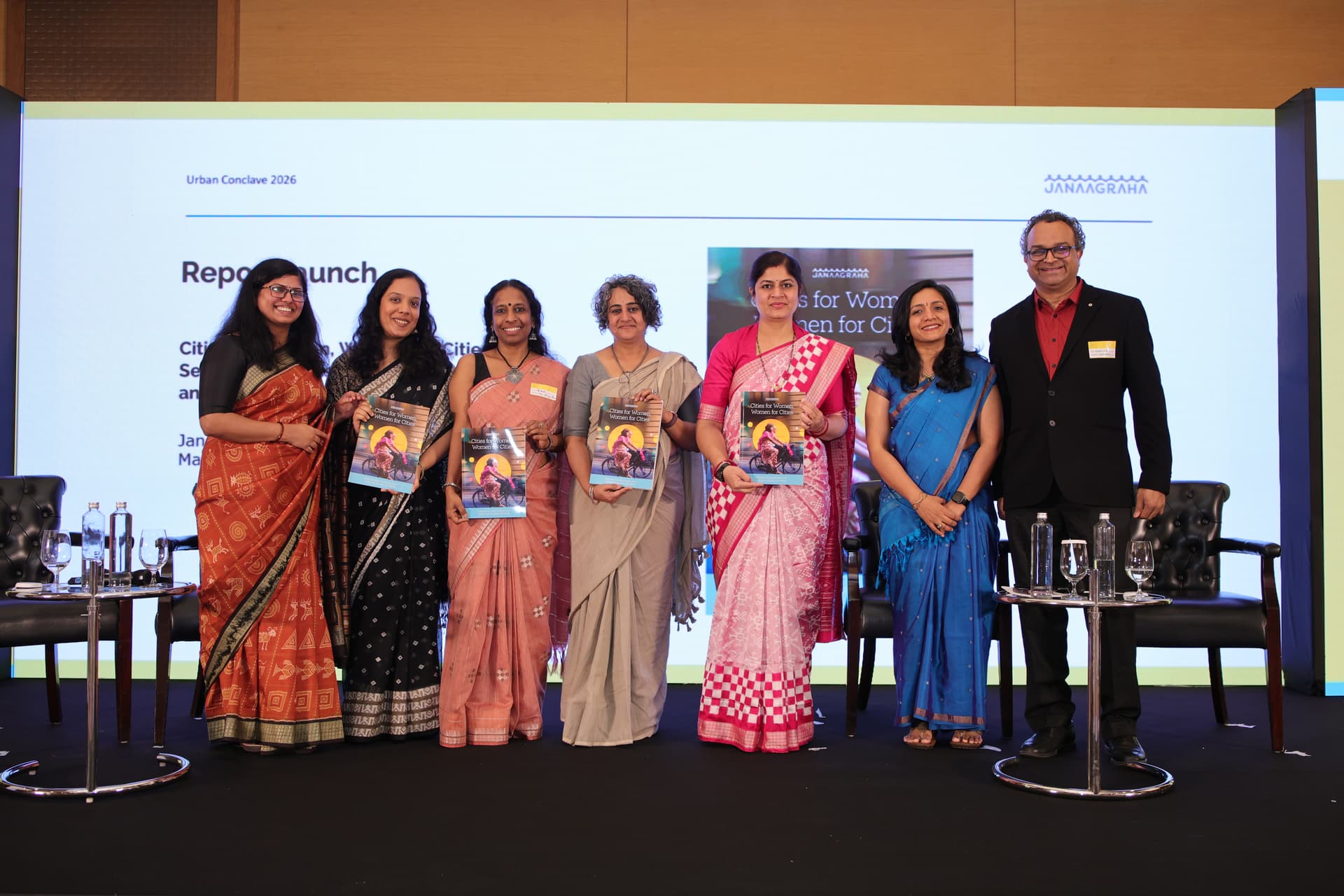
A key highlight was the launch of two reports:
- Shaping Urban India by Design, Not Default , which identifies structural gaps- limited ULG autonomy, fragmented governance, outdated planning, and weak municipal finance- explaining why increased investments have not translated into improved liveability outcomes.
- Cities for Women, Women for Cities , presenting 32 case studies that foreground gender-responsive urban governance.
Key Dialogues: Towards Systems That Deliver for All
1. Rebalancing Growth and Liveability
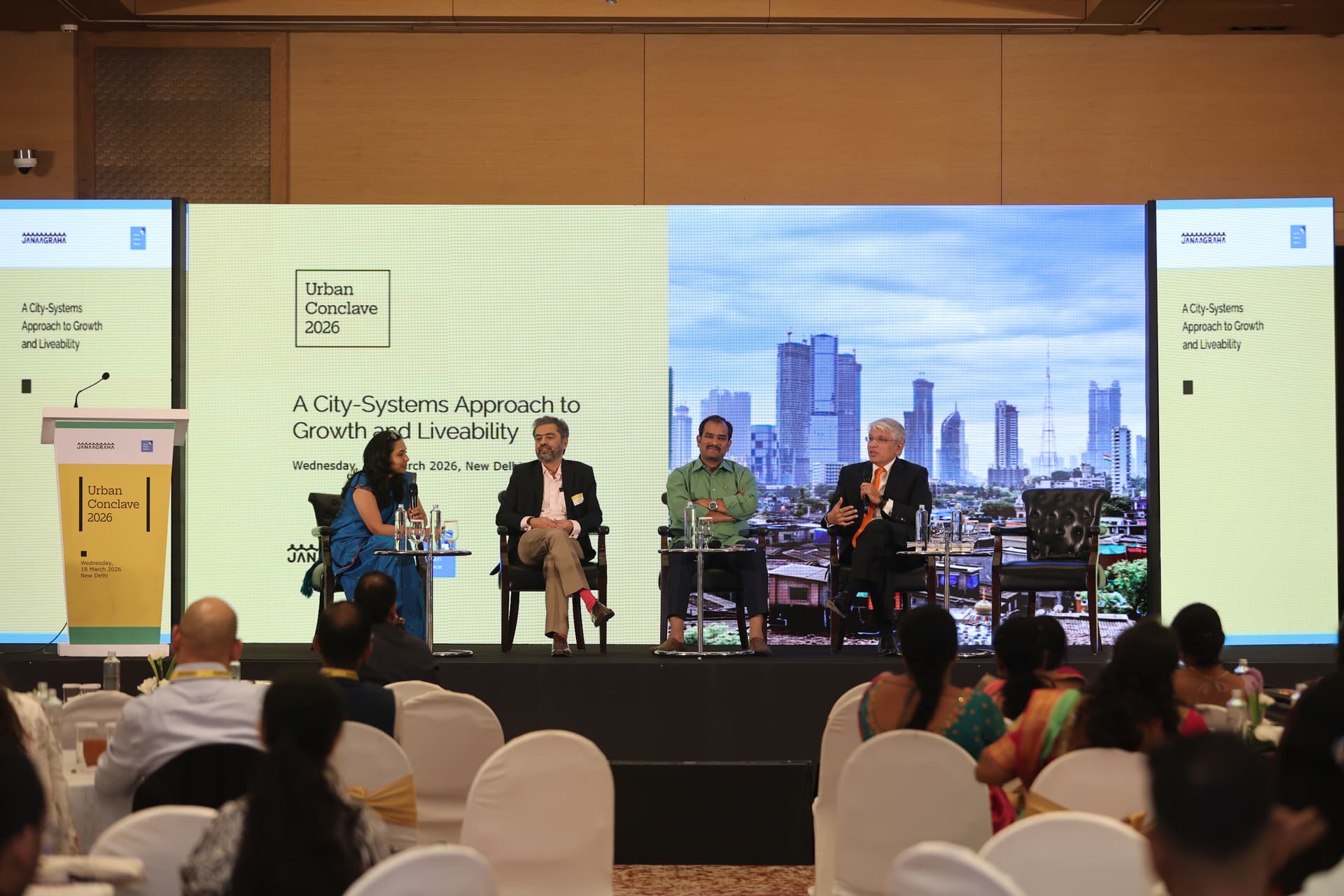
The opening panel underscored a core tension: while cities drive economic growth, governance systems have not kept pace. The consensus was clear- moving beyond centralisation debates towards functional empowerment, decision-making authority, and sustained institutional reform at the city level.
2. Cities for Women: Reframing Equity in Urban Systems
The report “Cities for Women, Women for Cities” (32 case studies: 12 India, 20 global) brought equity into sharp focus. Discussions highlighted systemic gaps- absence of gender-disaggregated data, planning blind spots around caregiving and safety, and low representation of women in decision-making. The takeaway: equitable cities require reimagining governance and social infrastructure with women at the centre.
3. Municipal Finance: From Allocation to Absorption
The discourse shifted from funding availability to cities’ ability to absorb and utilise resources effectively. Key constraints include weak institutional capacity, unpredictable fiscal transfers, and limited transparency. Strengthening predictable fiscal systems, execution capacity, and state–city coordination is critical to financing climate resilience, public health, and equitable services.
4. City Action Plans: Enabling Convergence and Participation
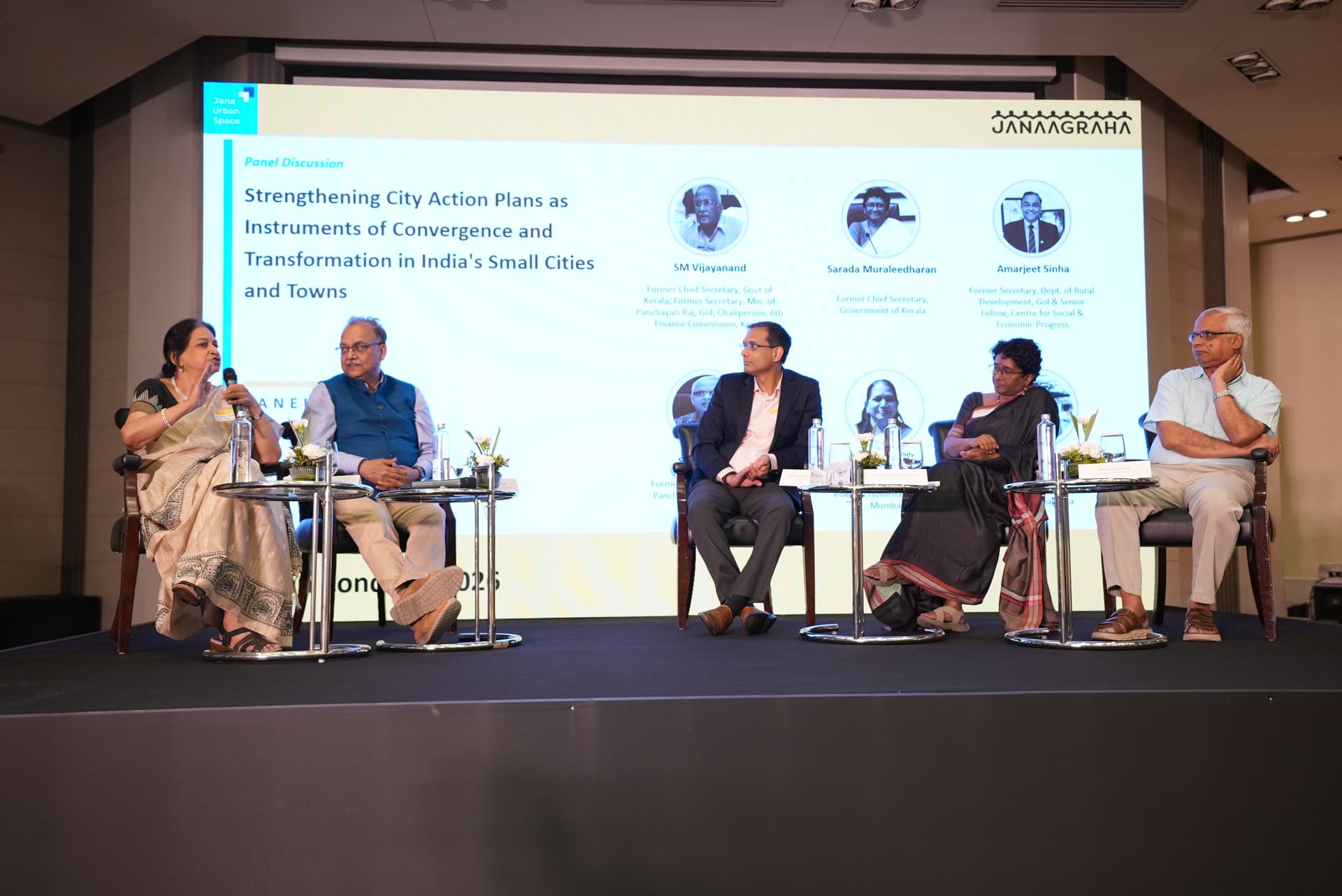
City Action Plans (CAPs) emerged as a powerful tool for integrated, participatory urban planning, especially in smaller cities. The challenge lies in transitioning from fragmented, top-down approaches to convergent, citizen-led, and financially grounded development models, with stronger community engagement and recognition of smaller towns as growth centres.
5. Inclusive Urban Economies
Discussions reframed urban growth beyond job creation to systems that shape access to livelihoods, wages, and economic mobility, particularly for informal and vulnerable workers- placing equity at the centre of economic planning.
Why This Matters: From Dialogue to Systemic Change
The Conclave reinforced that strengthening city-systems is the most effective pathway to delivering outcomes at scale. It reflects a maturing urban ecosystem- shifting from fragmented interventions to systemic reform.
For partners, this signals:
- Growing political and institutional appetite for structural reform
- Stronger cross-sector convergence
- Credible pathways to scale impact through systems change
With representation across policy, political, and implementation levels, the Conclave serves as a bridge between thought leadership and actionable reform.
Looking Ahead: Towards Viksit Cities for Viksit Bharat
The closing message was clear: India’s pathway to Viksit Bharat will be shaped by the strength of its cities.
This requires:
- Empowered and devolved city governments
- Stronger institutional capacity and governance systems
- A sustained focus on inclusive, citizen-centric development
Janaagraha remains committed to advancing this agenda- working with governments and partners to build cities that are not only engines of growth, but enablers of health, equity, and climate resilience.
