When an age-old tradition embraces nature, it creates a beautiful bond between culture and environmental responsibility. Bruskhya Raksha Bandhan, a unique initiative facilitated by SEWAK, extends the promise of nurture and care beyond human relationships to the trees that sustain and protect life.

The initiative began in 2020 at Jhurimal village, in the Lephripara block of Sundargarh district, during the COVID-19 pandemic. With lockdown restrictions in place, many married women were unable to visit their maternal homes to celebrate Raksha Bandhan with their brothers. Rather than let the occasion pass, the women of the village came together and chose instead to plant trees, tie rakhis around them, and pledge lifelong care and protection.
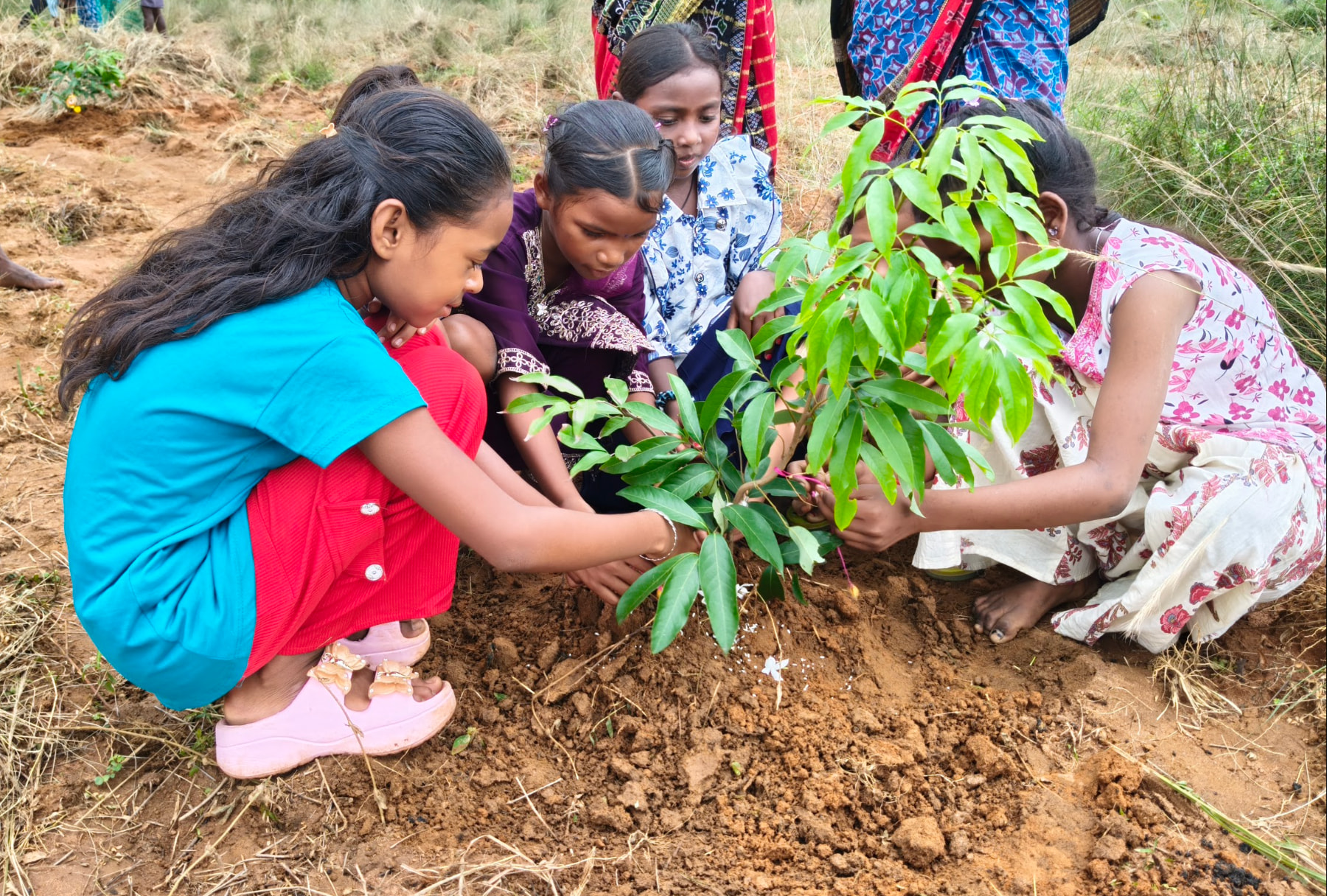
What began as a small gesture in one village has gradually grown into an inspiring, people-led environmental movement. Through SEWAK’s engagement and facilitation, the Bruskhya Raksha Bandhan has now spread across the districts of Sundargarh, Jharsuguda, Sambalpur, Deogarh, Keonjhar, Boudh, and Subarnapur in Odisha.
This year, the campaign reached 178 villages across seven districts, with the participation of more than 3,000 women and girls. They gathered around trees in their common lands, offered prayers, tied colourful rakhis around the trunks, and pledged to nurture and protect the trees throughout their lives.

The initiative carries a simple but powerful message: planting a tree is only the beginning; protecting and nurturing it through its life is a shared responsibility. Through this practice, the communities of Odisha, specifically the women and girls, are weaving cultural traditions together with environmental conservation and climate responsibility.
By Digambar Upadhyay, SEWAK