“Women SHG-Led Development of Community-Based Tourism in Daringbadi Block, Kandhamal District”
Daringbadi, known as the “Kashmir of Odisha,” attracts thousands of visitors each season. Yet, Sunset Point at Green Badi remained unmanaged, with no system to organize tourism or generate local income. On 2nd November 2025, five women-led Self-Help Groups Reha, Jyoti, Khyamamai, Arati, and Madar Teresa stepped forward. Together, 57 members invested ₹10,390 and began managing tourism activities. They introduced a ticketing system and launched a turmeric-based enterprise.

Outcomes in the first month:
- Ticketing earned ₹7,830 against costs of ₹3,470, showing immediate profit.
- Turmeric sales brought in ₹3,500 from an investment of ₹6,920, signaling growth potential.
Gram Vikas supported the journey with training, exposure visits, marketing guidance, and official linkages. This effort created a sustainable livelihood, diversified income sources, and showcased the power of women-led community tourism. The women shared that earlier they struggled with conflicts, but now they work as a team, respecting each other and managing the counters smoothly. Looking ahead, they aim to make the system even more efficient and organized.
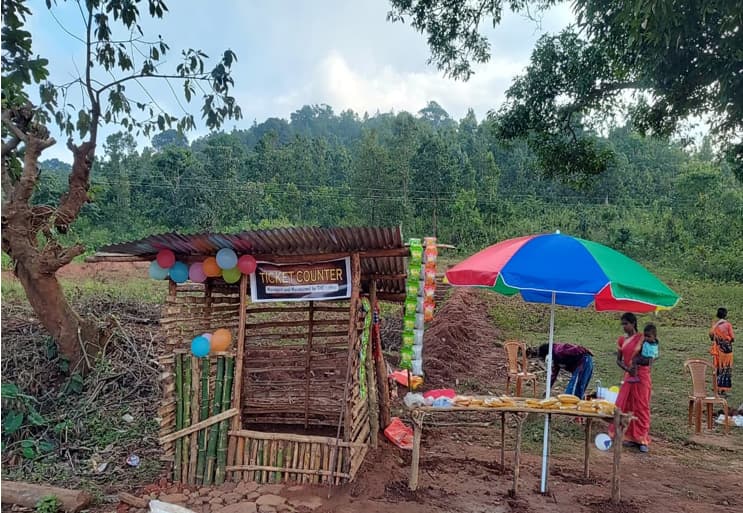
Another waterfall called Patabanda Waterfall in Kisubadi village under Siangbali Gram Panchayat, Daringbadi block of Kandhamal district, Odisha, is a well-known tourist spot attracting visitors from inside and outside the state. Earlier, there was no proper tourism management system, no ticket counter existed, and villagers informally collected small amounts by stopping visitors at a temporary bamboo point. In the month of November and December 2025, discussions to develop the site started with support from Gram Udyog Mitra. Seeing the potential for community-led tourism, Gram Vikas arranged an exposure visit for Philip Kumar Pradhan to Meghalaya to learn about tourism management and community-based models.
Inspired by this, the villagers set up a proper ticket counter using bamboo from the forest and their own labour, managing construction alongside their daily work. Now, both men and women actively run the counter, ensuring smooth and transparent operations while welcoming visitors. Within a short time, the initiative has shown strong results. The site now generates an annual profit of ₹1,11,951 with around 5,000 visitors each year, creating a sustainable, community-owned income source. This highlights how local leadership, collective effort, and institutional support can turn a natural resource into a successful livelihood opportunity with lowest investment in the local areas.
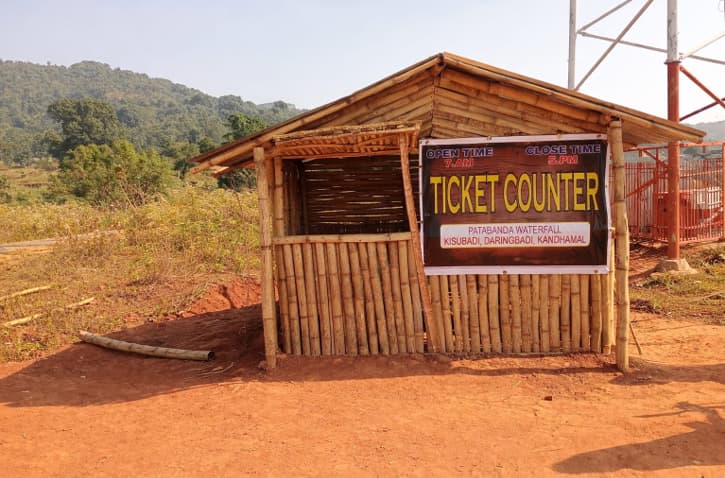
In the similar way Dasingbadi is a small tribal village in Daringbadi block of Kandhamal district, known for its cool climate, scenic hills, forests, and waterfalls like: Midhubanda. The village is mainly inhabited by the Kandha tribe, whose livelihoods depend on subsistence farming, forest produce, and seasonal wage work. The Project Midhubanda” focuses on creating a community-based tourism enterprise at Midhubanda Waterfall by strengthening local ownership, improving visitor management, and generating sustainable livelihood opportunities for SHG women.
Key interventions included introducing a ticketing system managed by SHG women, regular cleanliness drives, and community mobilisation through shram daan for road and site development. Basic infrastructure such as a ticket counter-cum-room, selfie/photo booth, dustbins, and signage boards was also created. Through continuous training and engagement, SHG women developed skills in site management, tourist interaction, and financial record-keeping. This resulted in better visitor flow, improved cleanliness and accessibility, stronger community participation, and a more structured and sustainable tourism system. The project aims to promote women’s leadership, build SHG capacity in tourism operations, enhance visitor experience, create sustainable livelihoods, and establish a replicable community-led tourism model. The initiative benefits 93 SHG women, mostly middle-aged, with some elderly participants. Income from tourism supports their households as an additional livelihood source.
Gram Vikas played a key role in facilitating community mobilisation and strengthening the enterprise by providing training, including Entrepreneurship Development Programme (EDP). It supported SHG women in managing operations, maintaining financial records, and ensuring proper coordination and monitoring. These efforts improved the efficiency and sustainability of the enterprise. About ₹69,000 was supported through the SBI Sahyog fund, and around ₹40,000 was mobilised by Gram Vikas. One entrepreneur, Bishnupriya, started a sweet corn stall later in the season but still earned a good profit. She noted that she had not earlier realised the income potential of this activity, even though maize has long been grown in the area.
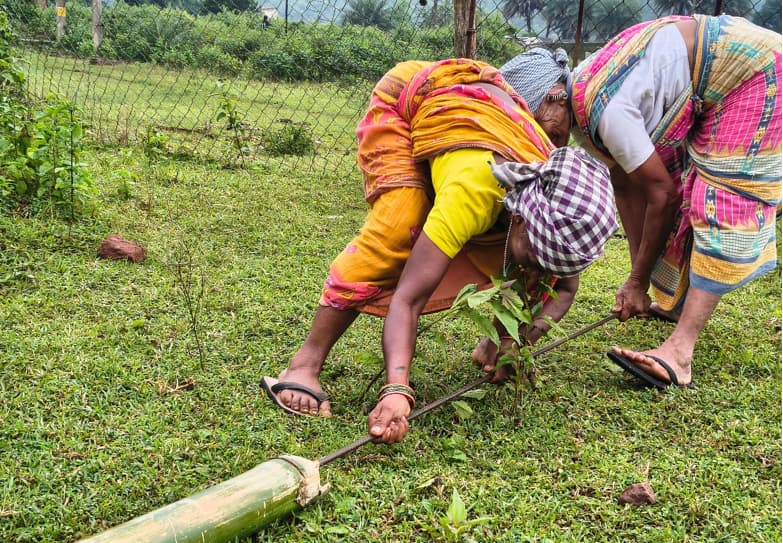
These small businesses mainly operate during the tourist season, as they depend on visitor flow. The income data reflects earnings from different activities during the financial year 2025-26. After the project, the Block Office and Panchayat supported construction of an access road with an investment of about ₹7 lakh in 2022–23, improving connectivity to the site.
[image]Fig-1: Initial Women Self Help Group Meeting for the Development of Entrepreneurship[image]Fig-2: Women SHG Shrama Dan for developing the local community based tourism
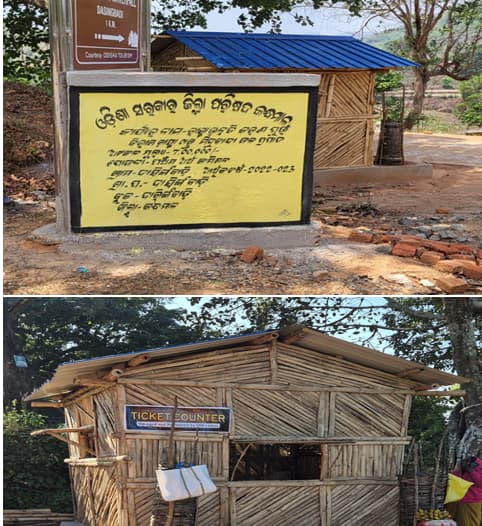
Fig-5: Community based local tourist place entry point[image]
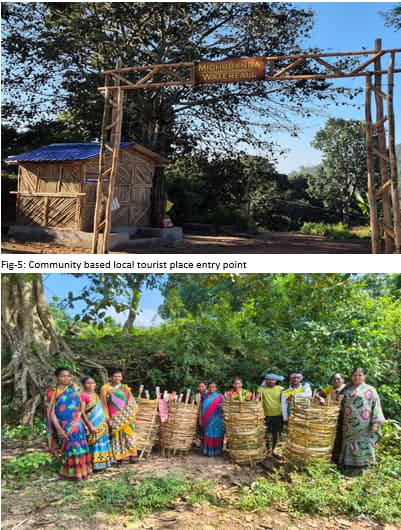
Fig-6: Promoting women’s entrepreneurship for sustainable development and strengthening the economic stability of tribal communities.