What’s Brewing at Ethos Foundation?

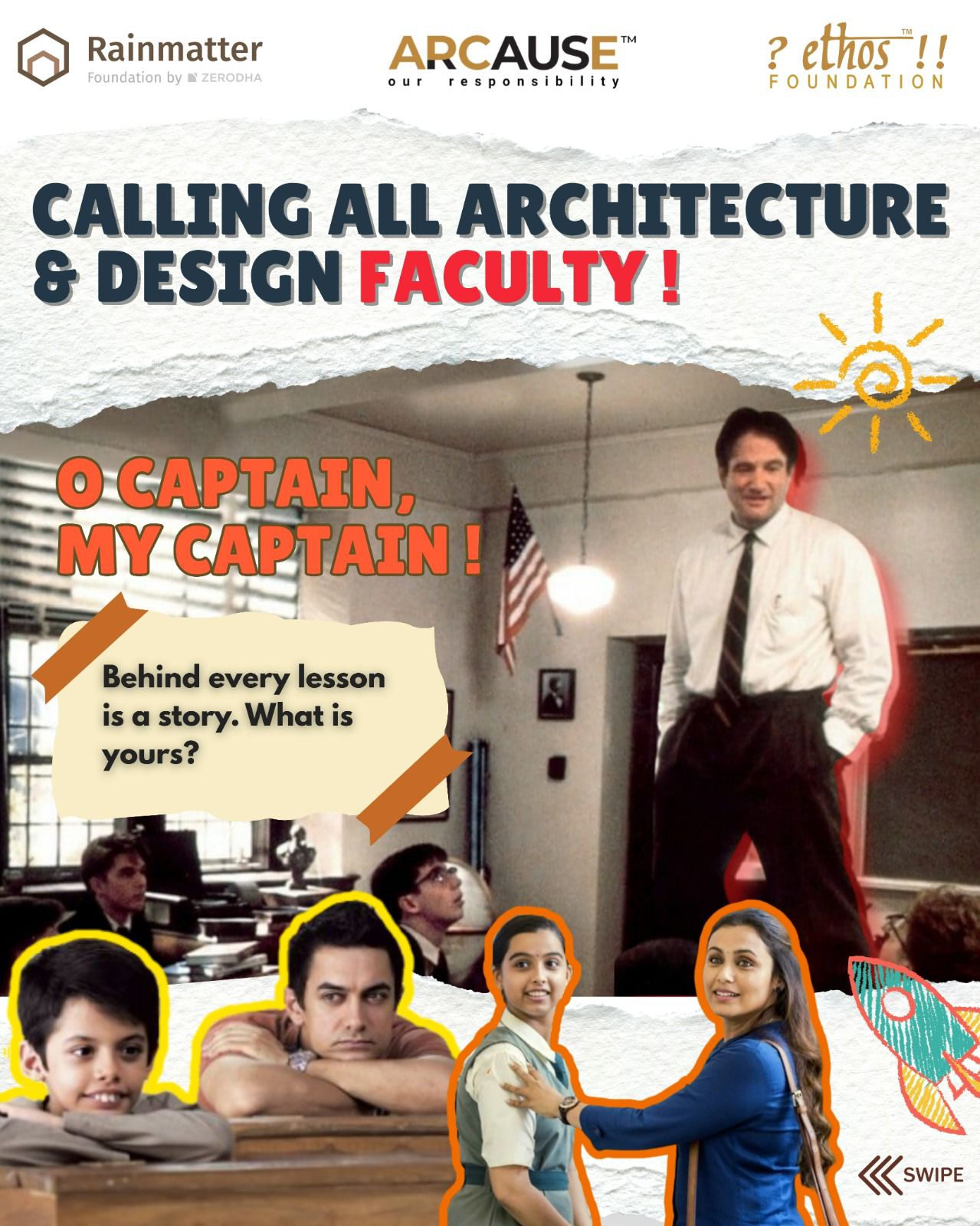
Faculty Campaign - Outside the Classroom

Teachers shape far more than academic curricula and timetables. They nurture possibilities, shift mindsets, and influence the worlds of students. Their impact goes beyond classrooms, and their stories deserve to be heard all year round.

On 5th December 2025, we launched a campaign that invites educators to reflect on three simple but powerful questions:
Why did you choose teaching as a career path?
What makes you stay in the teaching line?
What is your most memorable day or anecdote?

While the questions seem familiar, each response opens the passion, persistence, and purpose of educators. These reflections reveal the human heart of teaching, which is an aspect overshadowed by institutional expectations. This initiative helps us understand the motivation that guides educators’ journey and the values they have committed to for a long time. These insights strengthen our ability to represent teachers across our media and to appreciate their work publicly.

By spotlighting educators, we affirm a larger agenda: to recognise teaching as a continuous act of leadership and to ensure educators are celebrated throughout the year.

Through this campaign, we invite everyone, institutions, partners, learners, citizens, and students, to engage with these stories, amplify them, and reimagine how we can value the people who shape our social fabric.

Explore, share, and contribute to the growing archive of narratives of educators. Each of these stories strengthens the movement towards a society, honours teachers and their work as a foundation.

Teaching is leadership, which needs to be recognised daily.


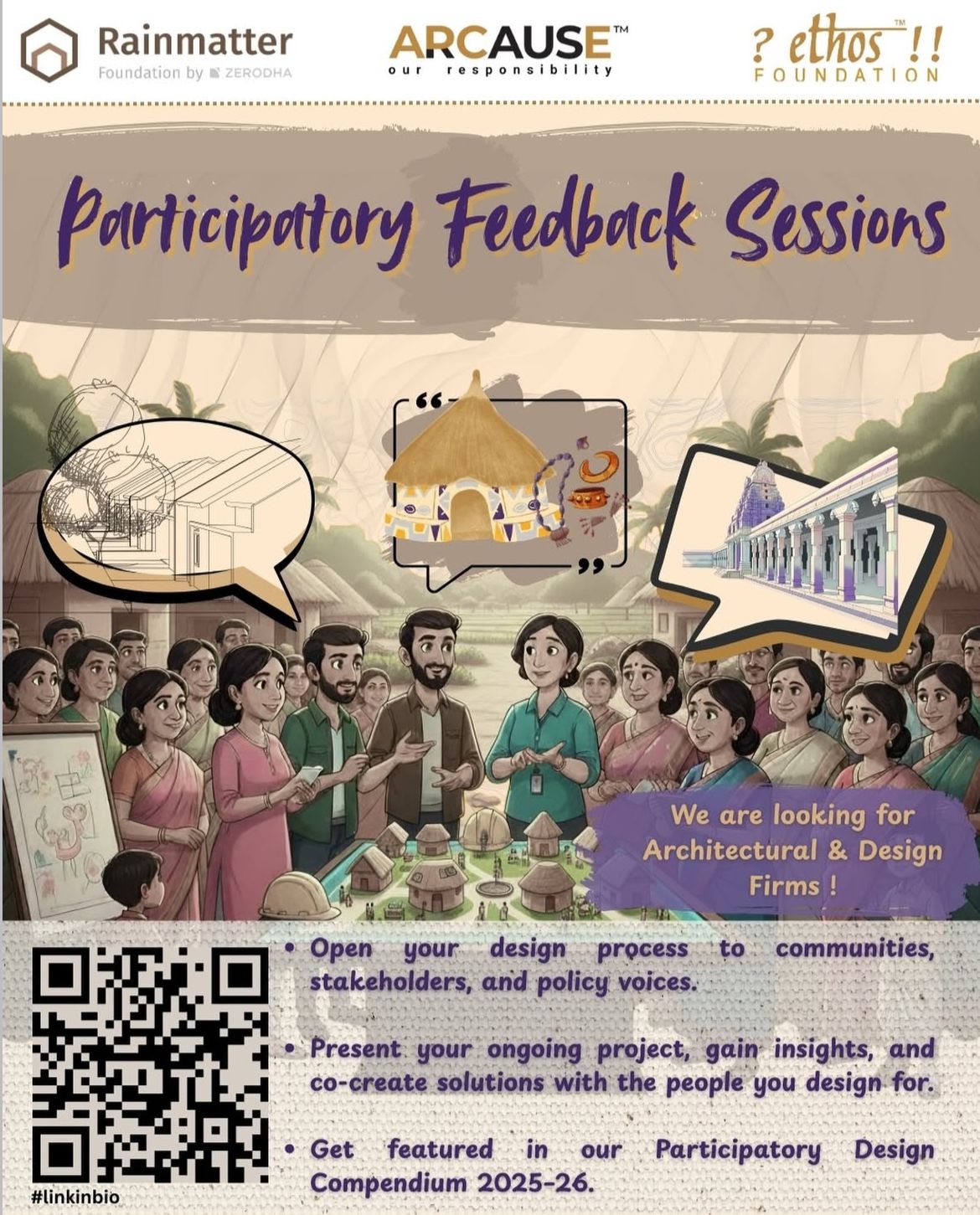
Participatory Design Feedback Sessions

Every building we see around us alters the ecosystem, social rhythm, and relationship between people and place. Usually, when development happens without proper planning, the built environment suffers its repercussions. We often see that the trees disappear quietly, water flow shifts, and culturally significant places lose their meaning, with new developments taking place.

Consider a sacred space that has anchored a community for generations. When a new building emerges in the vicinity, the impact begins to be visible both emotionally and culturally. Similarly, when large-scale projects like a resort or a hotel come near forests or coastal edges, how does it affect the environment, people, and their livelihoods? These moments raise a critical question: who gets to shape the future of a place? Who is responsible for making sure all the stakeholders are considered?

Responsibility has to be practiced from the ideation of a project. It requires architects, planners, policymakers, environmentalists, local stakeholders, and communities to discuss the decisions that form the built environment. The Participatory Design Feedback Sessions create a space for this exchange of thoughts. These sessions are designed as an open platform where design teams can present ongoing work and receive direct feedback from local communities. The intent is to make design decisions in lived realities. By bringing different voices into the process, these sessions uncover blind spots in drawings, reports, and reviews, strengthening projects while they are in their evolving stage.

This initiative enables exchanges of meaningful conversations between designers and communities. The design decisions get context-driven with stronger accountability in practice. It also supports a growing culture of participation within the design ecosystem. This initiative offers a clear and structured way to explore participatory tools.

To take this initiative ahead, we invite architectural and design practices working on any type of project to explore community-engaged design processes. If you are an architect, a policy maker, or someone associated with a project and want to explore participatory design processes in your project, then please fill out the form to get started.

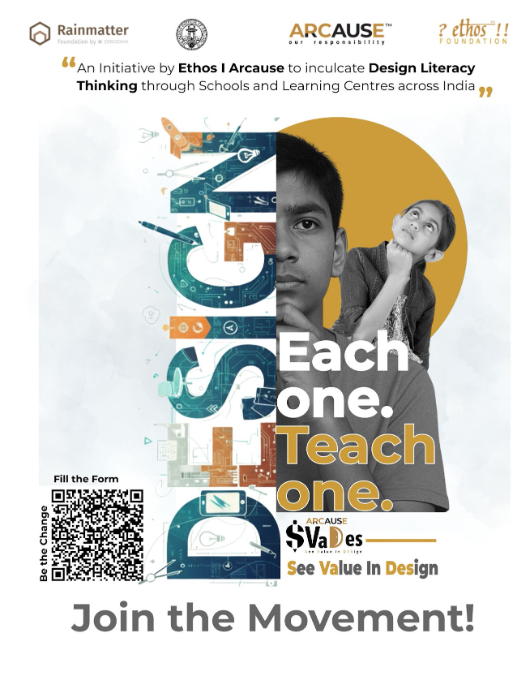
Design Literacy Outreach Program

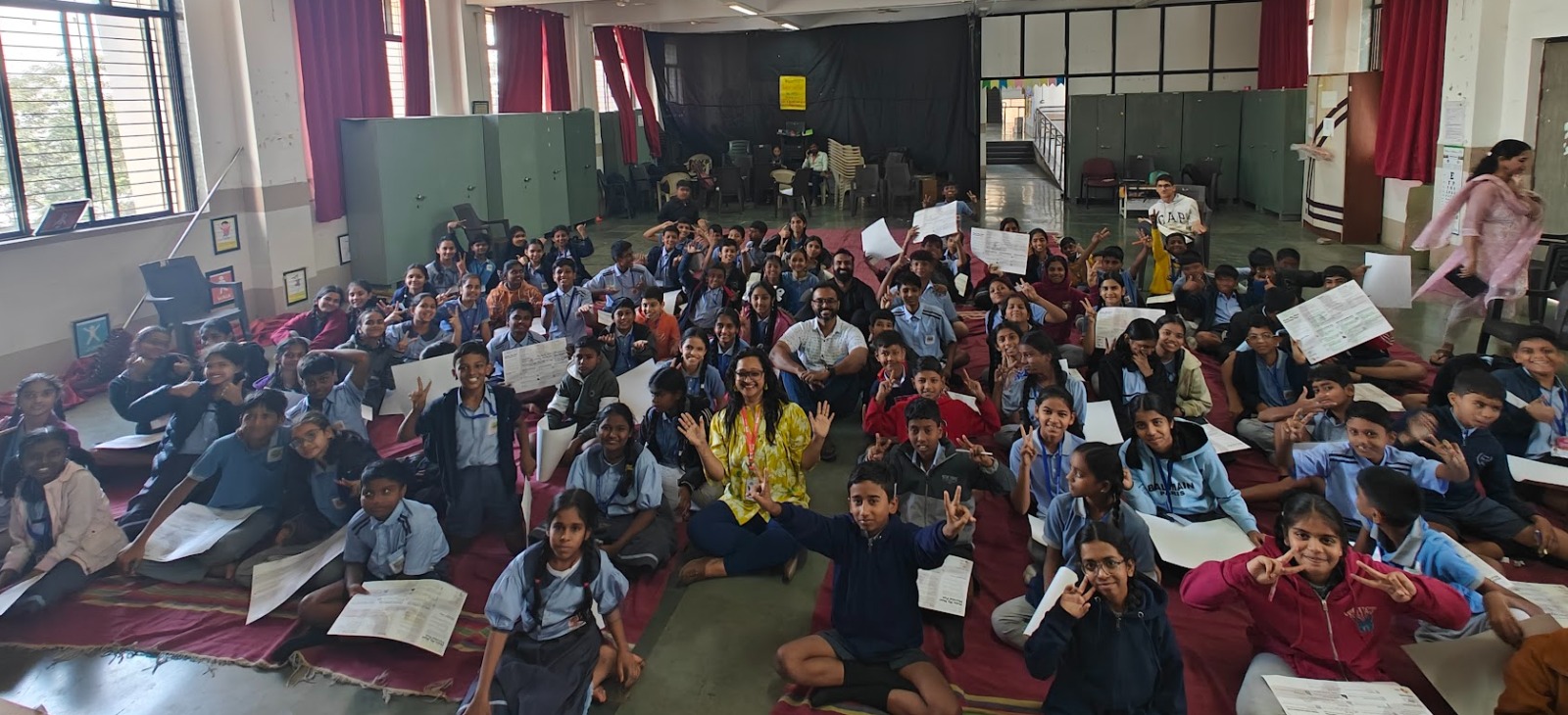
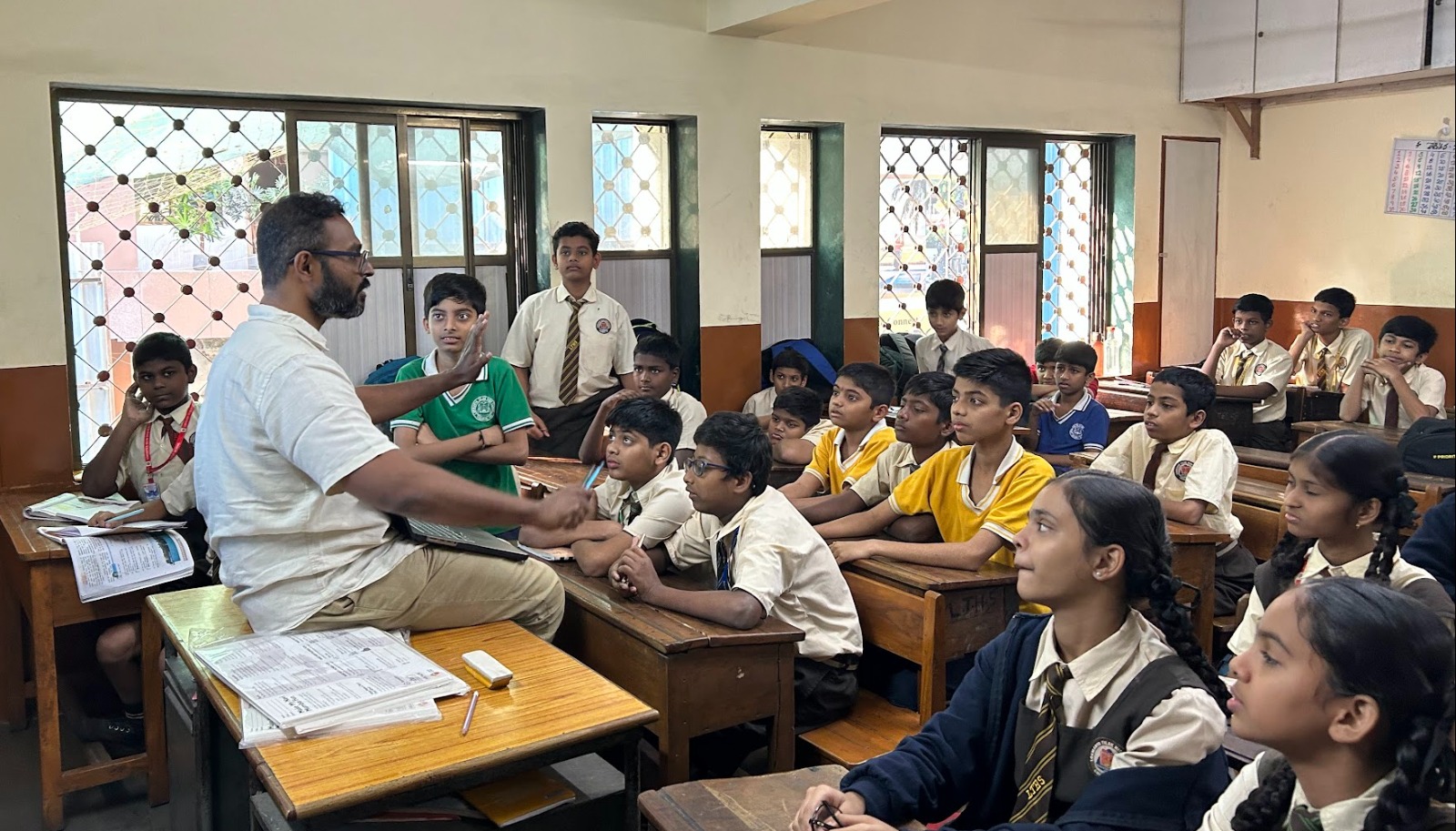
The Design Literacy Outreach Programme - 100 schools, an initiative under SVa-Des (See Value in Design) action area, is a nationwide effort to introduce design literacy into education across India. The initiative brings design awareness, creative thinking, and problem-solving skills to students. The students aged between 4 to 18 are directly engaged with schools and community learning spaces.

By observing, understanding, and responding to design in everyday life, the programme helps children recognise how their surroundings can be shaped. Through interactive and age-appropriate sessions, students develop curiosity, confidence, and critical thinking. This helps educators and parents to design a long-term learning resource. The young designers and architecture students are the Design Literacy Catalysts to create a two-way learning experience.

The outreach programme is structured across two pathways:

Outreach 1.0 is to work directly with schools across all age groups of students along with faculty and parents. Outreach 2.0 is to extend design literacy to NGOs and learning centres working with marginalised communities to ensure inclusivity and equity in access to design education. A key strength of the initiative lies in its community-driven model. The programme aims to -

  • Build early awareness of design and spatial thinking
  • Introduce design as a meaningful career path
  • Enable educators to integrate design thinking for long-term practices
  • Foster critical engagement of spaces, objects, and systems.

The programme will engage 100+ schools, 20+ colleges, and over 3000 children, teachers, and parents to create a large impact of mainstreaming responsible design. The programme builds awareness around social and environmental responsibility. By investing in Design Literacy early, we invest in more thoughtful citizens, responsive systems, and a future shaped with care.

1 Like

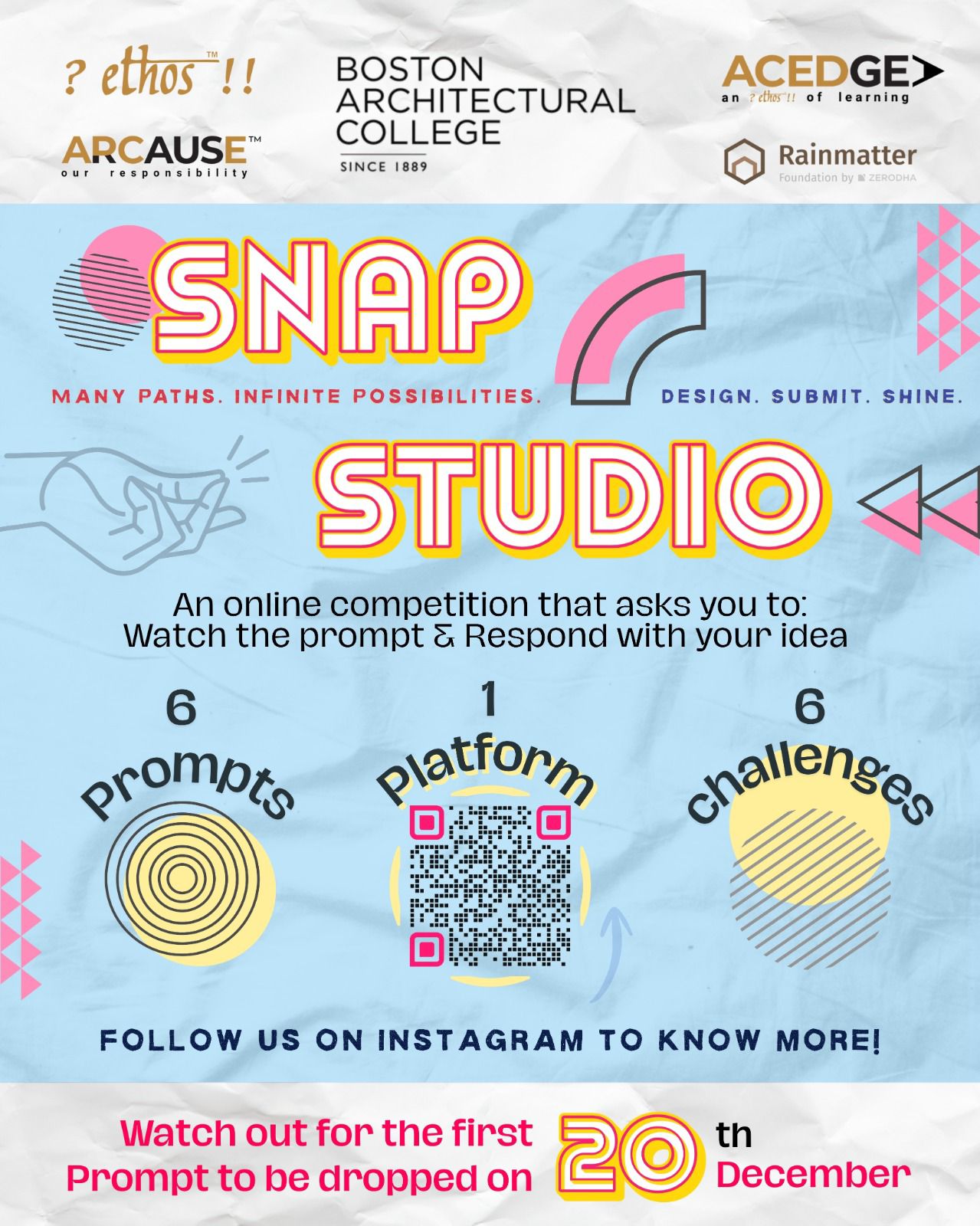
Snap Studio | BAC X Acedge

SNAP Studio is an initiative bought by the Acedge | Ethos Foundation in collaboration with Boston Architecture College (BAC), to extend design education beyond classrooms. The initiative is rooted in responding to real-world challenges by engaging designers and learners for design-led thinking.

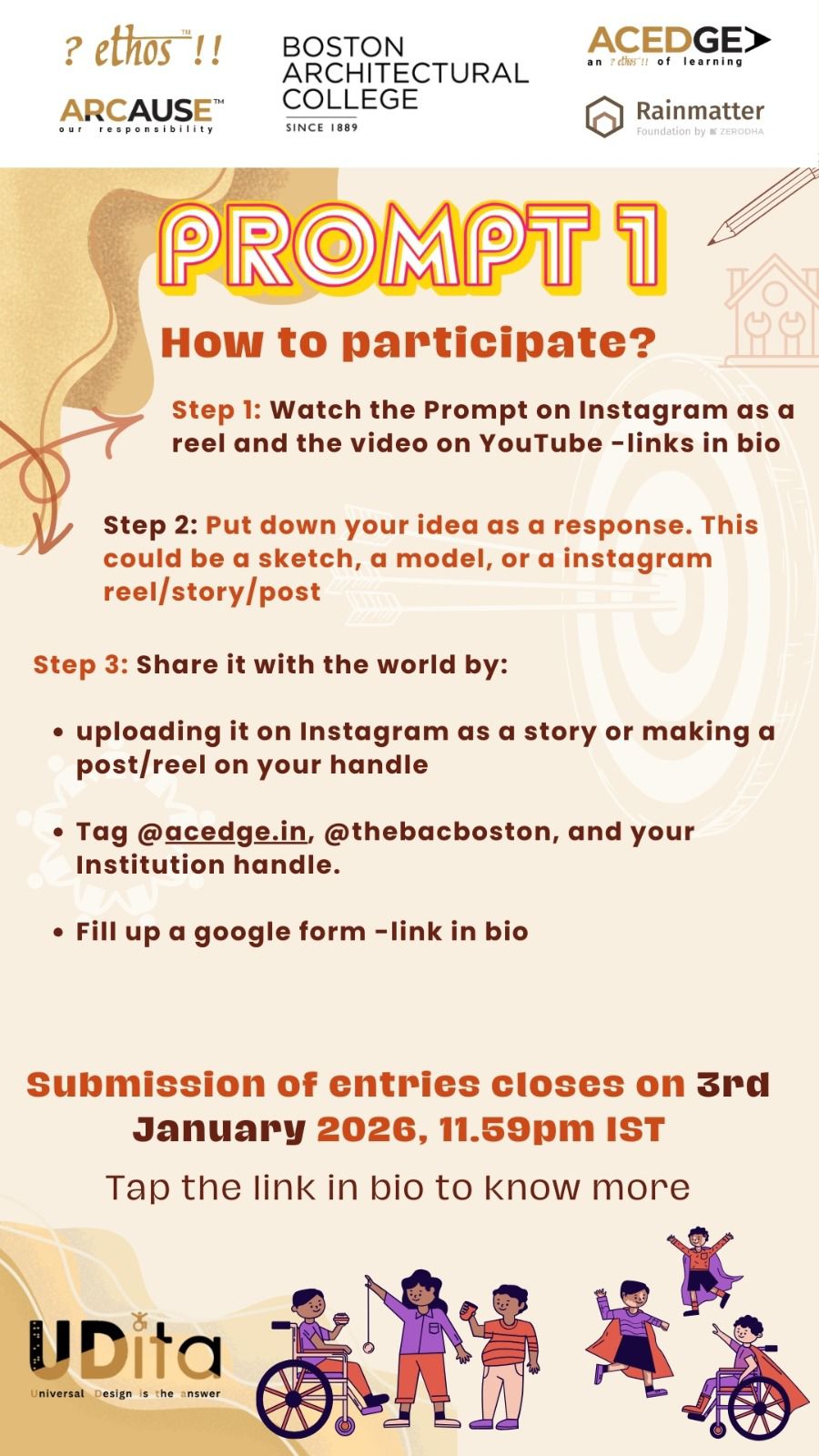
Snap Studio is where design meets play – a hands-on series of 6 mini design challenges that blends learning, creativity, and social engagement. Each prompt is designed as a short, engaging entry point into applied learning to encourage participants to think critically, respond, and connect design with lived realities. It is a year-round, multi-format initiative built around six action areas - Universal Design & Accessibility, Sustainability & Climate justice, Traditional wisdom, Design literacy, Social justice, and Affordable & Accessible design.

The Prompt 1 - “Every Body Plays”, launched on 20th December 2025, focuses on design inclusivity. By reimagining everyday play elements through the lens of accessibility, the prompt encourages amplifying inclusive thinking to become normalised. It is structured as a short, 30-minute activity, easy to integrate in classrooms and studios for independent learning. The Snap Studio brings together international academic perspectives, contexts, and social design practices by creating a shared platform for learning. This helps students to become socially aware, reflective, and responsible towards global design.

Inclusivity cannot be taught only through theory, but it must be experienced, discussed, and designed for. These short, fun, and accessible exercises help sensitise students across age groups, building empathy alongside creativity.

Encouraging learners to take part in such activities plays a vital role in sensitising the young minds to inclusivity and accessibility. If you work with school children or are associated with any school, we invite you to help spread the word about this initiative. @sameershisodia


Post-session Impact for Masterclass Speaker Series

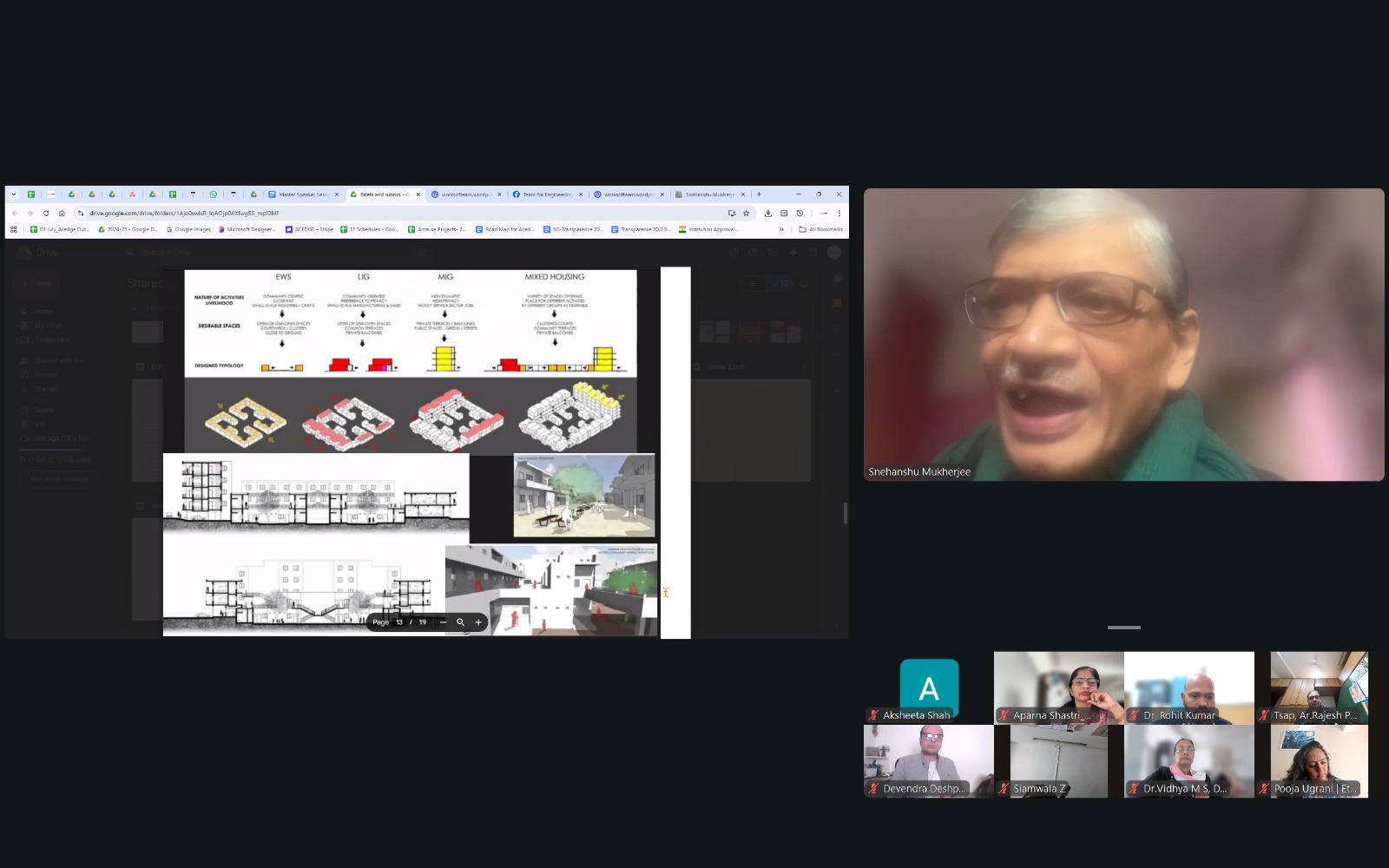
The inaugural session of the Master Speaker Series marked a significant impact on design education to address the real classroom realities. This session - ‘Reimagining the Future of Design’ by Ar. Snehanshu Mukherjee emerged as a shared learning experience that deeply resonated with educators and students.

The session that took place on 13th December 2025 was impactful due to its interactive structure. The session unfolded as a live, thinking exercise with a real-time dissection of architecture briefs. This allowed the participants to witness intent, pedagogy, and outcomes carefully to experience the discourse beyond studio walls. Students and educators joined in from Delhi, Coimbatore, Bengaluru, Cuttack, and other regions that created diverse and impactful conversations. The choice of pedagogue also played a crucial role in shaping the session.

The session ended with an impactful open and engaged Q&A session. The students and faculty actively questioned, reflected, and responded. The wide number of participants reflected the need for mentorship-driven learning spaces. The turnout proved that when the pedagogy is presented with intent and openness, engagement follows naturally. The masterclass was rooted in real academic challenges through constant dialogue and questioning. Encouraged by the response, the series will have more such sessions, bringing more educators and voices together.

The first session of the Masterclass Speaker Series sets the initiative to achieve a platform for shared learning where educators and students grow together. The impact of the session is to continue creating a space to strengthen the pedagogy, encourage critical thinking, and make responsive design.


A New Year at Ethos | What is Brewing?

As we step into a new year, we wish everyone a thoughtful and inspiring year ahead. Ethos continues to engage with initiatives rooted in the lived realities of architecture education and practice, with much more planned for the year ahead.

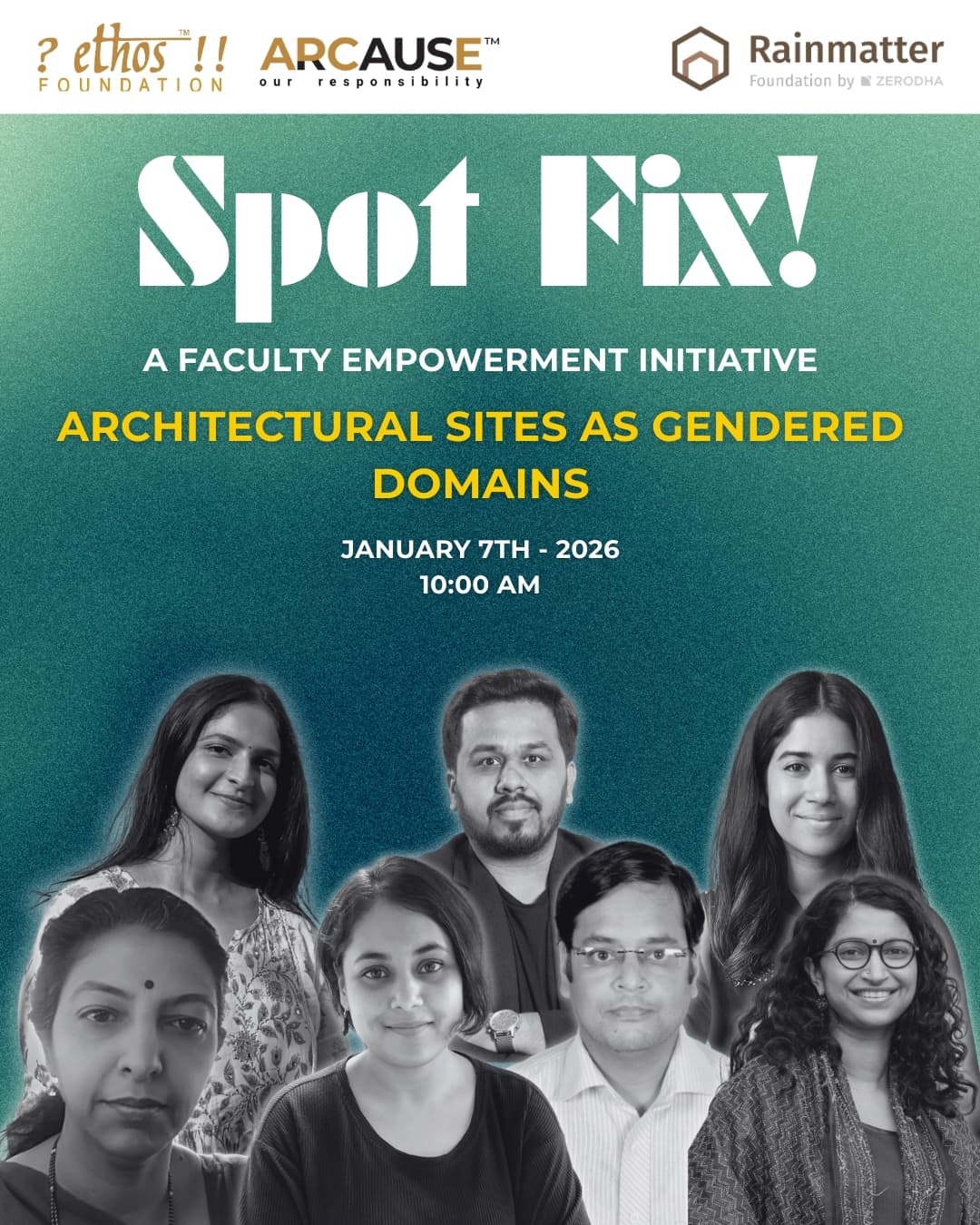
The first engagement to kick start this year is the Spot Fix. Spot Fix is a reflective engagement format that supports institutes with tools and resources for a specific challenge they want to address. Our first one, which is scheduled for 7th January 2026, focuses on a two-part engagement with BNCA, Pune, and IGDTUW, Delhi. The first part of the engagement is a panel discussion titled “Architecture Sites as Gendered Domains”, which will examine and address the real-world challenges women face, both as students and practicing architects, across project sites and in offices. This will be followed by a capacity-building activity for the students at both colleges. Along with the two colleges, the panel also includes practising firms like M+P Pune, Spacematters Delhi, and SJK Mumbai to gain diverse perspectives and experiences on site-based practice.

This initiative will unite educators and professionals to move beyond identifying common issues and focus on applicable change.

SNS 21.0 | Materials of Meaning

Sense N Sensibility is a lecture series by ACEDGE that opens access to expert viewpoints from across the globe. SNS is rooted in practice-led learning and brings forward diverse voices to demonstrate the choices and experiments.

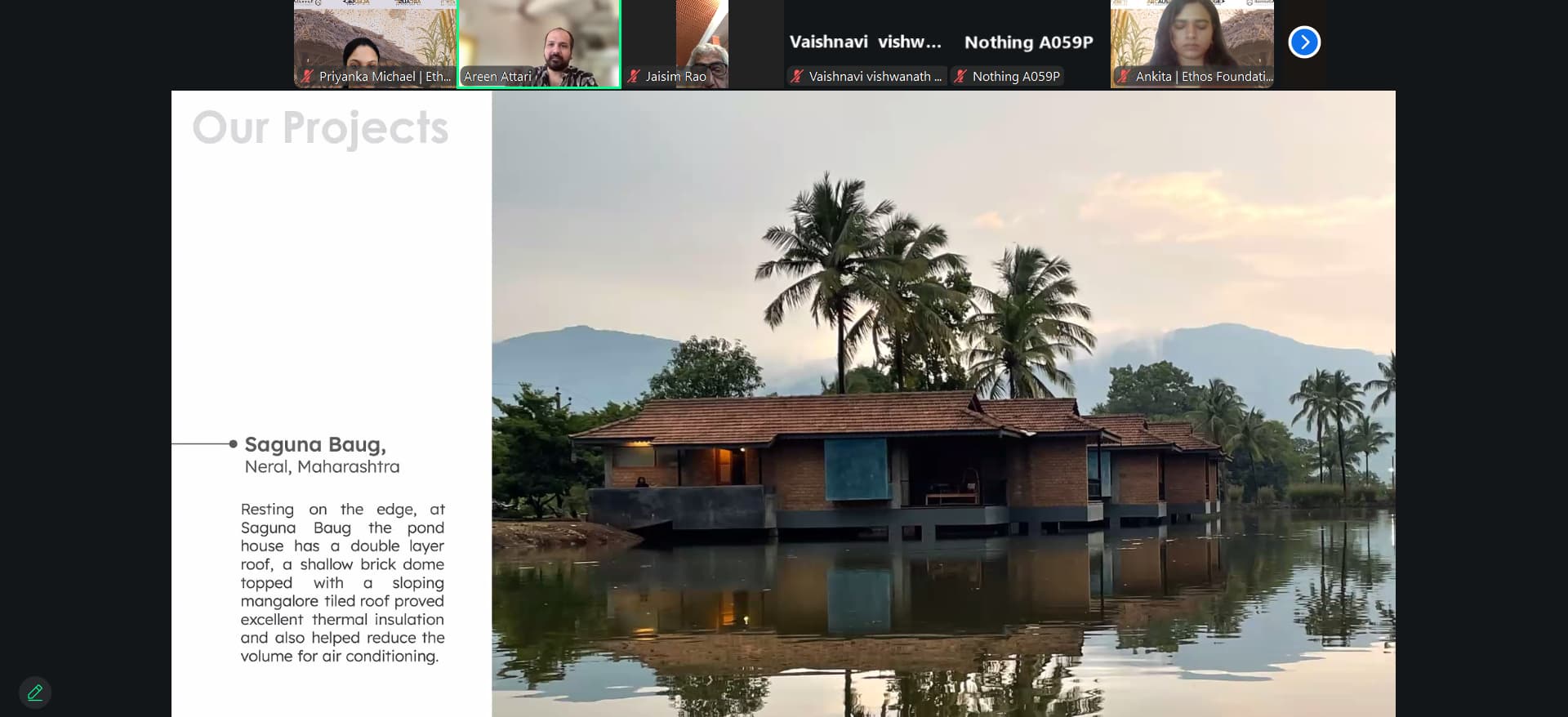
The upcoming SNS 21.0 on 20th January 2026, follows the theme Materials of Meaning. The session brings together Areen Attari, Co-founder and Principal Architect of Put your Hands Together - BioArchitects, and Neelam Manjunath, founder of Manasram Architects. The conversation explores how social, cultural and ecological systems add value and meaning to materials beyond function and form. Areen is a master at blending artistry with architecture and is known for his hands-on approach with materials like bamboo and earth. Whereas Neelam’s work is emphasised widely on sustainability and bamboo. The session will focus on how materials speak beyond form used to express the cultural and social contexts in built environments.

The discussion also revolves around distinct voices of people, communities and ecosystems to contribute towards a shared future. This helps frame diversity, balance, and collaboration as the mainstream responsibilities for designers.

Spot Fix post-event | From Conversation to Capacity

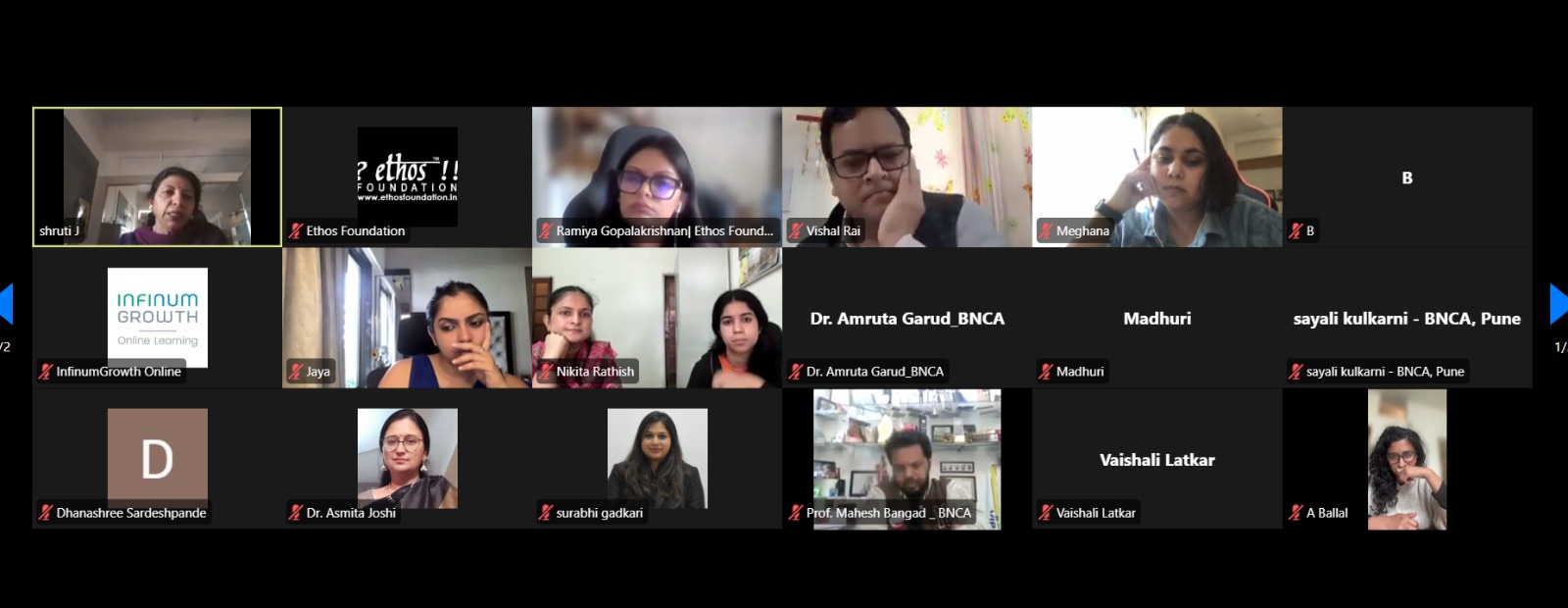
The first SpotFix roundtable marked a critical shift in understanding social, gendered, and institutional environments. The dialogue brought together educators from BNCA Pune and IGDTUW Delhi, as well as practising architects from M+P Architects, Space Matters, and SJK Architects, to examine how women navigate sites and professional fields with safety and dignity.

The panel revealed a consistent reality that women struggle because the ecosystem around these sites does not include them. The conversation highlighted that confidence on site grows from preparation, technical knowledge, institutional backing and collective presence. It showed that planning, contracts, orientation and cross-disciplinary dialogue are the structural conditions that decide whether inclusion is real or performative.

Phase two of this engagement will focus on capacity building for the students of BNCA Pune and IGDTUW Delhi, developed in collaboration with the architects and experts who were part of the panel. The next phase will translate insights into practical tools, guidelines and learning resources for faculty and students. Architectural sites are shaped by engineers, contractors, workers, consultants and young professionals in training. The inclusion should be meaningful and must be owned by the entire built environment ecosystem, acting as the mainstream professional responsibility.


Participatory Feedback Sessions

Our first Participatory Feedback Sessions Initiative kick-started with a collaboration with MAWI Design. Through one of their projects- a community-led community centre, the initiative places everyday life at the centre of design decision-making. The session examines how social interactions, livelihoods, rituals, and cultural rhythms shape the way shared spaces are used. It recognises that villages are living systems which are reshaped by people, seasons and collective gatherings.

The on-ground process has a survey, where volunteers and architects move through the village observing daily routines, engaging in informal conversations with residents, and documenting their emotions and social relations. This inquiry is strengthened further through festival-based spatial mapping during Pongal, capturing how streets, open areas, and informal nodes are transformed through processions, rituals, food, and gatherings.

The session was conducted on-site on January 15th and 16th by the MAWI Design team, along with two student volunteers to help support observation, documentation, and community interactions. The insights gathered during this phase will inform subsequent hotspot and adjacency walks, scenario-building workshops, and an impact reflection process, ensuring that the design evolves from lived experiences rather than assumptions.

This initiative represents a shift in how architecture engages with communities. It demonstrates how ethical, inclusive, and culturally grounded design processes can be structured, documented, and replicated across contexts. Ethos Foundation will curate the participatory methodology, enabling learning, and support reflective documentation, while MAWI Design leads facilitation and on-ground coordination. This partnership models how practitioners, institutions, and communities can collaborate to produce design processes that are socially accountable, deeply rooted, and responsive to everyday realities.


Sense N Sensibility 21.0 | Materials of Meaning: Session Highlights

This wasn’t just another lecture.
It was a collective pause to rethink what materials truly mean!

Sense N Sensibility 21.0 | Materials of Meaning, was a powerful and deeply engaging session that brought together 270+ individuals and multiple others through live broadcasts from 15+ architecture colleges, with the conversation extending even further through a live broadcast across campuses.

Led by the two speakers, Ar. Areen Attari (PYHT Bioarchitects) and Ar. Neelam Manjunath (Manasaram Architects), the session moved beyond conventional material discourse to explore how materials embody culture, ecology, craft and ethics. Through grounded practice-based insights, the speakers sparked thoughtful dialogue on bio-architecture, contextual design, and material responsibility, resonating strongly with both students and educators.

The high level of participation, questions, and reflections highlighted a growing curiosity among young architects to engage with materials as living narratives rather than mere construction elements. The diversity of colleges joining live made it a truly collective learning moment, reinforcing SNS as a platform that connects classrooms, practitioners and values-driven architectural thinking.

SNS 21.0 reaffirmed the relevance of slow, sensitive, and meaningful design conversations, leaving participants inspired, reflective, and eager for what comes next.


Local Gyan X SvaDes

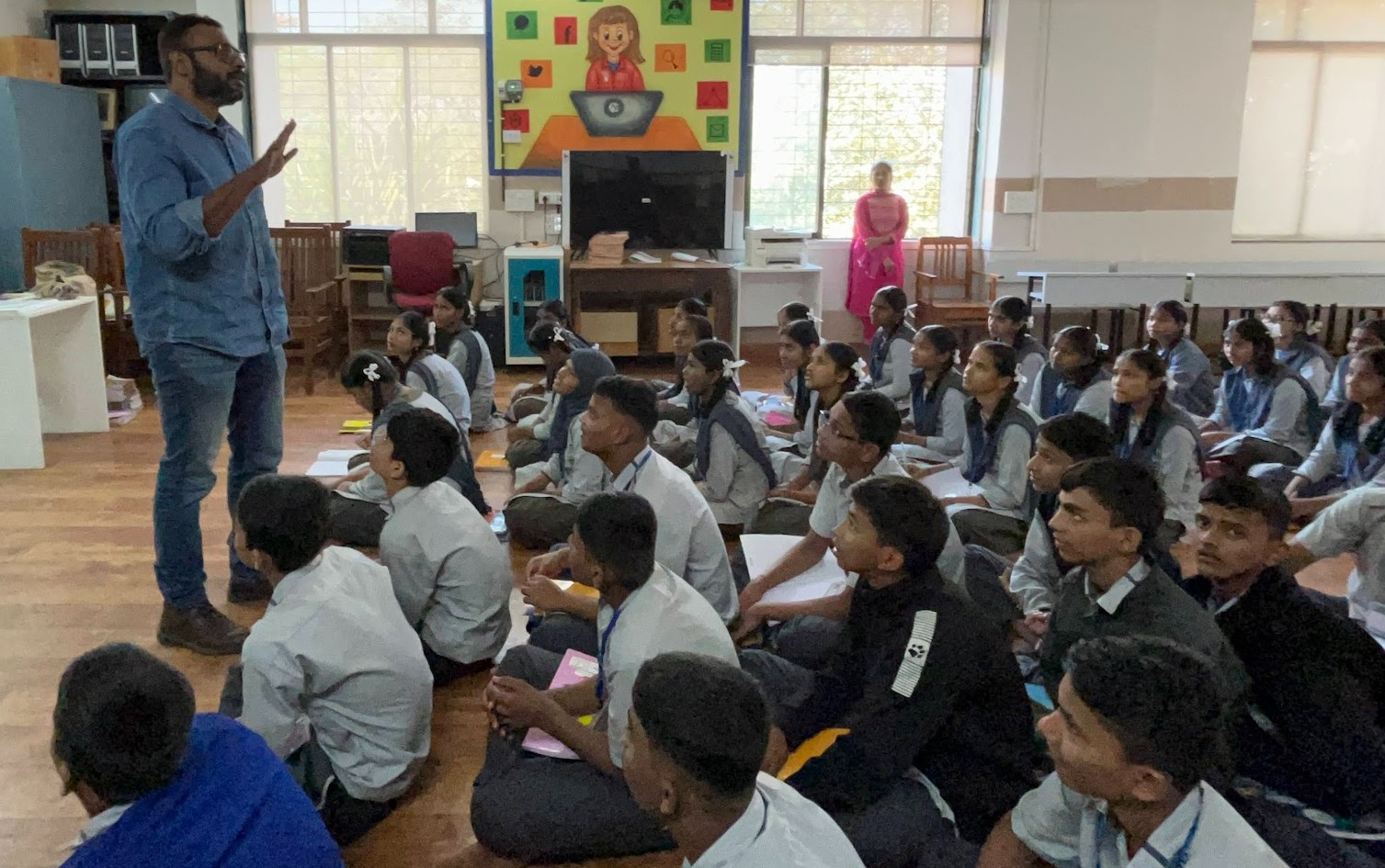
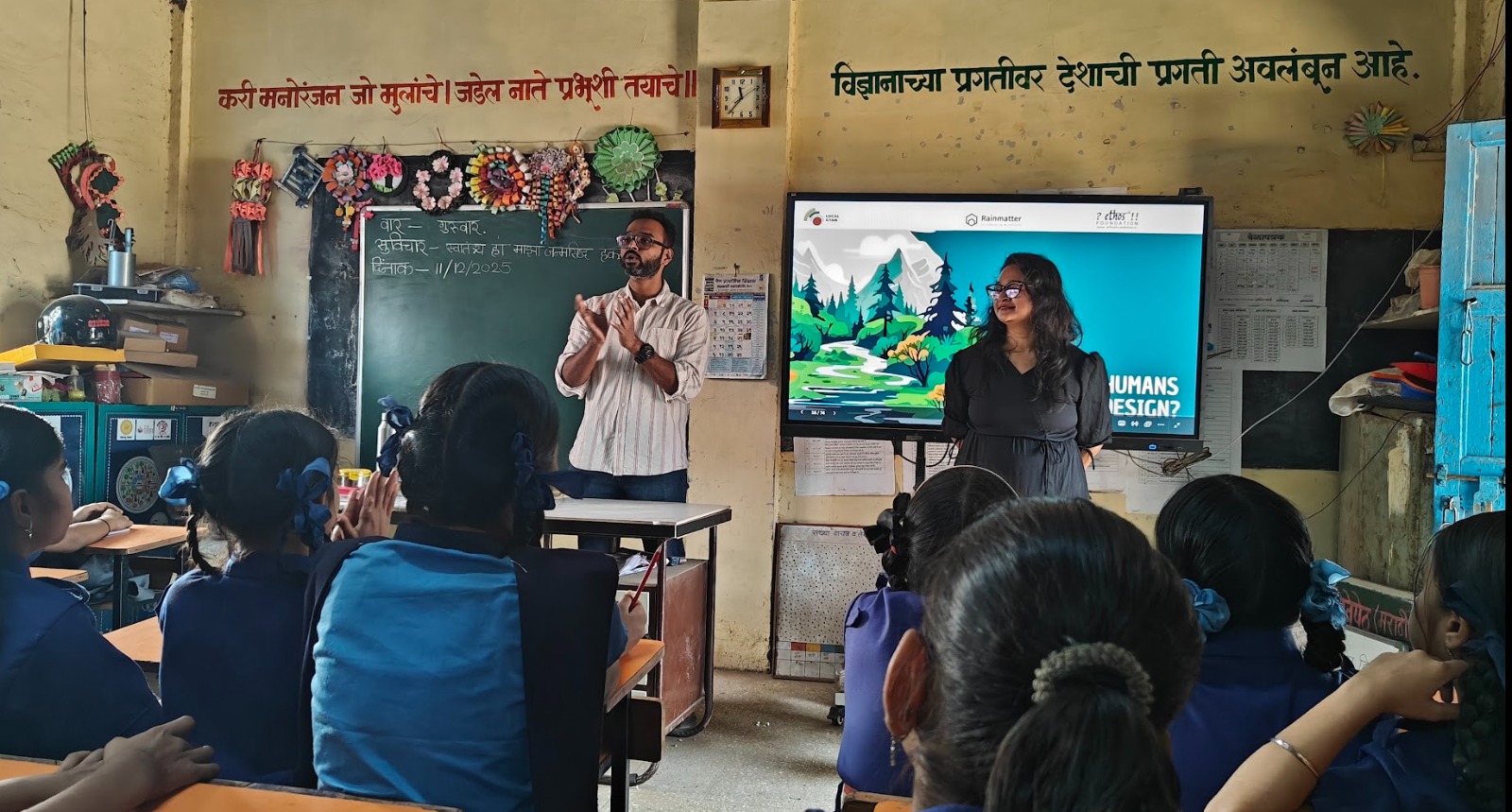
We are thrilled to share an update on our SVa-Des (See Value in Design) campaign. As we work toward our goal of 100 schools, we partnered with Local Gyan, a young organisation that is making the “invisible” systems of our cities visible to the next generation. Through interactive, illustrated lecture sessions, Local Gyan engages with students from 10 schools in understanding how everyday elements around them are designed, connected, and sustained. From streets and water systems to public spaces and services, these sessions make the workings of cities visible.

Progress Report:

  • Mission: Bridge the gap between classroom learning and urban reality.
  • Milestone: 9 out of 10 targeted schools have already been reached.
  • Timeline: Completion scheduled for the end of January.

We believe design literacy is a civic right. When students “See Value in Design,” they begin to see their own power to innovate and empathise with their community.


Arcause Social Internships
The Arcause Social Internships is an initiative bridging architecture and design education with India’s on-ground social realities. It connects students with NGOs and community-focused organisations working across sustainability, inclusion, heritage, and rural development.
This year, partner organisations included Karigar Shala Trust, Shelter Associates, WRI India, Social Design Collaborative, Gramiyo Foundation, Akshara Centre, The Rainwater Project, Sparc, Tiny Farm Lab, Aravali, INTACH Bhopal Chapter, Carbon Craft Design Pvt Ltd, Dronah, Inclusive Divyangjan Entrepreneur Association, Thumbimpressions LLP, and Iyal Naadi – Earth Matters.
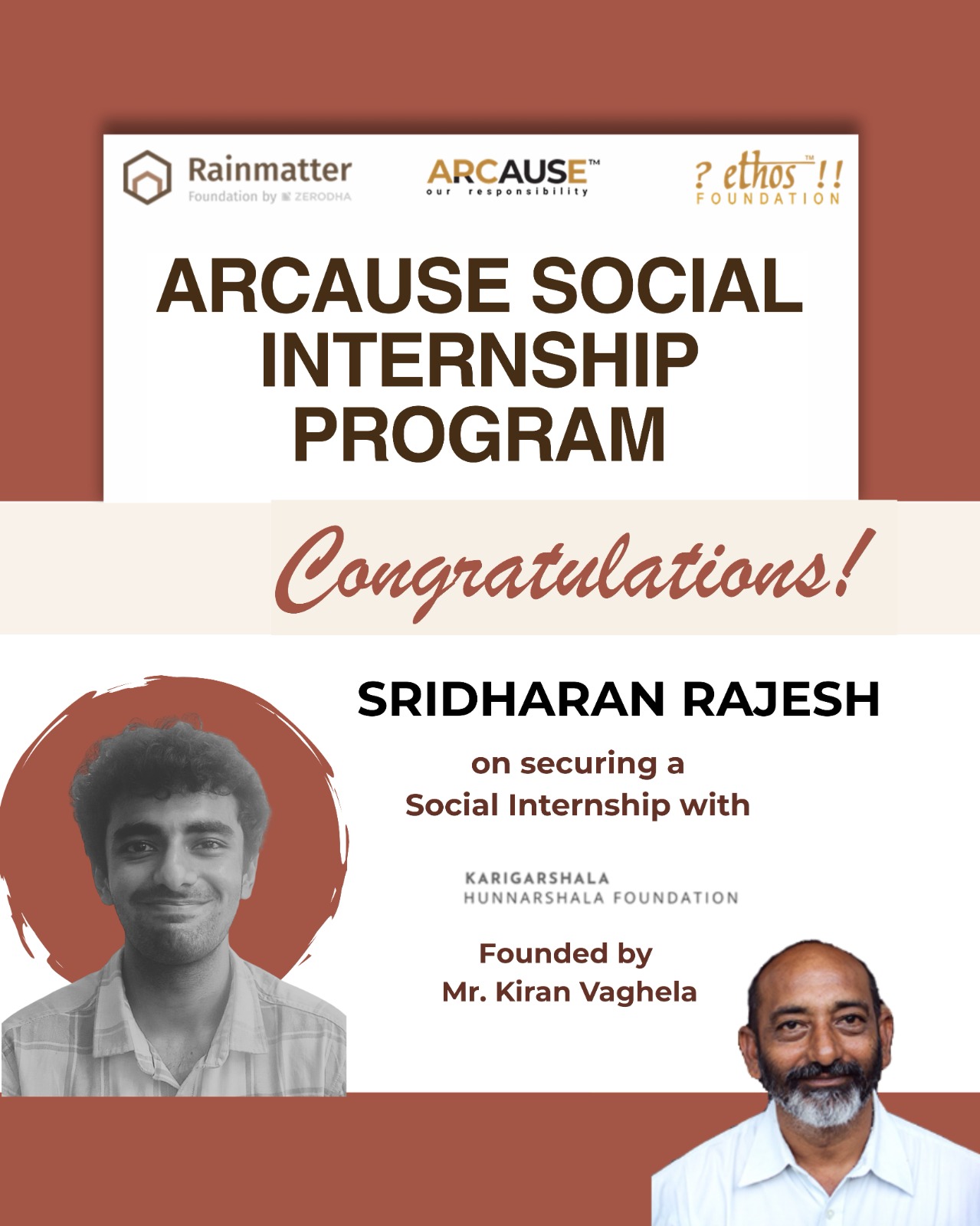
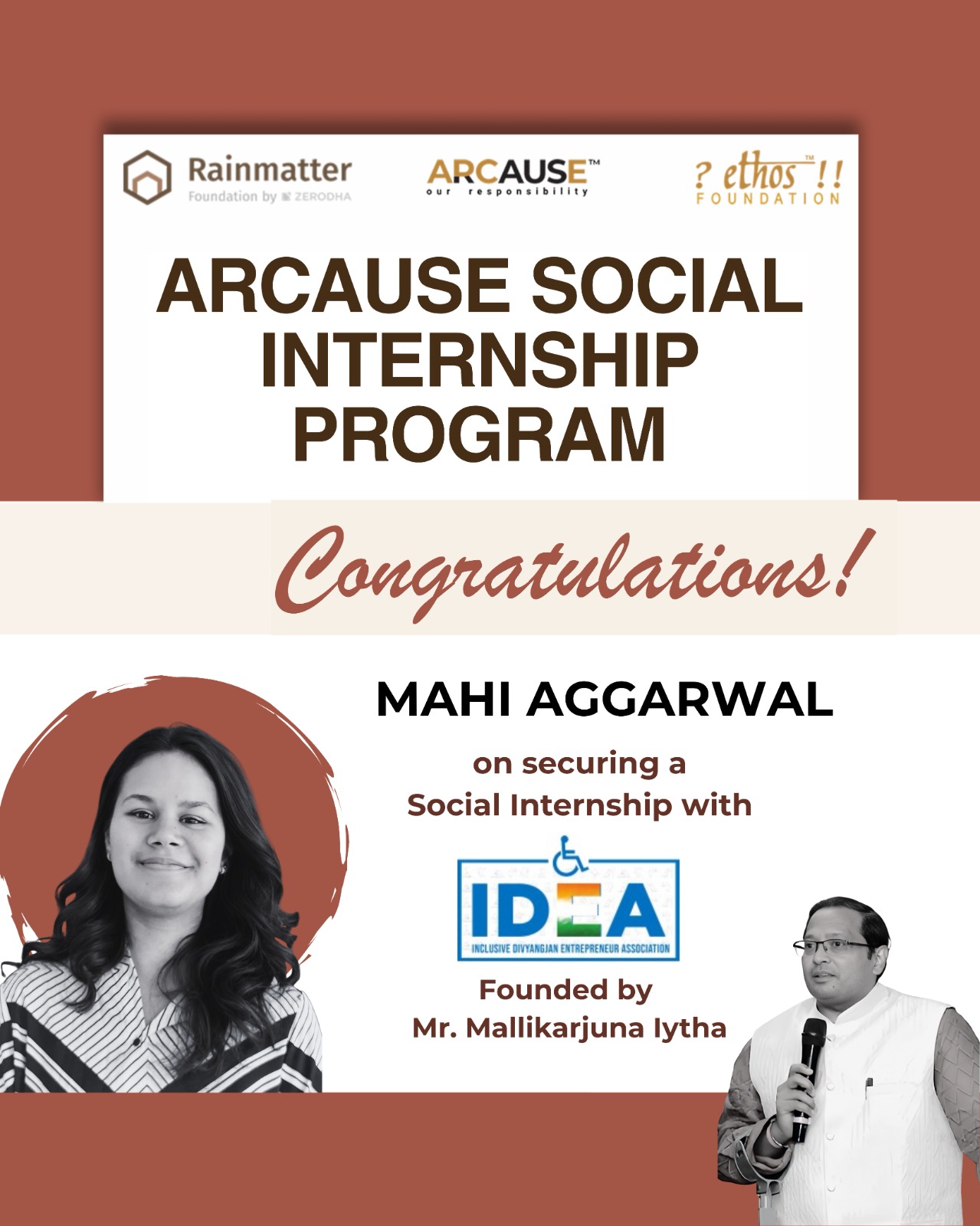
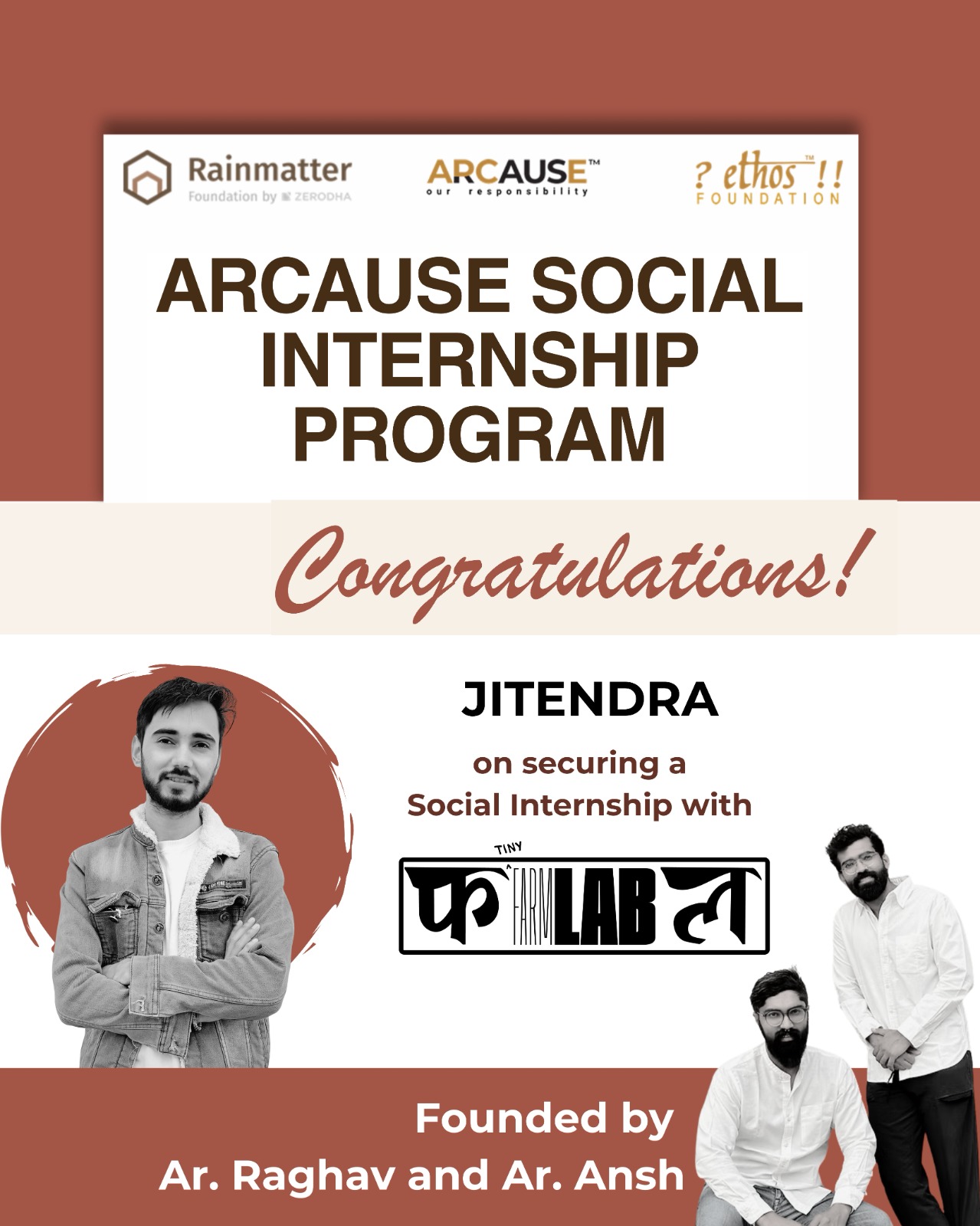
Several students have already secured impactful internships: Leelasree Akula with The Rainwater Project, Jitendra with Tiny Farm Lab, Lakshit Pathak with Social Design Collaborative, Mahi Agarwal with Inclusive Divyangjan Entrepreneur Association, and Sridharan Rajesh with Karigar Shala Trust, reflecting the program’s growing reach and relevance.


Snap Studio | BAC Prompt 2

Snap Studio is where design meets play – a hands-on series of 6 mini design challenges that blends learning, creativity, and social engagement. Across India, materials move through our hands with such familiarity that their stories are often invisible. Materials carry narratives of affordability, speed, resilience, and survival.

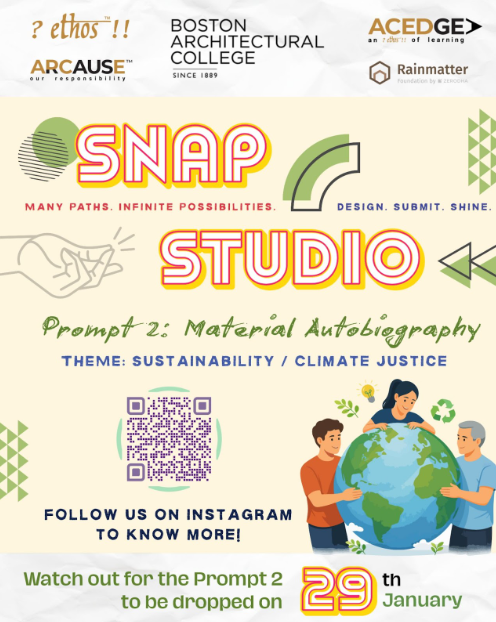
We are now onto Prompt 2 - “Material Autobiography”, which is launching today on 29th January 2026. This prompt invites the participants to focus on different materials, which can be achieved through design. Through storytelling, they can choose one everyday object and narrate the life of this material. They can transform the material into a small act of re-use or re-imagination to fight for the planet’s future.

This prompt asks designers to take responsibility for how materials are chosen, discarded, and reimagined. Material Autobiography expands the climate conversation into the mainstream. It frames sustainability and climate justice to shape ecosystems, livelihoods, and the future we collectively inherit. If you work with school children or are associated with any school, we invite you to help spread the word about this initiative.

Participatory Feedback Sessions - MAWI

Our first Participatory Feedback Sessions Initiative started with a collaboration with MAWI Design. The session examines how social interactions, livelihoods, rituals, and cultural rhythms shape the way shared spaces are used. The following are some of the community reflections sent by MAWI after their participatory session.
Cultural traditions remain deeply embedded in village life, from kolam drawings and daily temple rituals to festivals like Rekla races during Krishna Jayanthi and Maattu Pongal, traditional Pongal games, and the revival of Devaraatam folk dance after years of dormancy. Public life centres around key spaces such as the Arasamaram (banyan tree) as a symbolic social node, the bus stand as a major activity hub, the tea shop near the government school as a daily gathering spot, and the open ground beside the proposed community centre that continues to host poojas and communal meals.
Temples shape both social and spatial life. The Maduraiveeran Temple serves the working community, while the Balakrishna Temple, with its gopuram hosts Pournami poojas and large celebrations, supported by processional routes and a ceremonial entrance zone. Education-driven migration is increasing. With the government school now operating only till 8th grade and low enrollment, many students travel to Pollachi and Udumalpet, leading to partial depopulation of the village.
Livelihoods remain rooted in agriculture and coir production, with the local coir factory as a key employer. Residents expressed strong interest in using the community centre for agricultural and educational initiatives. Multiple linguistic identities coexist, alongside visible social hierarchies that influence access to public spaces.
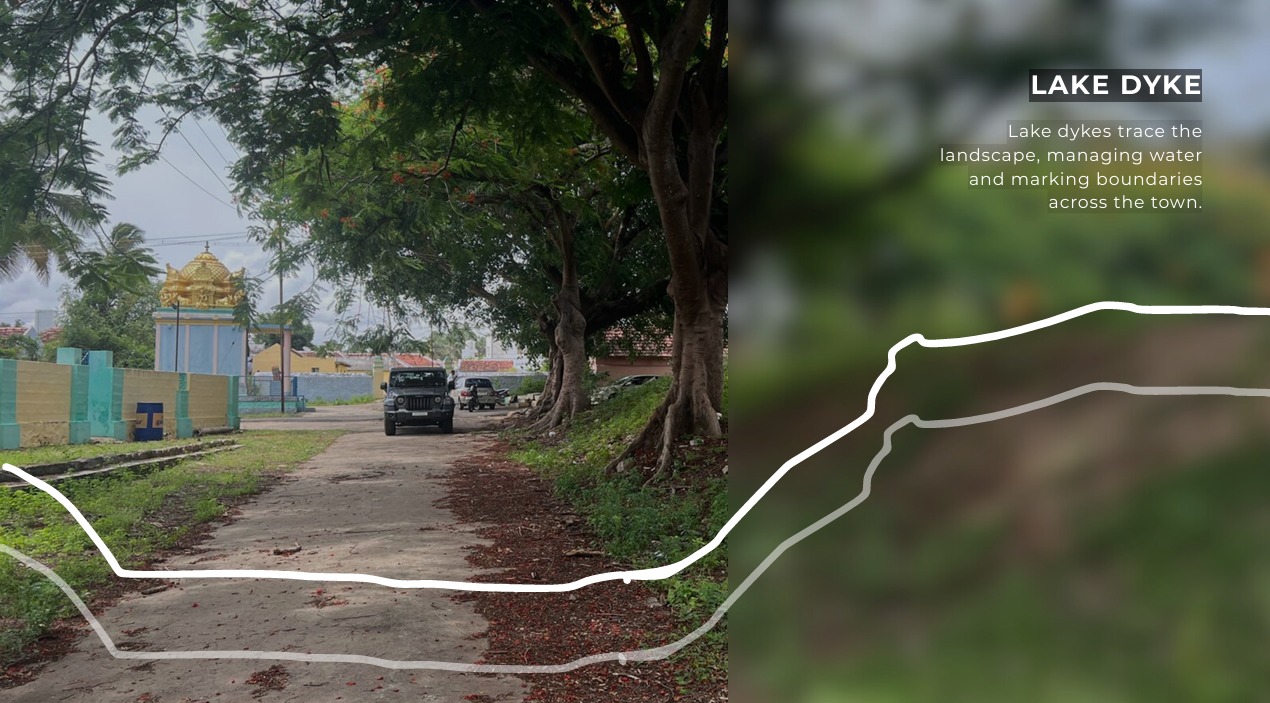
Key concerns include poor waste management near the lake, limited public seating, and declining livestock health, highlighting urgent infrastructure and welfare needs.


January 2026 at Arcause marked a month of focused action, collaboration, and community-driven learning. With the Sense N Sensibility 21.0, the speakers sparked thoughtful dialogue on bio-architecture, contextual design, and material responsibility, resonating strongly with both students and educators. For our online social-media competition of Snap Studio, we announced the winners for Prompt 1 - Everybody Plays. Following that, we also recently launched the BAC X Acedge | Prompt 2 - Material Autobiography on 29th January 2026. The submissions are open until 16th February. The Spot-Fix event revealed a consistent reality that women struggle because the ecosystem around these sites does not include them.

The Participatory Feedback Sessions initiative, launched with MAWI Design, placed everyday life, cultural rhythms, and lived experiences at the core of design decision-making. A major milestone was the progress of Arcause Social Internship Placements, with students beginning their journeys with community-focused organisations across India. The launch of Local Gyan x SvaDes engages with students from 10 schools in understanding how everyday elements around them are designed, connected, and sustained. Alongside this, Sva-Des onboarded catalysts to set the foundation for structured engagement, mentorship, and long-term design-driven social collaborations.

Together, January reflected the commitment to learning through action. Here, different initiatives led to learning through dialogue and observation, helping education extend beyond classrooms and communities.

Arcause Spotlight Announcement

Indian cities are at a defining moment. Rapid urbanisation, climate stress, social inequities, and fragmented governance continue to shape everyday life. Arcause Spotlight is our first regional event in Delhi, which emerges as a space to bridge this gap, bringing together design, policy, community action, and on-ground experience to reimagine cities that are safe, smart, inclusive, and sustainable.

The platform will recognise and amplify the work of alumni, awardees, grantees, and contributors from across the Arcause ecosystem. It will create opportunities for dialogue, visibility, and collaboration among practitioners, innovators, and grassroots organisations. Through public engagement, experiential learning, and cross-sector exchange, Arcause Spotlight aims to strengthen urban causes and the communities working on them.

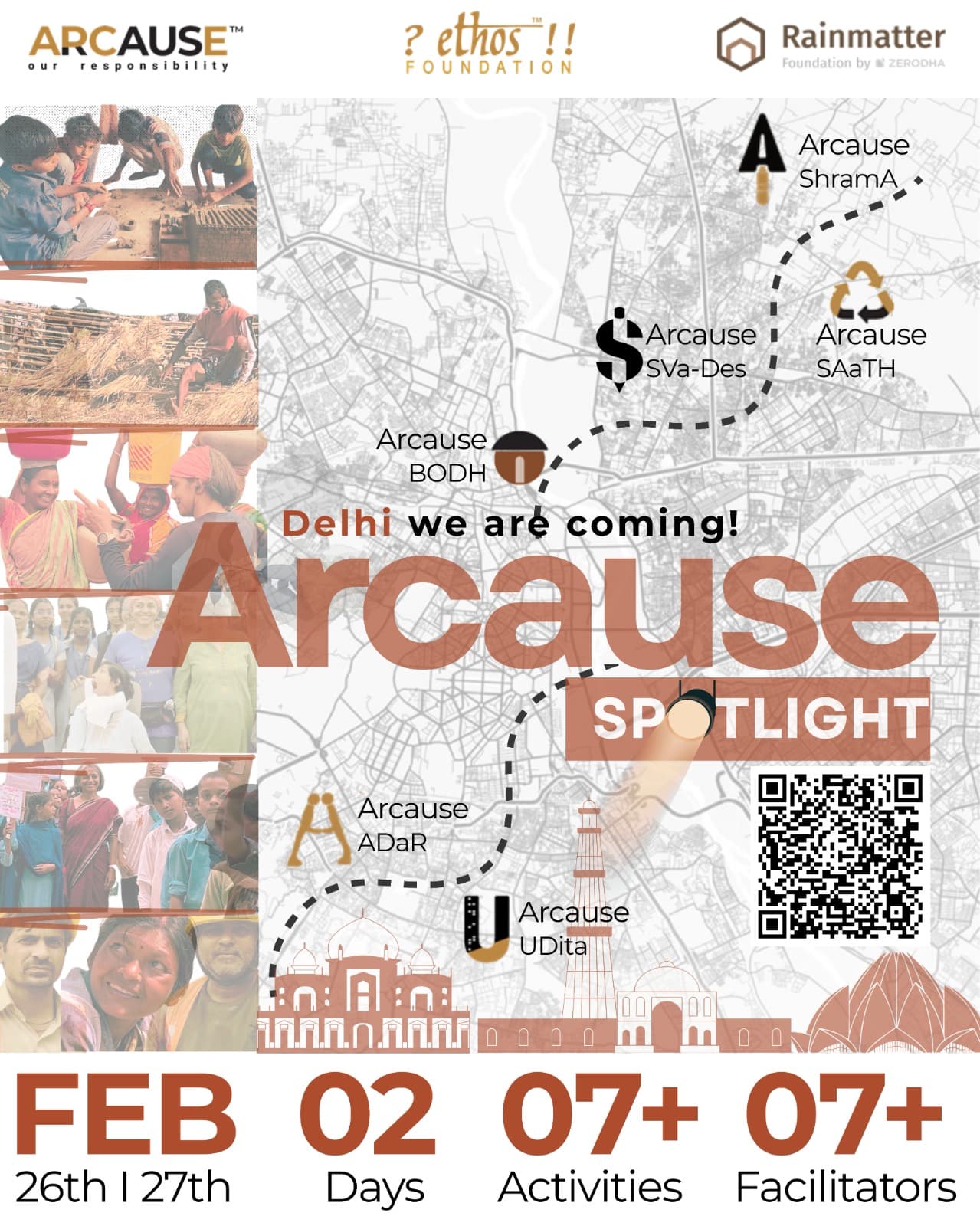
  1. 26th February: Arcause will be curating a day of walks, workshops, engagements, and encounters across the city, exploring heritage, labour, accessibility, waste, safety, and everyday urban life through on-site engagement.
  2. 27th February: the engagement will continue within the Municipalika event, with a dedicated Arcause Spotlight space for discussions, reflections, and sessions emerging from the previous day’s activities.

Activities and detailed programming will be announced soon.

Post session: The AI master class and impact of AI in today’s world

The second session of the Master Class Series marked a transformative milestone in the ongoing dialogue on AI in education. This session - ‘Augmented Intelligence: Empowering Educators with AI in Architecture’ by Ar. Anurakti Yadav emerged as a learning experience that every modern educator needs.

The session, which took place on 7th February 202,6 was impactful, with over 50 faculty members participating. Through interactive Q&A and live demonstrations, the session created a clear and practical foundation for experimentation with AI. A shift was observed within the Architecture department, as educators recognised AI as a powerful tool for professional growth and pedagogical enhancement. The session talked about important conversations around various elements of AI, supported by a few engaging activities. The session also received an overwhelming response for follow-up training, reflecting a strong interest among faculty to embrace the future of AI-driven pedagogy.

The Master Class session had an impact on helping educators augment their capacity to teach and lead with greater clarity.


Masterclass 3 Announcement

Architectural education often separates theory from practice. Usually, history and theory remain in the lecture hall, while application is confined to the studio. This gap produces individuals who have knowledge but cannot connect it to practice and struggle to translate it into meaningful design action. To nurture a culture of holistic synthesis, we must begin with pedagogy itself.

Masterclass 3: “From Theory to Design: Forming Links for a Holistic Education” will be led by Ar. Neelkanth Chhaya. Drawing from decades of professional practice and academic leadership, this session aims to empower faculty to create a curriculum in which theory serves as a tool for observation that can be integrated into practice. This masterclass empowers educators to reframe theory as a critical tool for observation and interpretation in design practice.

:spiral_calendar: 7th March 2026
:clock3: 10:00 AM – 01:00 PM
:computer: Hybrid | Online: Zoom | Offline: SCAD Auditorium, Saveetha College of Architecture and Design, Chennai
Please spread the word to all Architecture and Design faculties to rethink the connections between theory and studio, and work towards a reflective architectural education.

Municipalika event announcement: All facilitators and confirmed activities

Arcause Spotlight at Municipalika is hosting its first regional event. It is a platform that brings together diverse voices shaping the future of cities. As part of this larger ecosystem, Arcause participates as a curated engagement and experience partner, contributing its lens on socially responsible, inclusive, and sustainable urban design.

The event brings together practitioners, communities, and young changemakers to experience Delhi through accessibility, memory, labour, waste, safety, and inclusion. The event is happening on the 26th and 27th of February.

On Day 1, Arcause will be curating a day of walks, workshops, engagements, and encounters across the city.

  1. Design Literacy: Stories, Identity, and Resilience in Delhi’s Informal Settlements

Facilitator: Ikhat Society

  1. Monuments & Memory Walk

Facilitator: Dronah

  1. Understanding Accessibility in Delhi

Facilitator: Inclusive Divyangjan

  1. Waste, Urban Design & Innovation

Facilitator: Malba Project

  1. Community Spaces, Access to Design & Affordability

Facilitator: Social Design Collaborative

  1. Understanding Accessibility in Delhi

Facilitator: Samarthyam

  1. Interaction with Construction workers ShramA

Facilitator: Team Arcause

  1. Night Safety Walk

Facilitator: Safetipin

On Day 2, the engagement will continue with a dedicated Arcause Spotlight space for discussions, reflections, and sessions emerging from the previous day’s activities.

  1. Welcome & Engagement
  2. Reflections & Urban Prototyping Workshop
    Facilitator: Payaswini Tailor (Antara)
  3. Recognition Ceremony
    SGG | Saath Grants | DEA | Bridge | Internships | Volunteers | Clubs & Special Mentions
  4. Valedictory Session

Spread the word as we learn, unlearn, and reimagine urban futures.

SNS 22.0 Annoucement

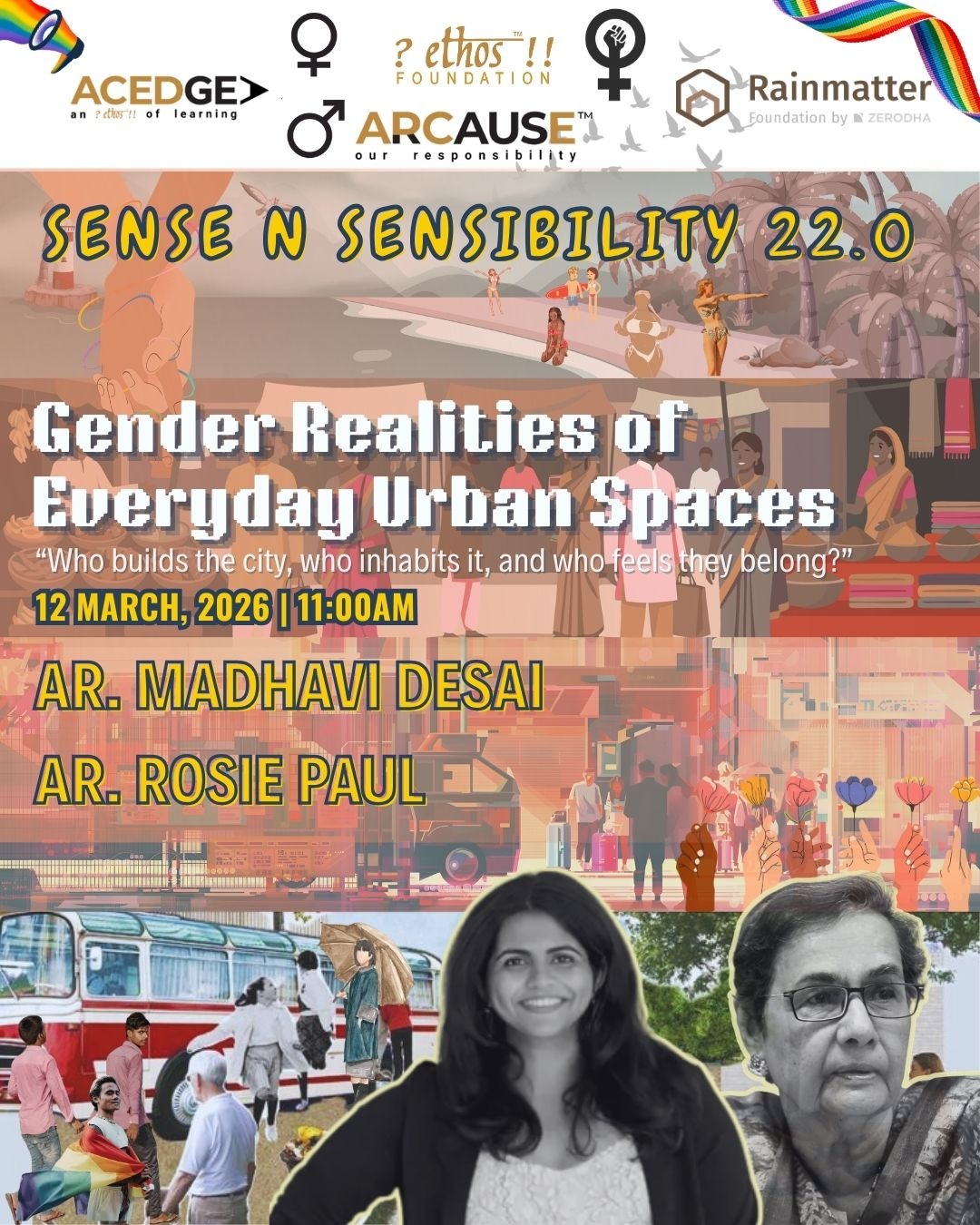
Sense N Sensibility is a lecture series that engages critical questions at the intersection of architecture and social responsibility. The upcoming 22nd edition on 12th March 2026, titled “Gendered Realities of the Urban Everyday,” explores how cities are not neutral spaces, but environments shaped by lived experience, labour, domestic life, movement, and access. As we approach Women’s Day, the conversation reflects on how gender influences the ways space is occupied, negotiated, and constructed.

The session brings together Ar. Madhavi Desai, an architect, researcher, and author whose work has significantly shaped discourse on gender and architectural history in India. Alongside her, Ar. Rosie Paul, Co-founder of Masons Ink Studio, is leading gender initiatives within her practice and working closely with women construction workers. Through presentations and dialogue, the session will examine how everyday realities, from domestic spaces to construction sites, reshape our understanding of urban life.