December 2025- June 2026
1. OVERVIEW
The Climate and Ecosystems team at Vidhi Centre for Legal Policy (Vidhi) works at the intersection of environmental law, conservation, and community livelihood. In furtherance of this work, during the reporting period (December 2025- June 2026), Vidhi organised 1 national-level event and was a key partner in 2 national-level multi-stakeholder convenings. In addition, the team conducted 12 invited training and capacity-building sessions for government agencies, academic institutions, and civil society organisations, participated in 4 invited panel discussions, and attended 2 invited consultations and expert meetings, contributing to knowledge building and policy dialogue across a wide range of environmental and conservation issues.
2. PROJECTS UNDERTAKEN
During this period, the team undertook extensive legal and policy research across its core research and policy areas. The team also worked on capacity building of key government and non-government stakeholders, and advocacy support to conservation partners to strengthen environmental governance in India.
The work of Climate & Ecosystems team at Vidhi can be categorised into three core research themes: Ecosystem Restoration and the Management of Invasive Alien Species; Policies for Human–Wildlife Conflict; and Conservation of Wildlife Outside Protected Areas (PAs); —alongside its flagship periodical tracking environmental proceedings in the parliament-, ‘The Green Hour’.
A. PREVENTION AND MANAGEMENT OF ALIEN INVASIVE SPECIES
Invasive alien species are among the most underestimated threats to India’s ecological security, rural livelihoods, and economy. Of more than 2,000 alien species recorded in the country, 330 have been declared invasive. Just ten of these are reported to account for documented economic costs of around USD 127.3 billion over six decades — a burden that, by available estimates, places India among the highest invasion-cost-bearing countries in the world. Yet India still has no dedicated legal framework to prevent, manage, or coordinate action against biological invasions.
I. Research on Legal and Policy Challenges in Managing Aquatic Invasive Species with Red-Eared Slider as Case Study (Ongoing)
The Red-Eared Slider (RES) is a medium-sized, semi-aquatic freshwater turtle native to the midwestern United States and northern Mexico. The RES is identified as a global invasive species and is listed among the World’s 100 Worst Invasive Alien Species. Despite global restrictions, the RES has a significant and expanding footprint in India. A 2024 technical report by the Zoological Survey of India (ZSI) estimates that there are between two to five million individual RES in India. The species has been imported both legally and illegally and bred in captivity for decades to meet the demands of the large pet market. These turtles are readily available in pet and aquarium shops across the country for a few hundred rupees. It has a significant impact on the conservation of native turtles, as well as other aquatic fauna through predation of tadpoles, eggs, and through spread of pathogens. However, there is no specific legal/ policy intervention to control the spread of RES in India.
The team has conducted a comprehensive legislative mapping of the legal framework governing the spread of invasive species in India with RES as a case study for aquatic ecosystems. This includes detailed analysis of domestic laws, international instruments, and global best practices relating to invasive species.
The report is presently under peer-review and expected to be published soon. When published, it will be the first of its kind report highlighting the key governance challenges and a primer for legal and policy reforms in prevention and management of RES and other such aquatic invasive species.
B. HUMAN-WILDLIFE INTERACTIONS
The team’s work in this area seeks to address broader gaps in wildlife governance through research, stakeholder engagement, and policy development. During the reporting period, this work encompassed multiple initiatives:
-
Research on Model Framework for Fair Compensation of Victims in Human-Wildlife Conflicts in India(Ongoing)
Human–wildlife conflict in India exacts a heavy toll—loss of life, injury, crop and livestock damage, and property loss—yet compensation for affected communities remains fragmented, inconsistent, and without any coherent statutory framework. Relief is scattered across disparate state schemes and lack any uniform government standard for compensating victims. This leads to not just delayed but often inadequate, and arbitrary redressal. Unfair compensation, in turn, erodes public tolerance toward wildlife and undermines conservation efforts.
Key Progress Made
As part of this research project, Vidhi is undertaking original legal and policy research toward benchmarking for a “Model Framework for Fair Compensation for Victims of Human–Wildlife Conflict in India”. The work has involved a comprehensive review of the regulatory landscape, a comparative analysis of state compensation schemes and parallel statutory regimes such as the Railways Act, Motor Vehicles Act, and Disaster Management Act, etc. and an assessment of state-wise conflict data and global best practices, complemented by consultations with government and civil-society stakeholders. Drawing on these findings, the team is now preparing the final report setting out the model framework. Once published, the framework is expected to serve as a ready, evidence-based reference that equips the MoEFCC, state governments, and decision makers to reform compensation policies—delivering fairer, faster redress for affected communities while strengthening between people and wildlife.
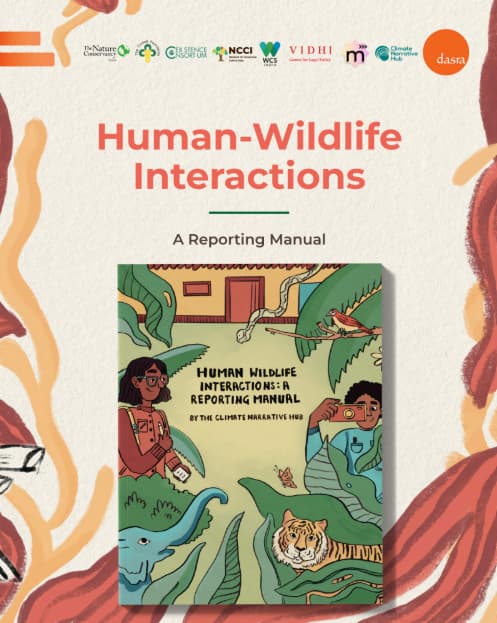
Vidhi also contributed as a knowledge partner to “Human–Wildlife Interactions: A Reporting Manual”, launched by the Climate Narrative Hub (an initiative of Momentum Shifts and Dasra, and supported by Rainmatter Foundation) on 23 March 2026. Developed in collaboration with several conservation and civil society organisations, the manual seeks to strengthen the quality of reporting on human–wildlife interactions by encouraging more accurate, contextual, and nuanced narratives that move beyond conflict-centric portrayals. Vidhi contributed legal and policy perspectives to support a more informed public discourse on human–wildlife coexistence.
Bird-window collisions are among the most under-recognised human-induced causes of bird mortality. Yet India, home to over 1,300 species and a key node on the Central Asian Flyway, has no national assessment and no regulatory framework mandating bird-safe building design, even as per some industry estimates 70% of the built environment is yet to be constructed. By framing bird-safe design as a question of law and regulation, Vidhi is laying the groundwork for coordinated research, standards, and policy reform.
Key Progress Made
The Climate & Ecosystems team in collaboration with IISER, Tirupati, and Nature Conservation Foundation has worked on a proposal on the ‘Prevention and Management of Bird–Window Collisions.’
To bring this largely invisible issue onto the research and policy agenda, Vidhi convened the “1st National Symposium on Bird-Window Collisions in India”, the first gathering of its kind, in New Delhi on 12th May 2026, alongside IISER Tirupati, the Nature Conservation Foundation, Feather Library, and the Rainmatter Foundation as partners. The symposium brought together over 100+ experts across science, architecture, industry, media, and government, and is working on publishing the proceedings as a report that will serve as a national reference point for next steps required by different stakeholders. The symposium also marks an important step for Vidhi towards developing legal, policy, and design recommendations to address bird–window collisions in India.
The proceedings of the symposium are being drafted and will be published in July. Vidhi is also in discussion with some key players in the building and design industry, and other key stakeholders for a long-term partnership to address the issue through law as well as voluntary standard adoption by the industry.
C. THE GREEN HOUR
Since 2023, this open-access publication contributes to ongoing efforts to improve accessibility and understanding of environmental discussions within Parliament by presenting parliamentary data and committee proceedings in a structured and analytical format. Seven issues have been published to date. Across the last six issues, the team tracked 10 Parliamentary sessions, analysing 70,705 parliamentary questions and 2,348 responses from the Ministry of Environment, Forest and Climate Change (MoEFCC), thereby creating a valuable repository of legislative and policy developments relating to environmental governance.
Key Progress Made
- The Green Hour, Vol. 3, Issue II, covering the Monsoon Session 2025 published on 16 April 2026.

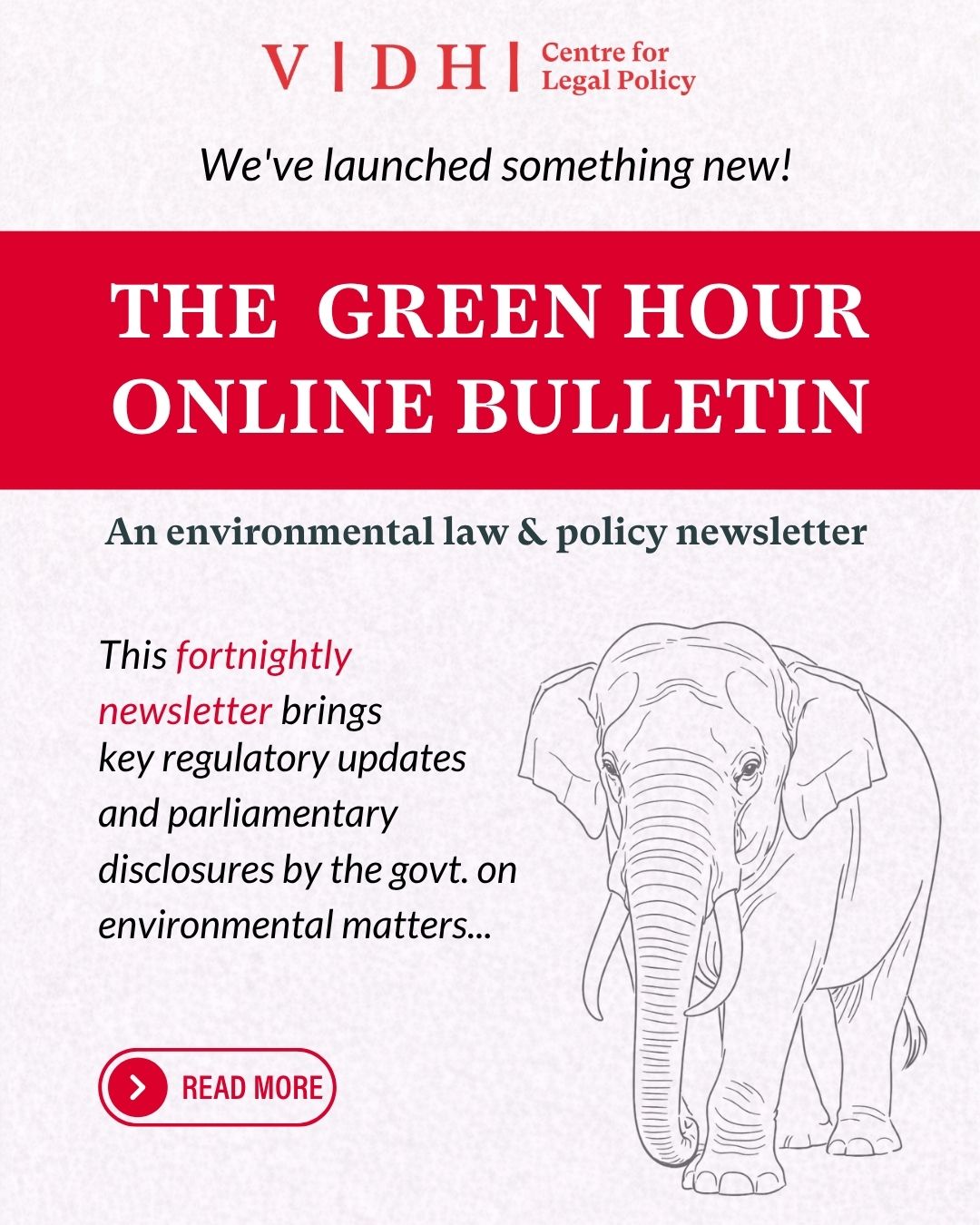
- On 30th January, 2026, the team launched a fortnightly newsletter “The Green Hour Online Bulletin” on Substack, publishing 11 editions to date (since January 2026). The newsletter was also launched on Grove for wider dissemination. The newsletter helps make complex legal and policy developments more accessible and easier to track and respond. It closely monitors changes in environmental regulations, as well as improves public engagement on environmental laws which escape public scrutiny. For instance, many of the government notices for public comments are only available on government websites like E-Gazette, Parivesh Portal, MOEFCC Website and websites of Parliament which are not otherwise reported by mass media. Such notices usually have very short deadlines to respond. The Green Hour Bulletin is filling this gap by informing the practitioners, researchers, and civil society organisations of all such developments in a timely manner.
All editions of the newsletter are published on Substack and can be accessed and available for free subscription in the following link: The Green Hour | Substack.
3. KEY ACTIVITIES & OUTPUT
A. PUBLICATIONS BY VIDHI
| S.NO. | PUBLICATION | DATE | IMPACT |
|---|---|---|---|
| Launch of The Green Hour Online Bulletin (Fortnightly Substack) | 30 January 2026 | Expanded reach and opportunities for action by stakeholders with timely environmental law updates; covers gazette notifications, Protected Area orders, and public comment deadlines. Eleven editions published to date. | |
| The Green Hour Vol. 3 Issue II (Monsoon Session 2025) | 16 April 2026 | Covers Monsoon Session 2025; introduces new refined methodology for parliamentary analysis. |
B. PUBLICATIONS IN COLLABORATION WITH VIDHI
- Human–Wildlife Interactions-
A Reporting Manual under the Climate Narrative Hub initiative- This guide aims to be a resource for journalists and storytellers reporting on human–wildlife interactions. Vidhi along with other partners- Network for Conserving Central India, Wildlife Conservation Society–India, Coexistence Consortium, Corbett Foundation, Mongabay–India, and The Nature Conservancy contributed to this publication. It encourages reporting that goes beyond conflict-focused narratives and reflects the full spectrum of relationships between people and wildlife. By providing context on the ecological and systemic factors shaping these interactions, the guide aims to promote more accurate, nuanced, and constructive storytelling that can inform public understanding, support better policy discussions, and foster shared responsibility and coexistence.
- Proceedings and Policy Recommendations from the 4th National Conference on Lesser Known Species of Central India-
Vidhi Centre for Legal Policy served as a knowledge partner to the 4th National Conference on Lesser-Known Species of Central Indian Landscape, held on 16–17 January 2026 at Bhopal and organised by the Society of Nature Lovers, Conservators and Local Tourism Development (SNHC) in partnership with the Madhya Pradesh Forest Department and the MP State Biodiversity Board. The conference brought together senior conservation scientists, forest officers, researchers, community practitioners, and editors from leading environmental media outlets across two days.
Vidhi has drafted the proceedings of the conference with key insights and key policy recommendations drawing from the experiences and suggestions shared by the experts across each session. The proceedings consolidate evidence-based recommendations across a wide range of legal, regulatory, and institutional areas. These include recommendations such as enforcement of existing statutory provisions on flow alterations into protected riverine habitats and on riparian zone regulation; reform of the Wildlife (Protection) Act schedules to reflect conservation status; protection of Open Natural Ecosystems currently classified as wastelands; and notification of pending protected area boundaries. The document also brings together site-specific and replicable institutional models, ranging from restart of discontinued state-level species recovery programmes, scaling of ecological-flow notifications, expansion of community conservation reserves, and recognition of citizen science and traditional ecological knowledge as legitimate instruments of biodiversity governance. Taken together, these recommendations bridge scientific findings, community-led conservation practice, and the formal legal and policy system.
The document is intended for use by government departments, researchers and policy makers, and other institutional partners working in conservation of biodiversity and natural ecosystems. Vidhi will use this document to inform its ongoing work on environmental law and biodiversity governance, including its engagement with policy reform on lesser-known species conservation, river ecosystem management, and community-based conservation governance.
C. OPINION PIECES
| ARTICLE TITLE | OUTLET | DATE |
|---|---|---|
| Revised definition of Aravallis will hurt its ecology | The Indian Express (Print) | 26 December 2025 |
D. EVENTS CONCEPTUALISED AND HOSTED BY VIDHI
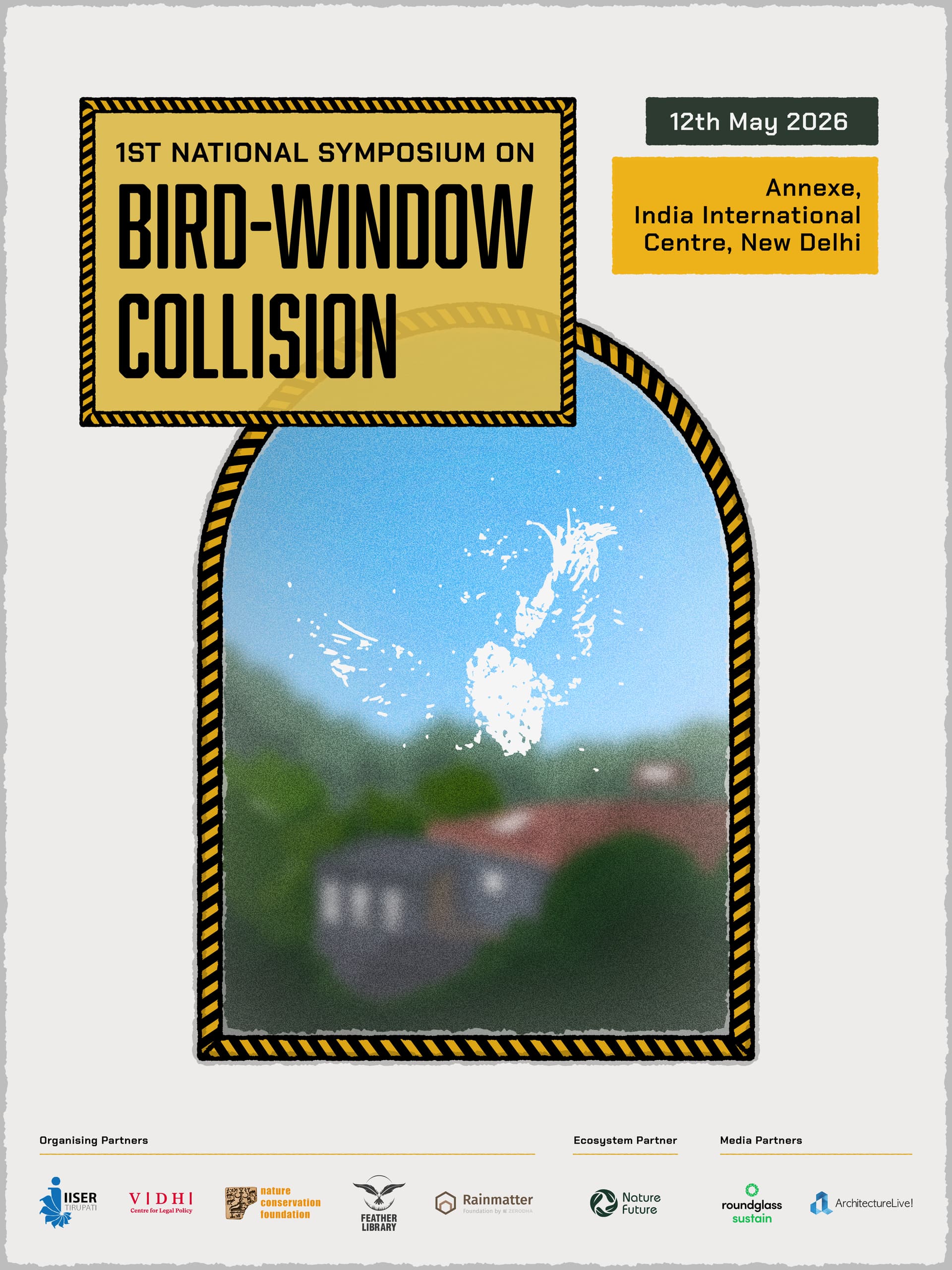
On 12 May 2026, Vidhi convened the 1st National Symposium on Bird-Window Collisions in India in New Delhi, in association with IISER Tirupati, the Nature Conservation Foundation, Feather Library, and the Rainmatter Foundation. The event addressed a significant but largely invisible conservation problem: birds are physiologically unable to perceive glass as a solid barrier, and with no national assessment, no regulatory framework, and 70% of India’s built environment yet to be constructed, the window for preventive policy action is narrow. Coinciding with World Migratory Bird Day 2026 and the 60th anniversary of the International Waterbird Census, the symposium brought together over 100 senior professionals across ornithology, wildlife veterinary practice, architecture, green building standards, urban design, civil society, media, and government.
Key insights from the day underscored the scale and urgency of the issue. Field data from rescue organisations in Bengaluru recorded a rising trend in collision cases across resident and migratory species, with over 110 species documented. Several affected species are listed under Schedule I of the Wildlife (Protection) Act, 1972 and on the IUCN Red List. Speakers from Saint-Gobain India and Green Business Certification Inc. confirmed that bird-safe solutions, including ceramic frit patterns, acid-etched glass, and retrofit window films, exist and are certified, but awareness is negligible, local manufacturing is yet to start, and regulatory mandate non-existent. A striking consensus emerged that design accounts for 70% of the outcome, yet bird-safe design is absent from building bylaws, Environmental Impact Assessments, green building credits adapted for Indian conditions, and urban master plans. Panelists from ICLEI South Asia, EDS Global and the Institute of Urban Designers India stressed that advocacy must target state governments, and that grassroots citizen demand must accompany any regulatory push to be effective.
Three cross-cutting themes defined the way forward:
First, India urgently needs a dedicated, structured data ecosystem for bird-window collisions, with corporate and institutional campuses, wildlife rescue centres, and citizen science platforms as the primary entry points, integrated eventually into the State of India’s Birds framework.
Second, the symposium identified several concrete legal and policy levers which include bird-safe provisions in building bylaws, urban master plans, and standards adapted for Indian species and construction typologies.
Third, organizations who are working at the interface of conservation and advocacy must build a coordinated civil-society and media coalition to make the issue visible enough to generate political acceptability for regulation.
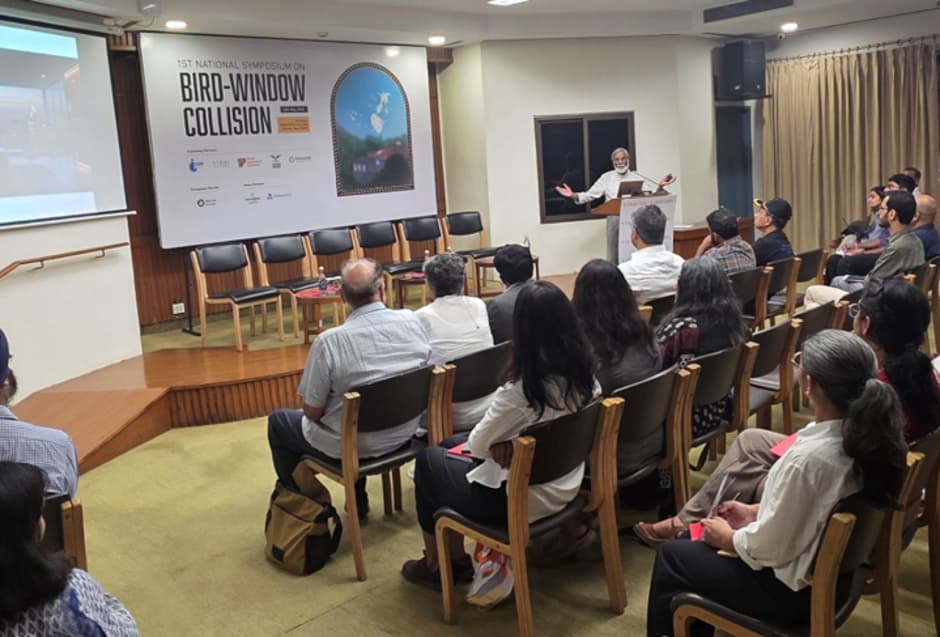
A short event update is posted here. The detailed proceedings are being compiled and will be published soon. Vidhi is also working with the stakeholders for long-term collaborations to translate the ideas discussed for this invisible conservation problem to a concrete regulatory and design reform agenda.
E. EVENTS CO-HOSTED BY VIDHI WITH PARTNER ORGANISATIONS
-
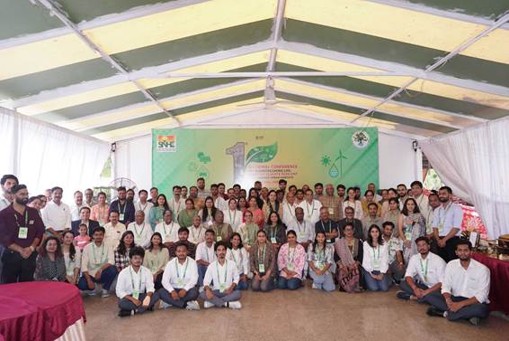
1st National Conference on Mainstreaming LiFE: Building Climate Resilient and Sustainable Urban Habitats (with SNHC India) (30 -31 May 2026)
On 30 and 31 May 2026, Vidhi participated as a knowledge partner in the “1st National Conference on Mainstreaming LiFE: Building Climate Resilient and Sustainable Urban Habitats”, held at EPCO Conference Hall, Bhopal, organised by SNHC India and Madhya Pradesh State Biodiversity Board in partnership with other institutions. The conference addressed a structural gap in India’s urban governance: as more than 40 percent of India’s population now lives in cities, and as urbanisation accelerates, questions of ecological sustainability, climate resilience, and biodiversity remain marginal to mainstream urban planning, building bylaws, and city master plans. Framed around SDG 11 (Sustainable Cities and Communities) and SDG 13 (Climate Action), the conference brought together urban ecologists, earth system scientists, planners, forest officers, architects, water researchers, and civil society practitioners for a full day of technical sessions and a closing panel discussion.
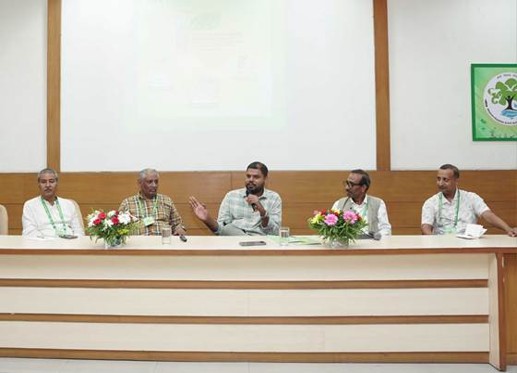
Vidhi’s contribution went beyond participation. Working closely with SNHC, Vidhi helped curate the conference, advising on the stakeholders and experts to be invited and shaping the thematic contours of the deliberations to ensure that legal and policy dimensions of urban sustainability were adequately represented alongside ecological and technical perspectives. Debadityo Sinha moderated the concluding panel discussion on sustainable cities, which brought together Mr. Jagadish Krishnaswamy (Dean, School of Environment and Sustainability, IIHS Bangalore), Dr. Anil Kumar Roy (Senior Associate Professor, CEPT University), Dr. Faiyaz Khudsar (Incharge Scientist, Biodiversity Parks Programme, University of Delhi), and Peeyush Sekhsaria of Vidhi’s Climate and Ecosystems team. The panel drew together the day’s key threads, including the governance deficit in urban local bodies following the partial devolution of powers under the 74th Constitutional Amendment, the inequality embedded in planning decisions that systematically exclude low-income communities from ecological and infrastructure benefits, the growing crisis of urban rivers and aquifers driven by over-extraction and habitat loss, and the case for embedding nature-based solutions and ecological restoration into city master plans rather than treating them as afterthoughts.
The conference also heard from leading voices on urban heat islands and city biodiversity (Wildlife Institute of India), the lessons Delhi’s air quality crisis holds for Bhopal (EnviroCatalysts), sand mining’s impact on riverine ecosystems (IISER Bhopal), dying urban rivers (School of Planning and Architecture, Bhopal), and the role of water narratives in building climate literacy (India Water Portal).
Drawing on the day’s discussions, Vidhi and SNHC are jointly preparing a set of policy takeaways from the conference proceedings, which will be shared with relevant government institutions to translate the deliberations into concrete advocacy inputs on urban governance, building standards, and ecological planning reform. The agenda of the conference can be accessed here and a livestream recording of the conference proceedings can be found here.
-
4th National Conference on Lesser-Known Species of the Central Indian Landscape in Bhopal (with SNHC India) (16-18 January 2026)
From 16 to 18 January 2026, Vidhi partnered with SNHC for the 4th National Conference on Lesser-Known Species of the Central Indian Landscape in Bhopal, as a knowledge partner. The conference addresses a structural gap in India’s conservation discourse: policy attention and research resources remain concentrated on flagship species and Protected Areas, while ecologically critical but under-studied species and the habitats outside PAs that sustain them receive little governance attention. Held at EPCO’s Paryavaran Parisar and supported by over 20 partner institutions, including WTI, BNHS, WWF India, IIFM, Wildlife Conservation Trust, Mongabay India, and Sanctuary Nature Foundation, the three-day event brought together over 200 researchers, senior forest officials, conservation practitioners, journalists, and community representatives. Discussions spanned species ranging from gharial and wild buffalo to dugong, Hill Myna, Mahseer, tarantulas, fireflies, and tiger beetles, with a recurring emphasis on river ecosystem governance, conservation beyond Protected Areas, and community-led stewardship models. Vidhi also curated and moderated the panel on the role of media in nature and wildlife conservation reporting, which examined how media shapes public understanding, the barriers to open-access conservation knowledge, and the need for ethical, evidence-based reporting standards. As a knowledge partner and co-host, Vidhi also prepared the key insights and policy recommendations drawn from the conference proceedings, now shared with the MP State Biodiversity Board and other relevant government institutions for further engagement and action. The agenda of the conference can be accessed here and livestream recording of the proceedings of the 2-day conference can be found here – Day 1 and Day 2.

F. CAPACITY BUILDING AND TRAINING
I. Invited Government Trainings
a) 27 June 2026: A training session (scheduled) on environmental laws for Forest Department staff from Uttarakhand as part of a “Training Programme for District Ganga Committees on the Rejuvenation of the River Yamuna”.at the Knowledge-cum-Skill Development Centre of the Delhi Development Authority and National Mission for Clean Ganga at Yamuna Biodiversity Park, New Delhi.
b) 13 June 2026: Conducted training session on environmental laws and river governance as part of a “Training Programme for District Ganga Committees on the Rejuvenation of the River Yamuna”. The programme was organised at the Knowledge-cum-Skill Development Centre of the Delhi Development Authority and National Mission for Clean Ganga at Yamuna Biodiversity Park, New Delhi. Participants included Gram Pradhans and representatives from various government departments from western Uttar Pradesh.
c) 26 March 2026: Conducted a training session for members of the District Ganga Committee, Uttarakhand, under a “Capacity Building Programme on Integrated Approaches for River Rejuvenation” organised by the Delhi Development Authority’s Yamuna Biodiversity Park and the National Mission for Clean Ganga. The session focused on environmental law principles and the governance framework for river ecosystems.
d) 19 March 2026: Conducted a training session on environmental laws for Eco Task Force (a wing of Indian Army) personnel as part of a “Capacity Building Programme on Integrated Approaches for River Rejuvenation” organised by the Delhi Development Authority’s Yamuna Biodiversity Park and the National Mission for Clean Ganga. The session introduced participants to the principles of environmental law and the legal and institutional frameworks governing river conservation and management.
e) 11 March 2026: Conducted a training session for engineers from Uttarakhand government as part of the “Capacity Building Programme on Integrated Approach for Rejuvenation of Rivers,” organized by the National Mission for Clean Ganga (NMCG) in collaboration with the Delhi Development Authority (DDA) Yamuna Biodiversity Park, Delhi. The session introduced participants to environmental regulations governing rivers, with a particular focus on ecosystem protection and wildlife habitat considerations in infrastructure projects. The training concluded with a discussion on integrating measures to support wildlife habitats within existing infrastructure, highlighting rare and endangered species such as the ‘Finn’s Weaver,’ which is now facing extinction in the Terai landscape.
f) 18 February 2026, Conducted a training session on “River Regulations from an Ecosystems perspective - with focus on Yamuna in Delhi” as part of a 3-day Training Programme organized by Delhi Development Authority Yamuna Biodiversity Park and the National Mission for Clean Ganga for the Eco Task Force personnel on River Yamuna (Yamuna Task Force). The session focused on the legal framework and policies related to the regulation of rivers, with special focus on the role of nodal agencies and authorities responsible for the protection, management and rejuvenation of the river Yamuna in Delhi.
g) 23 January 2026: Vidhi conducted a training workshop on “Environmental Protection Laws for Newly Recruited Deputy Architects of the Central Public Works Department (CPWD)” at the National CPWD Academy, Ghaziabad. The workshop introduced participants to key environmental laws, regulatory requirements, and governance considerations relevant to infrastructure planning and development.

II. Invited Academic Training
a) 05 June 2026: Debadityo delivered a lecture titled “What Counts as a Forest in India?” to the students and faculty of Christ (Deemed to be University), Bengaluru, in commemoration of World Environment Day.
b) 1 April 2026: Debadityo delivered a lecture titled ‘From Colonial Forestry to Climate Policy: What Counts as a Forest in India’ on the occasion of the ‘Symbiox 26’ students fest organized by the Zoology Department at Acharya Narendra Dev College, University of Delhi. He spoke about the historical understanding of the word forest, the influence of the economy and evolving laws on conservation and management of forests across India, and why policies need to view forests as living ecosystems and encourage ecosystem restoration over plantations.
c) 11 March 2026: Aditya conducted a workshop titled “Accessing and Utilising Environmental Information from the Parliament and Beyond” in collaboration with the Centre for Environment Law, Policy & Research at National Law University Delhi. The workshop introduced participants to key sources of environmental information and tools for legal and policy research.
III. Invited Training Programs for Civil Society Members
a) 5 June 2026: Debadityo was invited to deliver a guest lecture on the occasion of World Environment Day, to the executives of Akshaya Patra Foundation, Gurugram.
b) 02 – 04 June 2026: Debadityo Sinha was invited as a faculty member at the 'Summer School on Technology, Environment & Society’, organised by Pagdandi Collective at the CoVeda Learning Centre, Chandigarh, in the first week of June 2026. He delivered three lectures on 2nd-4th June covering fundamental principles of environmental law, Environmental Impact Assessment (EIA), and forest regulations. Vidhi’s documentary film An Unequal Fight, which documents the challenges in enforcing judicial directions on industrial pollution in Patancheru, was also screened during the training programme. The participants included concerned citizens ranging from young students, teachers, artists and professionals.
IV. Invited Panel Discussions
a) 30 May 2026: Moderated a panel on “Sustainable Cities” at the the 1st National Conference on Mainstreaming LIFE: Building Climate Resilient and Sustainable Urban Habitats held on 30th-31st May, 2026 in Bhopal. The panel included Mr. Jagadish Krishnaswamy (Dean, School of Environment & Sustainability, IIHS, Bangalore), Dr. Anil Kumar Roy (Sr. Associate Professor, Faculty of Planning, CEPT, Ahmedabad), Dr. Faiyaz A. Khudsar (Incharge Scientist, Biodiversity Parks Program, Delhi), and Mr. Peeyush Sekhsaria (Senior Associate Fellow, Climate & Ecosystems, Vidhi Centre for Legal Policy, Delhi).
b) 04 February 2026: Participated as a panellist at the 7th Annual Series of Thematic Deliberations and Analysis of the Union Budget 2026–27, organised by the Impact and Policy Research Institute (IMPRI). The discussion examined the environmental and sustainability dimensions of the Union Budget and their implications for climate action, conservation, and environmental governance.
c) 04 February 2026: Participated as a panellist at a multi-stakeholder dialogue on “Building Climate Resilience for Women and Smallholder Farmers through Beekeeping with Indigenous Bees”, hosted by Under the Mango Tree in New Delhi. The event brought together government and non-government stakeholders including practitioners, researchers, and development professionals to discuss nature-based livelihoods, climate resilience, sustainable agriculture and the need to support honey production using native bee species.
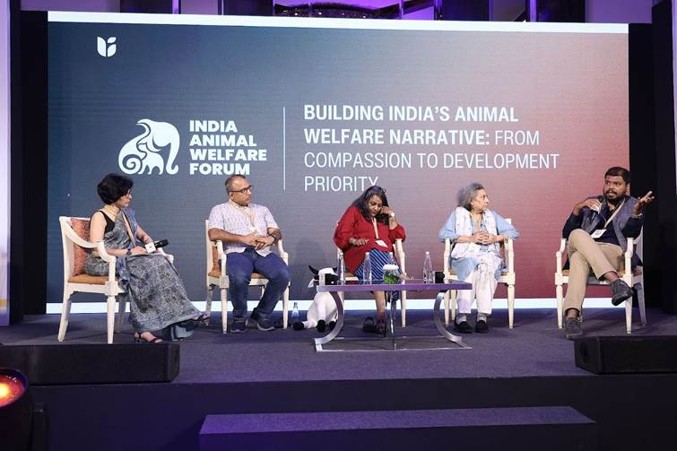
d) 03 February 2026: Participated as a panellist in the plenary discussion on “Building India’s Animal Welfare Narrative: From Compassion to Development Priority” at the India Animal Welfare Forum in Mumbai. The discussion explored the evolving role of animal welfare within broader policy conversations on sustainable development, governance, and social well-being.
V. Consultations Attended as Participants
a) 16 April 2026: Participated in a one-day roundtable and workshop on Urban-Rural Transitions and Their Impacts on Commons, jointly hosted by Land Conflict Watch (LCW), the Foundation for Ecological Security (FES), and the Social Accountability Forum for Action and Research (SAFAR) in New Delhi. The roundtable focused on examining the ecological, cultural, and social impacts of urbanization on common property resources.
b) 02 December 2025: Vidhi participated in the Delhi meet-up of the Climate Narrative Hub, an initiative of Momentum Shifts in collaboration with Dasra and supported by Rainmatter Foundation, which aims to transform how India’s climate story is told by bridging community voices, expert insights, and policy priorities. The Hub’s thematic focus on human-wildlife interaction and sustainable cities aligns closely with Vidhi’s research and policy work in both areas, and the engagement has opened avenues for collaboration on narrative strategy, media messaging, and public communications to ensure that Vidhi’s legal and policy findings reach and resonate with broader audiences beyond the policy ecosystem.
7. COLLABORATIONS & PARTNERSHIPS
The reporting period saw a significant expansion of the team’s collaboration and engagement with other stakeholders. In addition to existing institutional partnerships, new organisations were engaged across advocacy, capacity building, and research. Some collaborations are ongoing, providing partner organisations with sustained legal and policy advisory support, strategy guidance, and research inputs. Others are shorter-term engagements centred on specific issue-based convenings and capacity building sessions, where Vidhi’s legal expertise has informed action-oriented outcomes and built the awareness and capacity among key stakeholders. All such collaborations and partnerships are non-financial and grounded in shared objectives and values. Vidhi’s distinctive contribution across these collaborations is its mandate for improving law and policy for better governance. While most partner organisations bring ecological, community, or field expertise, and Vidhi’s role is to translate that expertise into regulatory analysis, policy frameworks, and sometimes lead to actionable strategies using existing levers.
A. Ongoing Long-Term Collaborations
I. Coalition for Wildlife Corridors
In May 2026, Vidhi became an institutional member of the Coalition for Wildlife Corridors (CWC), a multi-institutional platform working to monitor, protect, and secure wildlife corridors across India, alongside partners including WWF India, Wildlife Trust of India, WCS India, Wildlife Conservation Trust, ATREE, The Corbett Foundation, IUCN’s Connectivity Conservation Specialist Group, etc.
Vidhi’s membership reflects its recognition that habitat connectivity is as much a legal and regulatory problem as an ecological one. Vidhi intends to contribute legal and policy research across several priority areas: reviewing barriers to effective corridor implementation and assessing what legal conditions enable or hinder success on the ground; examining the overlap and tensions between Eco-Sensitive Zone boundaries and functional corridor landscapes; and supporting advocacy aimed at regulating development within corridors alongside legal capacity-building for Coalition member organisations. By bringing a dedicated law-and-policy lens to the Coalition’s science and field expertise, Vidhi aims to strengthen the legal basis for corridor protection and equip member organisations to engage more effectively with regulatory and advocacy processes.
II. Society of Nature Healers, Conservators and Local Tourism Development (SNHC)
Vidhi has been working closely with SNHC for over three years, combining Vidhi’s legal and policy research capacity with SNHC’s deep reach among conservation communities, government institutions, and the academic communities through its journal and field networks. Together, the organisations have co-curated high-impact national convenings including the 4th National Conference on Lesser-Known Species of the Central Indian Landscape, the 1st National Conference on Mainstreaming LiFE and the National Roundtable on Legal and Policy Reforms for Invasive Species in reporting period, with Vidhi preparing policy recommendations from these high-impact convenings for submission to the government bodies and identifying key areas for legal and policy interventions. SNHC’s networks and dissemination infrastructure provide Vidhi with the necessary outreach to ensure that its legal and policy research shapes public and institutional narratives on conservation as well as equip them with necessary legal and policy advisory. Currently, the two organisations are collaborating on three national-level convenings in Bhopal and expanding the partnership through targeted outreach programmes for key government and civil-society stakeholders working on key theme areas of Vidhi- ‘Management of Invasive Species’, ‘Wildlife Outside Protected Areas’, and ‘Human-Wildlife Coexistence’.
III. Indian Institute of Science Education and Research (IISER) Tirupati and Nature Conservation Foundation (NCF)
Vidhi has been working closely with IISER Tirupati and NCF for over a year to develop a new collaborative project on preventing bird-window collisions in India. The collaboration brings together ecological research expertise from IISER Tirupati and NCF and Vidhi’s legal and policy capacity, with the aim of building the evidence base, stakeholder network, and regulatory framework needed to address a significant but almost entirely unregulated cause of avian mortality from glass facades. In May 2026, Vidhi hosted the 1st National Symposium on Bird-Window Collisions in India in New Delhi. Vidhi is now working to translate the symposium’s recommendations into concrete policy action, including advocacy for bird-safe provisions in building regulations, green building standards, etc.
IV. Knowledge-cum-Skill Development Centre (National Mission for Clean Ganga) at Yamuna Biodiversity Park, Delhi Development Authority
Vidhi is providing sustained legal training support to the Yamuna Biodiversity Park’s Knowledge-cum-Skill Development Centre, which runs capacity-building programmes for frontline personnel engaged in river conservation in Yamuna River Basin. Between January and June 2026, Vidhi delivered 6 training sessions on environmental law to key government agencies working for conservation of Rivers which included Eco Task Force personnel of the Indian Army, District Ganga Committee members from Uttarakhand, and Yamuna Task Force personnel, etc. on the principles of environmental law and the legal and institutional frameworks governing rivers and freshwater ecosystems. These sessions address a significant gap: many of the personnel responsible for on-ground river conservation and enforcement have limited familiarity with the regulatory architecture that governs their work. By building this foundational legal literacy, Vidhi is strengthening the capacity of frontline institutions to engage with environmental law more effectively in their respective river conservation work.