-
Overall updates (since the last update)
The School of Ecological Nurturance completed its first tranche of activity under the Rainmatter partnership, October 2025 through April 2026. All four partner organisations — Gurukula Botanical Sanctuary (Wayanad), The Forest Way Trust (Tiruvannamalai), Upstream Ecology (Ooty), and Adavi Trust (Mysore) — are active and operational. A core cohort of apprentices, field coordinators, and long-term volunteers has been built across the four sites. Adavi Trust has come on board as the coordinating organisation, with a full-time coordinator now in post. An SEN website is under development. -
Progress on the goals listed while on-boarding
SEN was established with two broad objectives: building a core cohort of practitioners committed to ecological restoration and nurturance, and contributing to a wider shift in how people relate to ecosystems and the natural world.
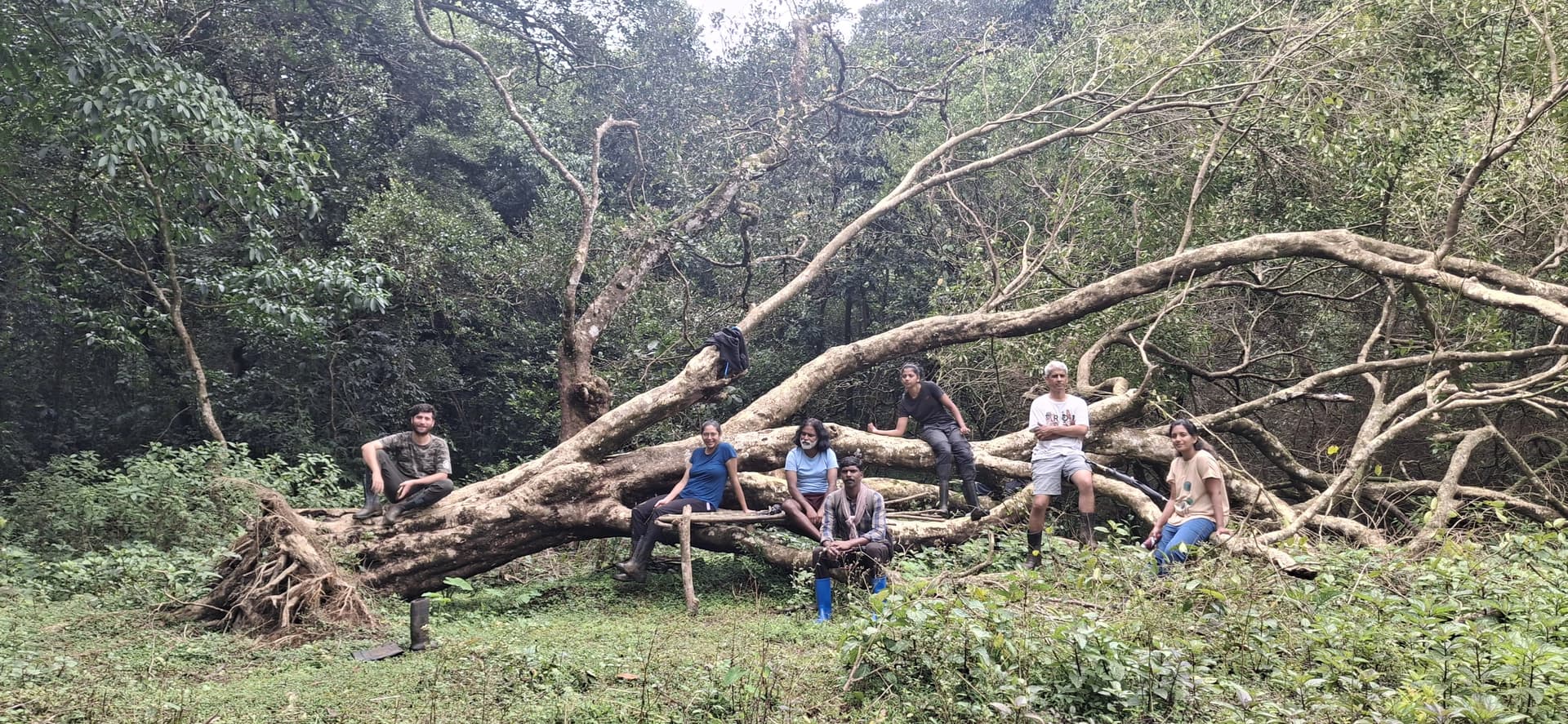
On the first objective, good progress has been made. GBS now has four resident apprentices, all of whom completed their first module and stayed on. Upstream Ecology has trained three field coordinators who are now working independently on restoration sites. The Forest Way hosted seven long-term volunteers over the period, several of whom came through the SEN network. Cross-site movement of people — volunteers going from Marudam to GBS, apprentices from GBS to Upstream — is beginning to happen organically.
On the second objective, early steps are being taken. The Forest Way’s engagement with the Tiruvannamalai Forest Department, government school teachers, and students has reached several hundred people this period. Upstream’s outreach at Government Arts College, Ooty, is extending the network into local institutions. Adavi is now actively working to open conversations with sectors and communities beyond the existing environmental network. GBS has renewed the Rewilding Retreats, and also offers other residential themed modules.
- Any challenges
The level of interest and turnout has been greater than anticipated, and this is creating infrastructure pressures at GBS. With four full-time apprentices, visiting volunteers, other visitors, and group workshops all running concurrently, questions of facilitation and facilities are becoming pressing — space, hosting, and the logistics of holding multiple overlapping groups at once.
A second, related challenge is what to do about people who want to stay on beyond their six-month term. This is a good problem in one sense — it speaks to the depth of engagement the programme is generating — but it raises real questions about capacity, about the shape of a longer-term relationship between a practitioner and the place, and about what SEN can sustainably hold.
The coordination across four geographically dispersed organisations, each with their own rhythms and priorities, requires ongoing attention. The arrival of Adavi Trust’s full-time coordinator will of course help, but this will take time to establish.
- Any new avenues of collaboration (with other Grantees of RCF or other NPO/NGO)
- A two-year research permit from the Kerala Forest Department, opening up forest survey work in northern Kerala with apprentices
- Engagement with Kerala Veterinary and Animal Science University on rewilding and restoration possibilities on campus
- Upstream Ecology working with the Tamil Nadu Highways Department on native flora conservation during roadworks
- Partnerships with ERA-India, Conservation Education Network, and Nature Classrooms for upcoming workshops at GBS, as well as potential land-based restoration opportunities in Wayanad being explored with other land stewards.
- The Forest Way’s new collaboration with the Tiruvannamalai District Forest Officer, opening up monthly engagement with approximately 200 FD staff
- Highlights from the initiatives being undertaken as part of your organization
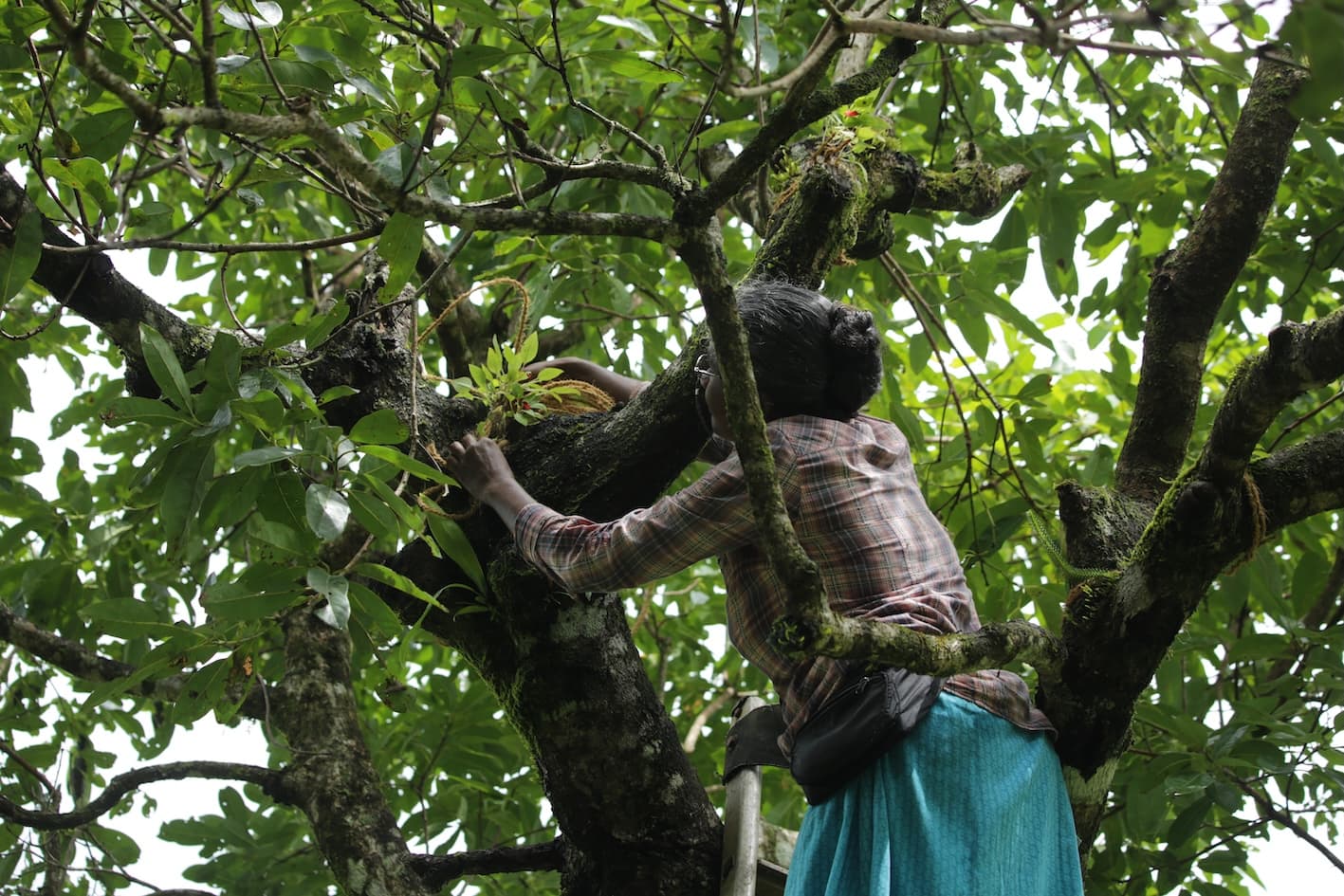
*Gurukula Botanical Sanctuary: Guru Manikandan, who first came to GBS for a Rainmatter-supported Rewilding Retreat in 2024, is now the most senior apprentice — a vivid example of the cadre of nurturers the school is trying to build. He is now followed by three enthusiastic others. The apprentice journal project has begun, producing some remarkable writing from people in the middle of their learning.
*The Forest Way / Marudam: The collaboration with the new District Forest Officer in Tiruvannamalai has opened up an unexpectedly rich chapter — monthly botanising workshops for 200 FD staff, teacher training for 50 government school botany teachers, and jackal and fox awareness sessions in 15 schools.
*Upstream Ecology: Field coordinator Abhishek Samuel led the full removal of invasive flora and replanting at a private restoration site in Lovedale entirely independently — a significant milestone for a programme that began six months ago with no prior restoration experience in the cohort.
*Adavi Trust: Shonali Chenzira has joined as full-time SEN coordinator, with a specific brief to reach beyond the existing environmental community — including groups and sectors that may hold opposing or indifferent views — to explore whether a shared language around ecological care is possible across difference.
- Outcomes you are chasing for the next 6 months (these can remain the same if unchanged since the last update)
- Consolidate the apprenticeship cohort at GBS; begin planning for the next intake. Draft a document on what an apprenticeship entails.
- Deepen Upstream Ecology coordinators’ work into succession modelling, restoration planning, and long-term ecosystem monitoring
- Launch the SEN website
- Run the planned workshops at GBS with ERA-India, Conservation Education Network, and Nature Classrooms
- Extend the Rewilding Retreats programme, building on the Rainforest Reciprocity retreat for Broadcom in June
- Continue and expand The Forest Way’s collaboration with the Tiruvannamalai Forest Department
- Begin forest surveys in northern Kerala under the new KFD research permit, with apprentices participating
- Develop clearer frameworks for tracking cross-site learning and movement of people
- KPIs (please use this section to let us know of the impact and reach of your work since the last update)
People directly engaged in apprenticeships, volunteering, or coordination:
- 4 resident apprentices at GBS
- 4 long-term volunteers at GBS (plus 12 short-term, under one week)
- 7 long-term volunteers at The Forest Way / Marudam
- 3 field coordinators at Upstream Ecology
- 1 full-time coordinator at Adavi Trust
- Total: 30 individuals
Outreach and public engagement:
- ~200 Forest Department staff reached through monthly botanising workshops (Tiruvannamalai district)
- ~50 government school botany teachers trained (2-day workshop)
- Hundreds of school students reached through jackal and fox awareness sessions in 15 schools
- ~1,000 students attended the Perceiving the Environment photography exhibition and talk
- Outreach sessions conducted at Government Arts College, Ooty (Upstream Ecology)
- Article on SEN published in The Hindu Metroplus
Restoration activity:
- 3 active restoration sites worked by Upstream Ecology coordinators (Nilgiris and Wayanad)
- Invasive flora removal and native replanting completed at Lovedale site
- Native flora conservation work with Tamil Nadu Highways Department
- Multiple private landholding site assessments for potential restoration connections (GBS)
- Can Rainmatter be of help with anything at all
It would be useful to know whether Rainmatter has connections with other grantees working in ecological education, land-based learning, or community conservation — particularly in South India — where there may be potential for cross-learning or collaboration. If there are partners working on mindset and culture change around nature, we would be interested in connecting.
Any visibility or amplification of the SEN story — particularly the apprenticeship model and the question of what a different relationship with the natural world might look like — would be welcome, especially as Adavi begins its outreach work.
- Any additional details you would like to provide
A full report with partner accounts from all four organisations is attached as a PDF. It includes journal excerpts from apprentices and field coordinators, and gives a fuller picture of the work at each site.
SEN_Report_Oct2025_Apr2026 (6).pdf (6.3 MB)
Also submitting a more detailed report from SEN partner Upstream Ecology
SEN-Ph1-Report-June26.pdf (4.4 MB)
For context on how SEN compares with other efforts: in India, there is no close parallel to what SEN is attempting. Globally, the nearest comparators are programmes like Schumacher College (UK) and The Land Institute (US), but these tend toward self-sufficiency and wilderness skills rather than ecological restoration in biodiverse tropical landscapes. Nearly five decades of continuous place-based learning at GBS, now extended across four sites, each with their deepening experience and expertise, is unusual by any measure.
- Please also share any images or videos that you have documented as part of your work