National Heatwave workshop, Kolkata
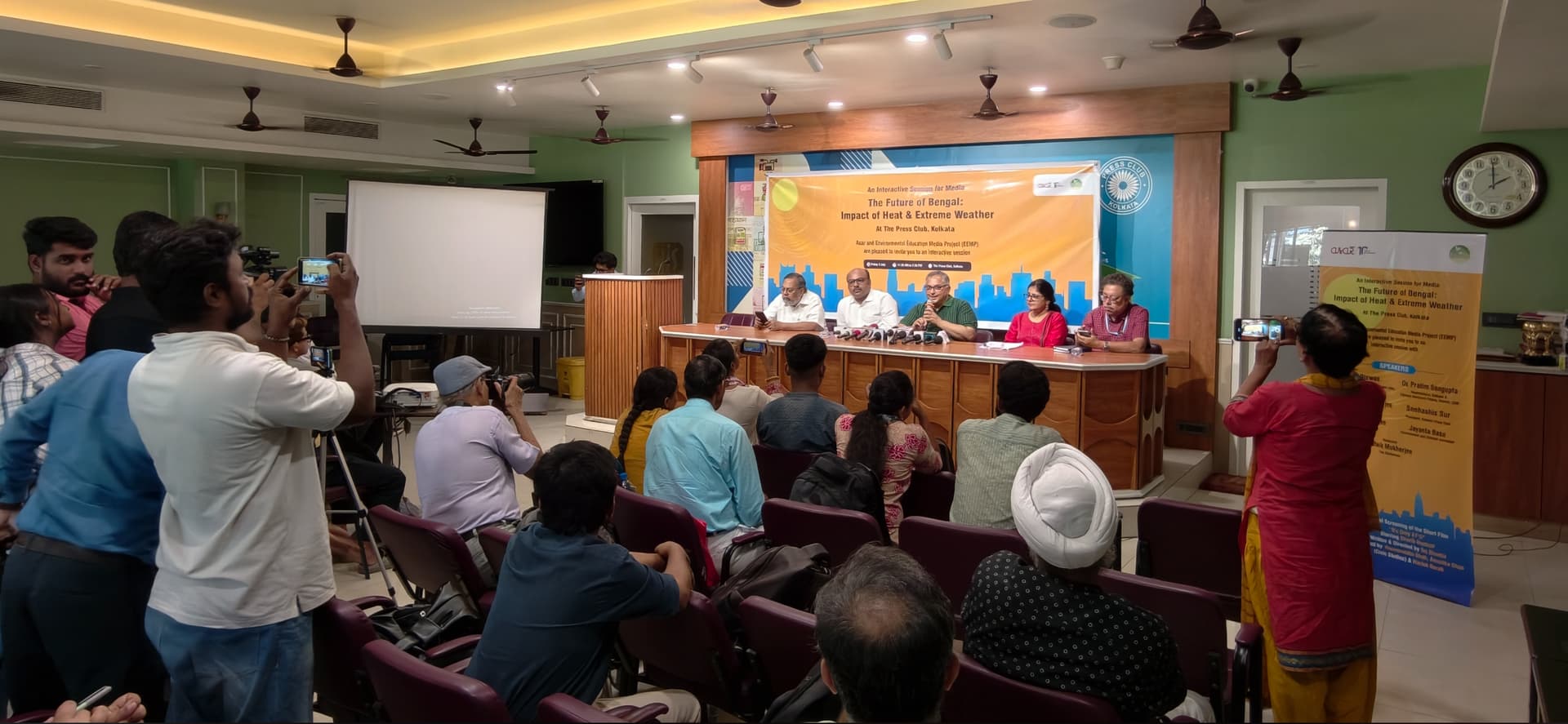
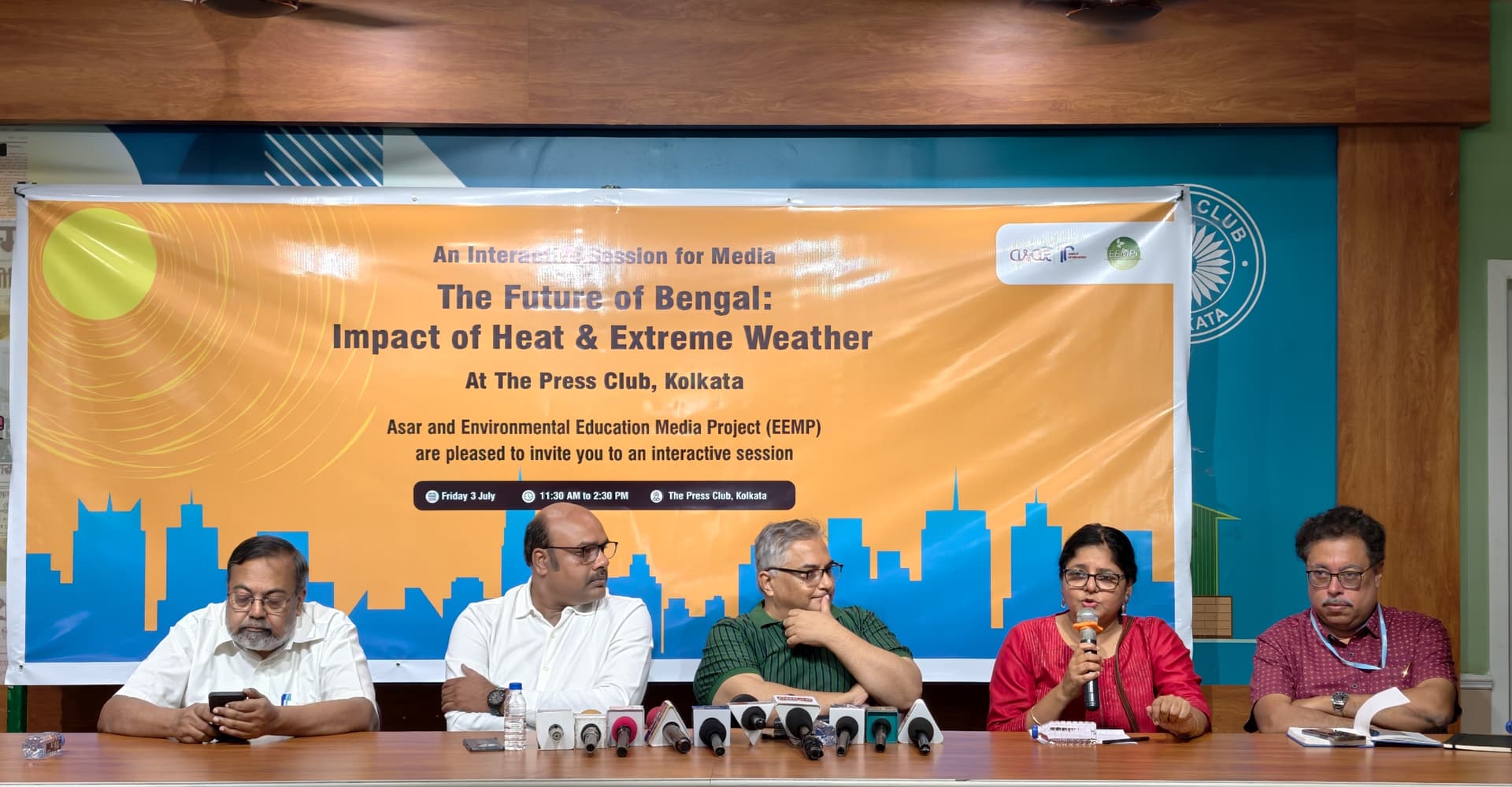
The seventh in the series of Asar’s National Heatwave Workshops for media persons was held on July 3, 2026, in Kolkata, West Bengal. This follows the workshops organised in Mumbai, Nagpur, Bengaluru, Chandigarh, Ranchi, and Bhubaneswar between April and May 2026, aiming to shape the narrative on heatwaves as a climate problem, de-mystify meteorological science, and build a data-backed, people-centered stories around extreme heat and public health.
Detailed information about the workshop:
Workshop #7: Kolkata, West Bengal
Date: July 3, 2026
Partners: Press Club, Kolkata & Environmental Education Media Project (EEMP)
Attendance: 65 participants, including approximately 40 reporters and members of civil society
Resource Persons:
Dr. R.K. Jenamani – Head, Regional Meteorological Centre (RMC), IMD Kolkata
Dr. H.R. Biswas – Scientist-F, RMC Kolkata
Dr. Pratim Sengupta – Leading Nephrologist & Clinical Research Fellow (Boston, USA)
Prof. Abhijeet Chatterjee – Bose Institute
Swati Bhattacharjee – Journalist and Researcher
Jayanta Basu – Climate Journalist
Snehashis Sur – President, Press Club Kolkata
Moderator: Ritwik Mukherjee – Senior Journalist
Key Highlights & Insights:
Cardiovascular and Renal Heat Risks: Dr. Sengupta bridged meteorological trends with clinical medicine, presenting critical data on how compounding heat and humidity strain heart and kidney health. He provided an actionable list of medical dos and don’ts for extreme weather days.
The Gendered Impact of Heat: Swati Bhattacharjee provided concrete examples of how extreme heat disproportionately impacts women. She highlighted severe health risks and underreported heat-related livelihood/job losses—vulnerabilities that are currently entirely absent from existing state action plans.
Humanising Climate Data: The panel challenged traditional editorial habits, urging journalists and editors to stop treating climate and extreme weather stories as simple “fillers.” They called for an editorial pivot toward human-centric narratives that translate statistics into real lived experiences.
Simplifying Science for Media: Prof. Chatterjee emphasised that meteorological science must be actively simplified to be useful to reporters on tight deadlines. He commended Asar’s Simplifying Science initiative as a vital framework for bridging the gap between academia and mainstream media.
Institutional Reach & Future Training: Press Club President Snehashis Sur committed to utilising the club’s expansive institutional network to help Asar’s simplified media releases reach journalists throughout West Bengal. This workshop established an active partnership pipeline with EEMP and local senior editors for future specialised journalist training.