Over the past few weeks, Jana Urban Space Foundation has been engaging with practitioners, policymakers, and academia to advance conversations on resilient, inclusive, and future-ready cities.
1. Reframing Cities for Resilience
At the Bangalore International Centre, we convened a discussion anchored in Reframing Cities for Resilience: Embracing Complex and Uncertain Futures, with around 60–70 people in attendance.
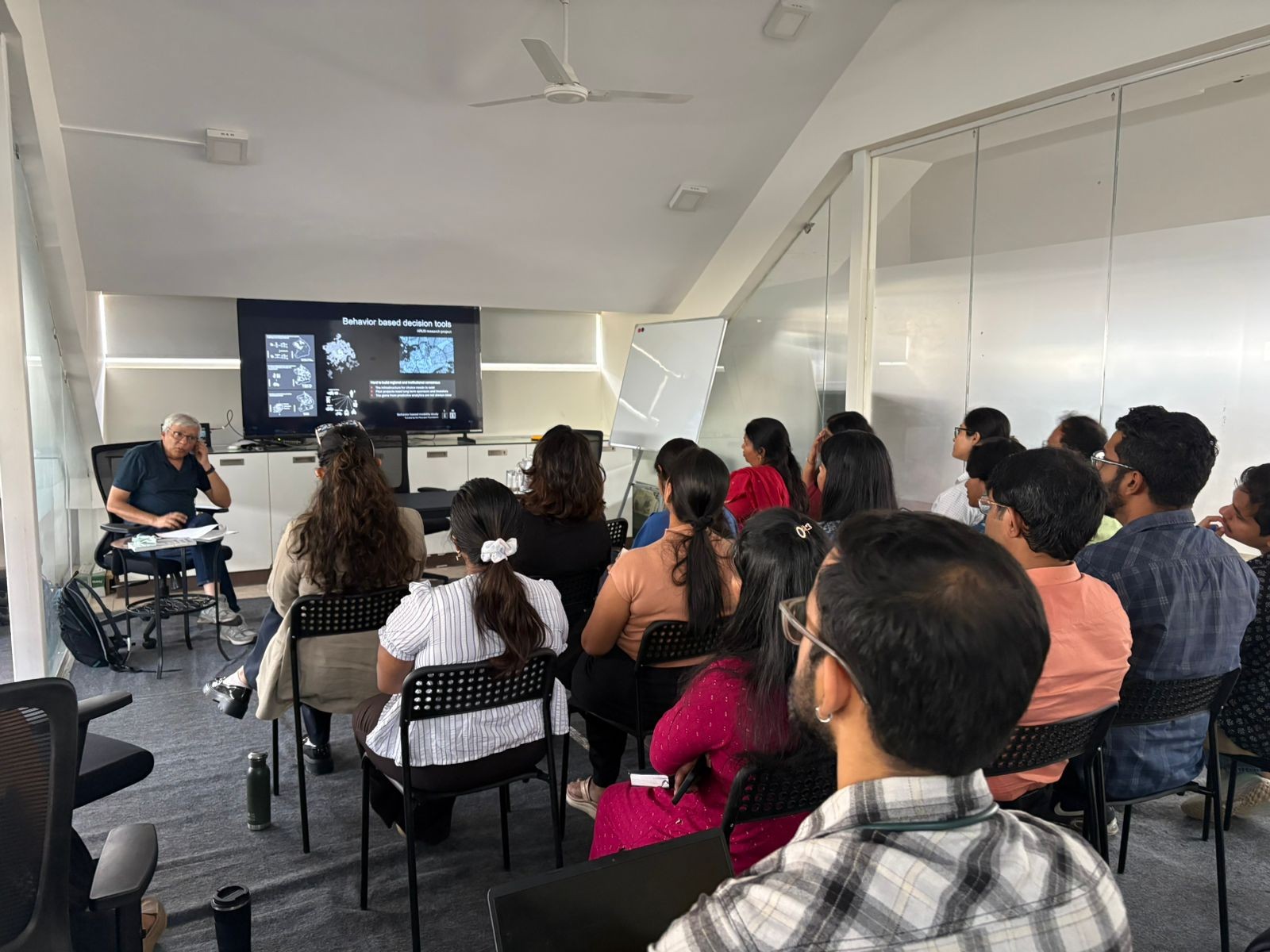
The conversation explored how cities today face an unprecedented convergence of pressures—from climate risks and infrastructure stress to institutional fragmentation and rapid growth. Drawing on systems thinking, behavioural sciences, economics, and technology, the discussion emphasised the need to understand cities as complex, interconnected systems and to move beyond conventional planning approaches toward embracing uncertainty.
The session featured reflections from Dr. Champaka Rajagopal (Fellow, Centre for Policy Research & Professor Affilié at the Urban School, Sciences Po, Paris) and Jaya Dhindaw (Executive Program Director, Sustainable Cities & Director, WRI India Ross Center), and was moderated by Srikanth Viswanathan (Chief Executive Officer, Janaagraha, Executive Director, Jana Urban Space Foundation). Using Bengaluru as a reference point, the discussion examined what it takes for cities to not only withstand shocks but also adapt and evolve in the face of ongoing change.
2. Urban Mobility at Bengaluru 2040 Summit
At the Deccan Herald Bengaluru 2040 Summit, Nithya Ramesh (Director – Planning and Design, Jana Urban Space Foundation) moderated a panel on “Can Bengaluru beat traffic?”, engaging an audience of around 500 attendees and bringing together policymakers and mobility experts to examine one of the city’s most pressing challenges.
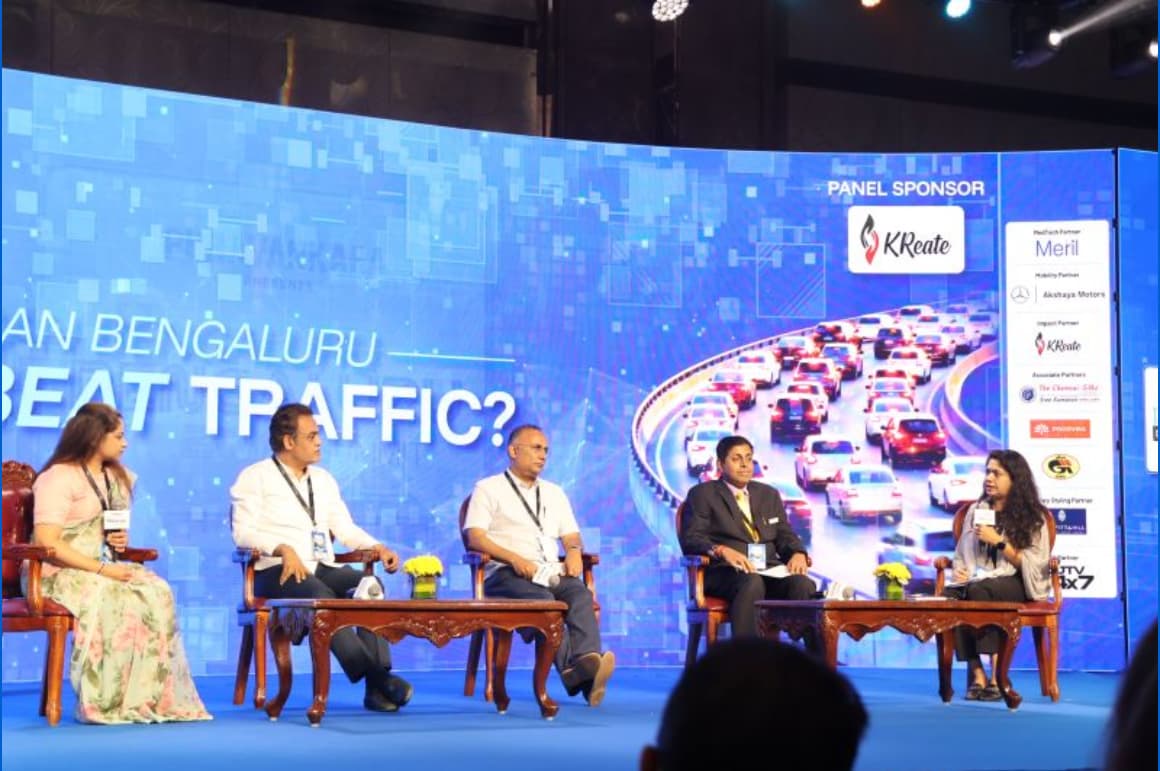
The discussion highlighted the scale and urgency of Bengaluru’s mobility crisis. With a population of approximately 1.2 crore and a comparable number of private vehicle registrations, the city has seen a rapid rise in vehicle ownership—now surpassing Delhi in the number of private cars. This has translated into longer commute times, with an average of 36 minutes required to travel 10 km, and significant economic costs, including losses from fuel waste, reduced productivity, air pollution, and road accidents.
The panel identified key structural challenges, including increasing dependence on private vehicles, inadequate and poorly maintained road infrastructure, declining walkability, and a public transport system that has not kept pace with the city’s growth.
Discussions focused on solutions across time horizons. In the long term, panellists emphasised the need to disincentivise private vehicle ownership and use through measures such as higher taxes, congestion pricing, and stricter parking management. There was also a strong focus on rethinking urban planning to reduce travel demand—by enabling more people to live and work within the same or nearby neighbourhoods through better land use and densification strategies.
In the medium term, the conversation underscored the need for improved governance and accountability in traffic management, including the creation of specialised mobility expertise within city systems and the use of technology-enabled “living labs” to test and scale solutions.
In the short term, the panel highlighted the importance of improving walkability and investing in well-designed urban streets—such as those implemented under the Tender S.U.R.E. model—alongside strengthening and making public transport more accessible and affordable.
Overall, the discussion reinforced that addressing Bengaluru’s mobility crisis requires moving beyond isolated interventions toward coordinated, sustained action across planning, governance, infrastructure, and public transport systems.
3. Climate-Resilient Streets at SPA Mysuru
At the School of Planning and Architecture, Mysuru, Usha K (Associate Director - Urban Design, Jana Urban Space Foundation) spoke at a workshop on Sustainable and Climate-Resilient Development, with around 80–90 students in attendance.

Her session traced the journey from on-ground street redesign projects under the Tender S.U.R.E. model to the policy frameworks now shaping similar efforts across states such as Uttar Pradesh, Odisha, and Assam. The discussion reflected on how lessons from implementation can inform stronger design standards, governance processes, and long-term institutional adoption.
The session underscored an important shift in urban practice—streets cannot remain one-off projects. Embedding design principles into policy, procurement, and engineering practice is essential for cities to consistently deliver safer, more climate-responsive streets at scale.
4. Thought Leadership: Urban Tech & Governanc e
In an interview with The Indian Express, Nithya Ramesh highlighted the limitations of current urban planning systems in India and the need for integrated, interoperable data systems. She emphasised that technology must be embedded within governance processes to enable more responsive and evidence-based decision-making.
Read More: Article