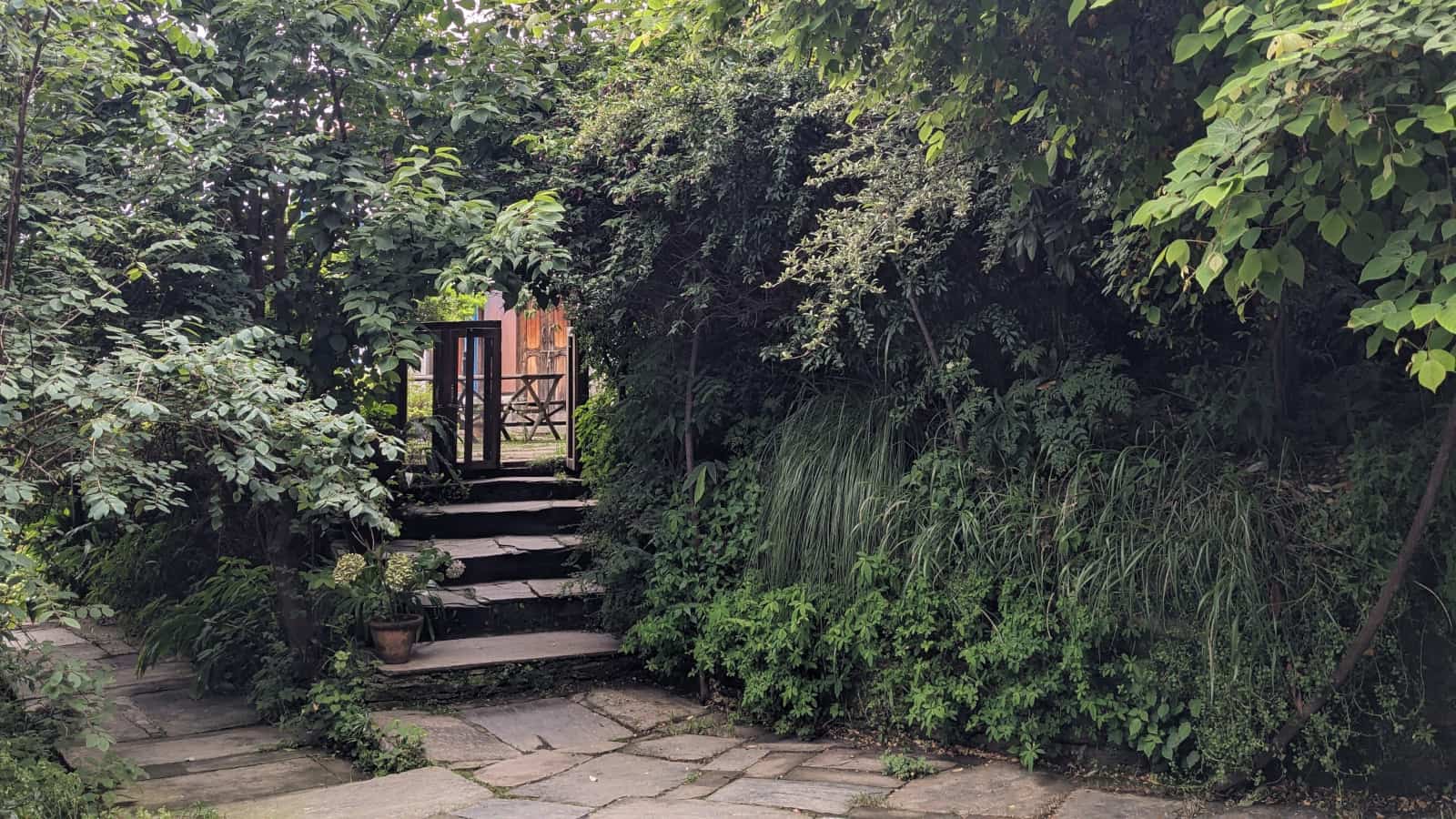
This month, naturalist and ERA community member Pallavi Singh writes a photo essay narrating her journey of restoring a patch of the Oak-Rhododendron ecosystem at the edge of the Binsar Wildlife Sanctuary in Uttarakhand.
Her account is an excellent reminder that restoration isn’t a one-off tree plantation drive, but a multi-season, multi-year practice. It sets aside time and resources to understand the reference ecosystem – an intact ecosystem that serves as a benchmark for restoration goals. And it seeks to create functional ecosystems by planting endemic herbs, shrubs, climbers, grasses and trees (and not just trees!) in appropriate places.
Remarkably, even as natural spaces around us increasingly get paved over with cement, tar and concrete, her team’s journey took them in the other direction – leading them to ‘de-pave’ a cemented surface and create a native wildflower meadow in its place.
In her account, Pallavi also chronicles her team’s efforts to rewild degraded areas beyond their site, and the new hurdles they’re encountering in a changing ecosystem. The story traces several of these hurdles to the past, noting how the effects of colonial as well as post-colonial forestry and conservation policy continue to shape the dynamics between different forest types, and between local communities and the forest itself.
Read time: 15 minutes.