Landscape Architecture
From the Sandbox: Snippets on a Growing Movement
What does it mean to be building something with others, not just for them? Does it mean to sit in meetings searching for answers, listening deeply? To listen not just to people, but to the place? These updates are a snapshot of what happens when we try.
The Odisha Sandbox began as a quiet experiment in convening, and orchestration–of people, questions, and possibilities within a place. Over the past few years, this experimentation has slowly begun transforming itself into a movement. It has taken root across mangrove villages, rural marketplaces, and is all set to explore the tribal heartland of the state. What connects these distinct landscapes is not an orchestration piece, but a shared belief that real change starts in conversation, in context, and in community.
Inside these, one will find snippets of plastic-free villages, and community-cleaned ponds, of FPOs slowly finding their footing in market systems, of organisations with deep social capital leading with care and courage. One will also find something deeper–of organisations shifting how they think about their work, their responsibilities, and their abilities.
It is a living archive of what happens when we choose to stay present in complexity, harvest the collective wisdom of each landscape and act accordingly.
Welcome to the Odisha Sandbox, OSB as we call it. It is being built–with you.
The Odisha Sandbox is steadily growing its presence across the state - not by replicating programs, but by building context-specific partnerships that allow solutions to travel and take root.
Coastal Landscape
The work has consistently started in an exploratory mode, focused on demand discovery from the ground rather than pre-defined solutions. Platforms such as Mangrove Pathotsav, Kendrapara@2036, Bagapatia DPR, Gram Swabhimaan, Kendrapara Vikas Mela, and the District Convergent Action Plan served as live spaces where community aspirations, ecological priorities, and livelihood needs surfaced. These processes revealed how demand is generated through collective dialogue, place-based engagement, and institutional interaction.
Responses were then plugged in through multiple channels based on scale and context, including Nature’s Club layers, District Convergent Action Plan orchestration, Mentopreneurs, Producer Groups Networks, Climate Champions, and Community. Together, these pathways enabled grounded demands to translate into coordinated, scalable responses.
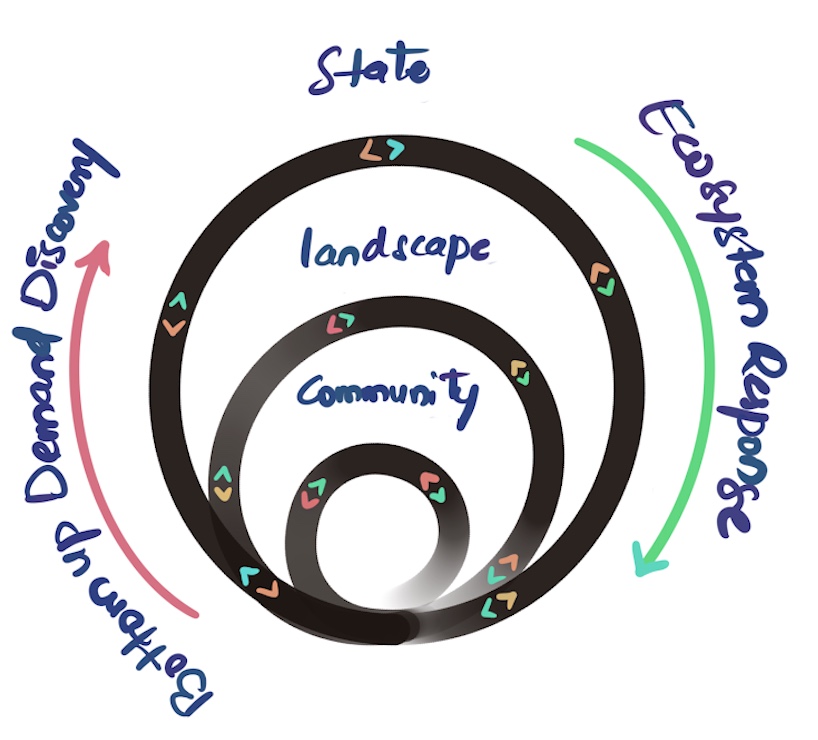
Demand Discovery Spiral:
Climate Champions Cohort & Village Surveys (Nov 2024)
- Trained 120 Climate Champions (primarily women SHG members) from Bhitarkanika and Mahanadi landscapes through a 30-hour blended program combining workshops, photo-walks, mindset-building, and green entrepreneurship modules.
- Built grassroots capacities in public problem solving, community facilitation, village asset mapping, and green enterprise identification.
- Enabled Climate Champions to conduct surveys across 30 villages, mapping natural, human, and institutional assets aligned with community aspirations.
- Introduced assessment tools and a 300-hour extended pathway for mentoring, enterprise due diligence, and leadership in local climate action.
Gram Swabhimaan – Community Demand Discovery Model (May–Oct 2024)
- Conducted three training workshops for ~115 Climate Champions on planning and facilitating Gram Swabhimaan meetings.
- Facilitated 48 Gram Swabhimaan meetings across Kendrapara district with participation of ~4,800 community members (men, women, youth).
- Surfaced 60+ community-identified demands including water body rejuvenation, plantations, skills, and livelihoods.
- Enabled tangible outcomes such as creek clean-ups, mangrove restoration (57 ha), livelihood training, and post-cyclone community infrastructure repair.
- Integrated community priorities into the District Convergent Action Plan (DCAP) and government-supported.
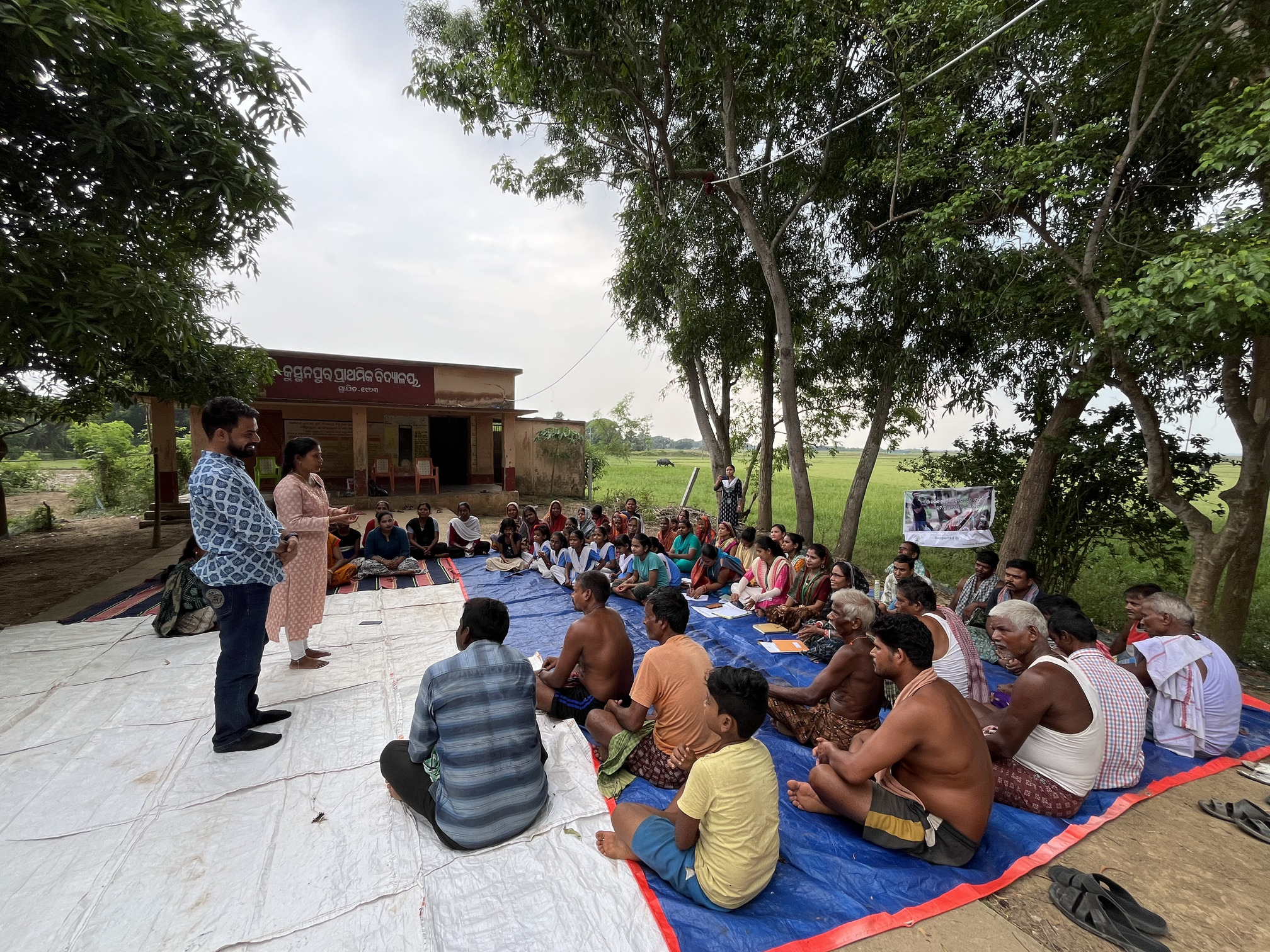
COMMUNITY LED MODEL
90 sample villages surveyed, more than 100 villages experienced Gram Swabhimaan, all DANA affected villages supported with rehab kits, 17 km creek got rejuvenated at Julusnagar and more than 200 community ponds identified for rejuvenation led by Climate Champions writes one of the finest practices on community mobilization models of Nature’s Club in partnership with ECRICC, District Administration, Save the Children, Socratus and Goonj.
Mangrove Pathotsav & Mangrove Economy Building (June–July 2024)
Organised Mangrove Patha Utsav, a three-day multi-stakeholder festival and dialogue platform in collaboration with the Odisha State Museum.
- Engaged 250+ actors from government, communities, CSOs, academia, and media to advance mangrove-centred ecological–economic narratives.
- Developed a Mangrove Ecological Repository and curated the Bhitarkanika Climate Recipes Exhibition featuring 22 adaptation solutions.
- Facilitated Citizens’ Jury deliberations and co-created action plans on mangrove restoration, governance, and alternative livelihoods.
- Initiated value-chain scoping for naliya grass, dry fish, honey, crab fattening, eco-tourism, and renewable energy solutions.
- Extended impact nationally through design support to the National Mangrove Conclave, influencing discourse on a National Mangrove Mission.

Kendrapara Vikas Mela – Climate Rasabali (Sept 2024)
- Conducted a 3-day Green Rural Economy (GRE) Clinic with WELL Labs, engaging 60+ farmers, women entrepreneurs, and FPO members.
- Facilitated expert-led sessions on climate-smart agriculture, sustainable livelihoods, and place-based development.
- Positioned #Kendrapara2036 as a district-level climate vision through engagement with senior political leadership.

District Convergent Action Plan – Kendrapara (Jan 2025)
- Enabled multi-stakeholder convergence involving district officials, CSOs, experts, and market actors.
- Designed and aligned 10+ integrated climate-resilient initiatives including pond rejuvenation, aromatic rice cultivation, and naliya grass value chains.
- Reached 200–250 direct beneficiaries, with scaling potential through scheme convergence and departmental coordination.

Response Ecosystem Spiral:
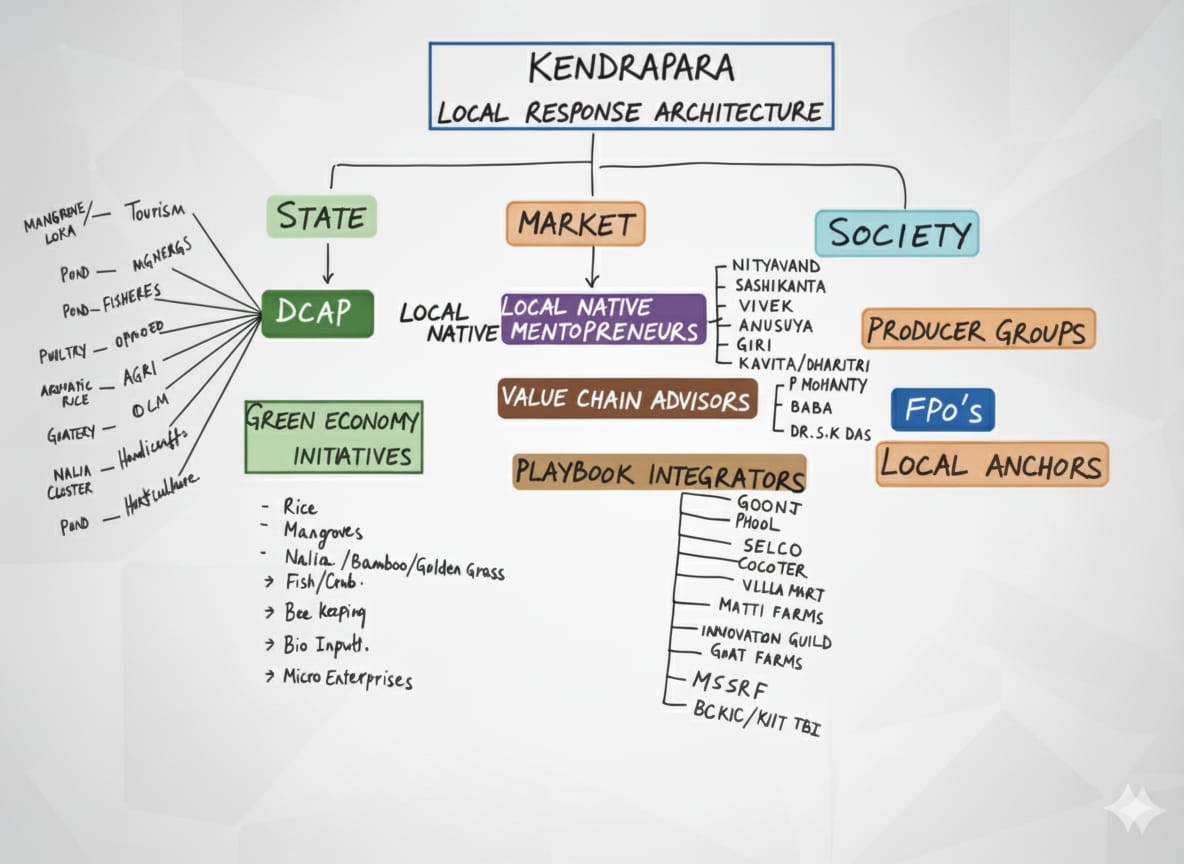
Local Response Architecture:
The major architecture to respond the demand is the local response architecture which consists of the intersection between the State (District Convergent Action Plan+), Market (Local/Native Mentopreneur & Value Chain Adviser and Playbook Integrator) and Society (Producer Group, FPOs, Local Anchor-Nature’s Club).
The architecture:
Mentopreneurs Model:-
These are first-generation entrepreneurs who have left lucrative jobs and other opportunities to return home and start local enterprises. They actively involve women, self-help groups (SHGs), local producers, and other community players, creating an ecosystem where skills, resources, and opportunities stay within the region. They are deeply rooted in local realities, helping rural producers improve their products, strengthen market access, and build resilient business skills.
Local and native mentors and innovators translate traditional knowledge into climate-responsive micro-enterprises such as organic agarbatti by Shashikant Nayak, bio-inputs by Nityanand Das, mushrooms, and coconut value addition.
Socratus is supporting Nature’s Club in institutionalising this through Mentopreneurs R&D Centres as living labs to test and scale circular, regenerative rural economy models. These efforts are closely aligned with government partnerships including UNDP-ECRICC, the Agriculture Department’s Crop Diversification Programme, OSDMA, and the District Convergent Action Plan, enabling cross-sectoral convergence across Govt departments, CSOs, Solution Providers and PRIs into one platform in the domain of Livelihoods, biodiversity, water management, and climate resilience.
R & D CUM TRAINING CENTERS: Support Nature’s Club in Setting up product research and development centers for Nature based and Bio products
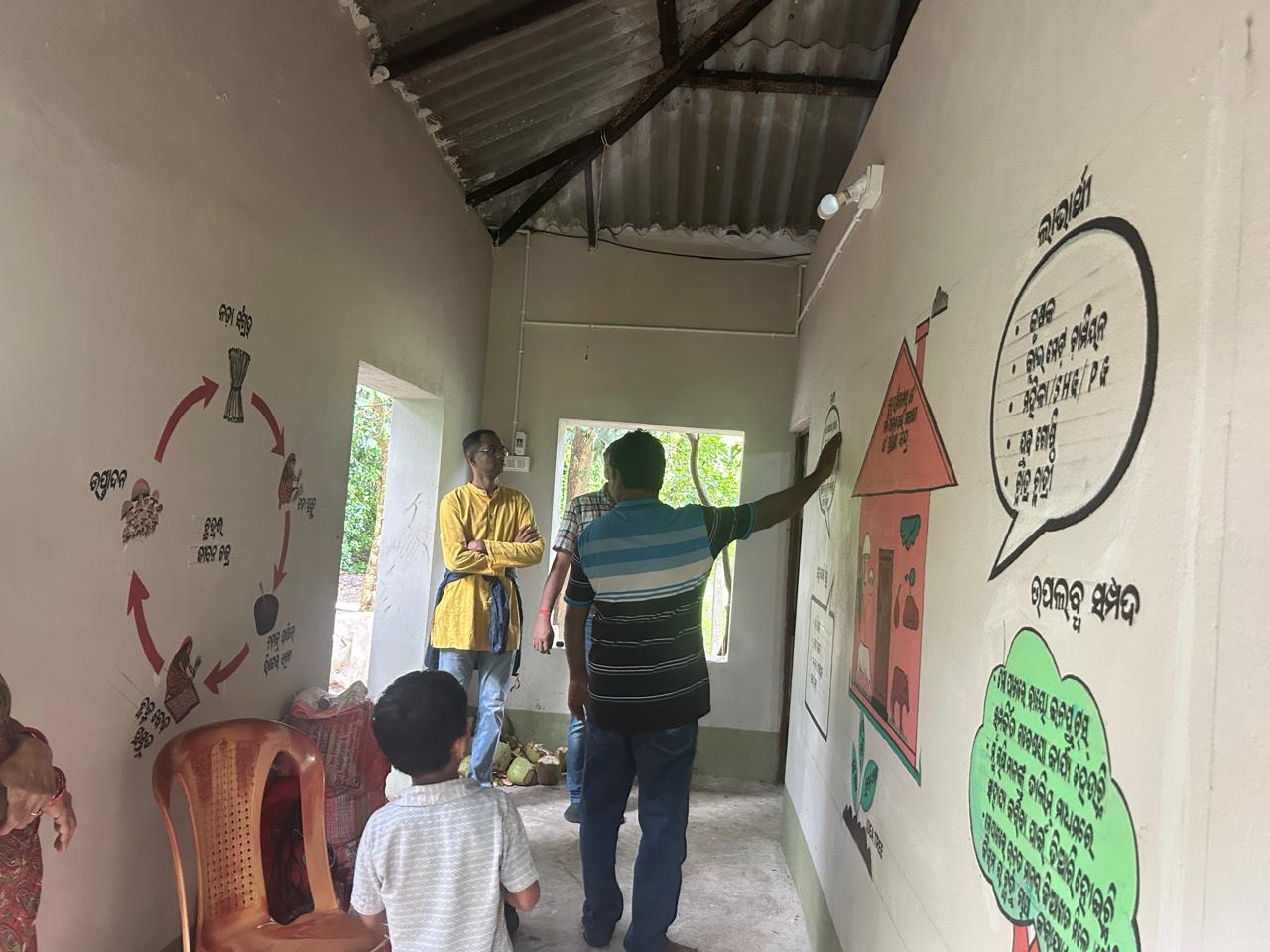

NALIA PRODUCTION AND CLUSTERING
- Support in Reviving the Nalia Craftsmanship and blending into Golden Grass and Bamboo artisan products.

Support Nature’s Club in Bio-input enterprise and Training Center as a circular model where Climate Champions and community members as PG are mentored by Entrepreneurs from mushroom cultivation to Vermicomposting with market linkages.
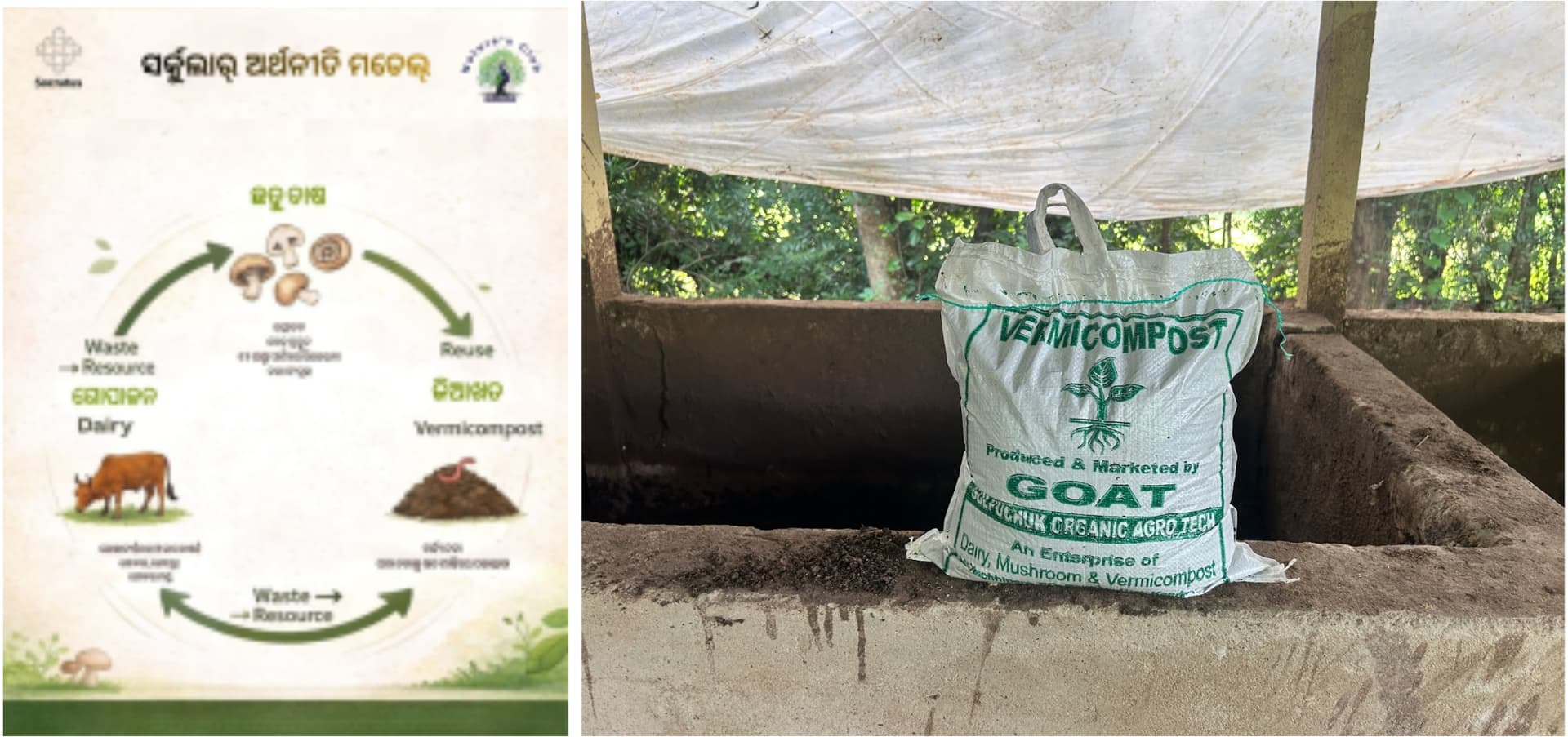
NATURE BASED AND CIRCULAR MODELS
- Repurposing Household Plastic Waste and Waste Clothes at Tailoring Clubs to Azolla as a Super Organic Feed for livestock and Organic Agarbatti from ekangi, wood apple and neem are the menu from KANIKA SUNDARI Brand.


VALUE CHAIN MODEL
- Out of 5000, more than 200 SRI farmers growing Leelavati – the indigenous variety of Kendrapara packaged as Rasabali Bhog brand.

LOKA – Local Knowledge Access Platform (Dec 2024)
- Co-created a Species Repository of mangroves and associated species, blending scientific knowledge with lived community wisdom.
- Positioned the repository as a foundational tool for carbon markets, mangrove tourism, and value-chain revival.
- Engaged artisans, fishers, Climate Champions, CSOs, and government stakeholders in applying knowledge for livelihoods and conservation.

Rural Landscape | FPO Strengthening & Market Linkages
In rural Odisha, the sandbox is taking a different tack - linking local production with fairer markets. The collaboration between Livelihood Alternatives and Villamart has demonstrated how farmer collectives can break cycles of distress sale.
From Demand Discovery to Response Plug in: A Sandbox Architecture Story from Odisha’s FPO Landscape
1. Demand Discovery: When Isolated Pain Revealed a Systemic Failure
In the early engagements across Odisha’s Rural Landscape, the Odisha Sandbox did not encounter a single, well-defined problem. Instead, through repeated convenings with Farmer Producer Organizations (FPOs), CBBOs, and ecosystem actors, a bundle of interlinked failures surfaced.
- Farmers spoke of distress sales and delayed payments.
- FPO leaders spoke of weak bargaining power, rejected produce, and governance stress.
- Markets spoke of inconsistent quality, fragmented supply, and unreliable volumes.
These issues were surfaced and structured during the Needs Assessment Workshop (Nov 19, 2024) using the 6M Framework, enabling FPOs to articulate challenges across market, money, methods, and machinery. What emerged was not a demand for subsidies or one-off buyers, but a recognition of a systemic gap:
FPOs were structurally excluded from reliable, quality-conscious, time-bound markets.
This phase of the Sandbox clarified the Demand Discovery- distress sale, power asymmetry, lack of quality standards, and payment uncertainty - all reinforcing one another and trapping FPOs in low-value transactions.
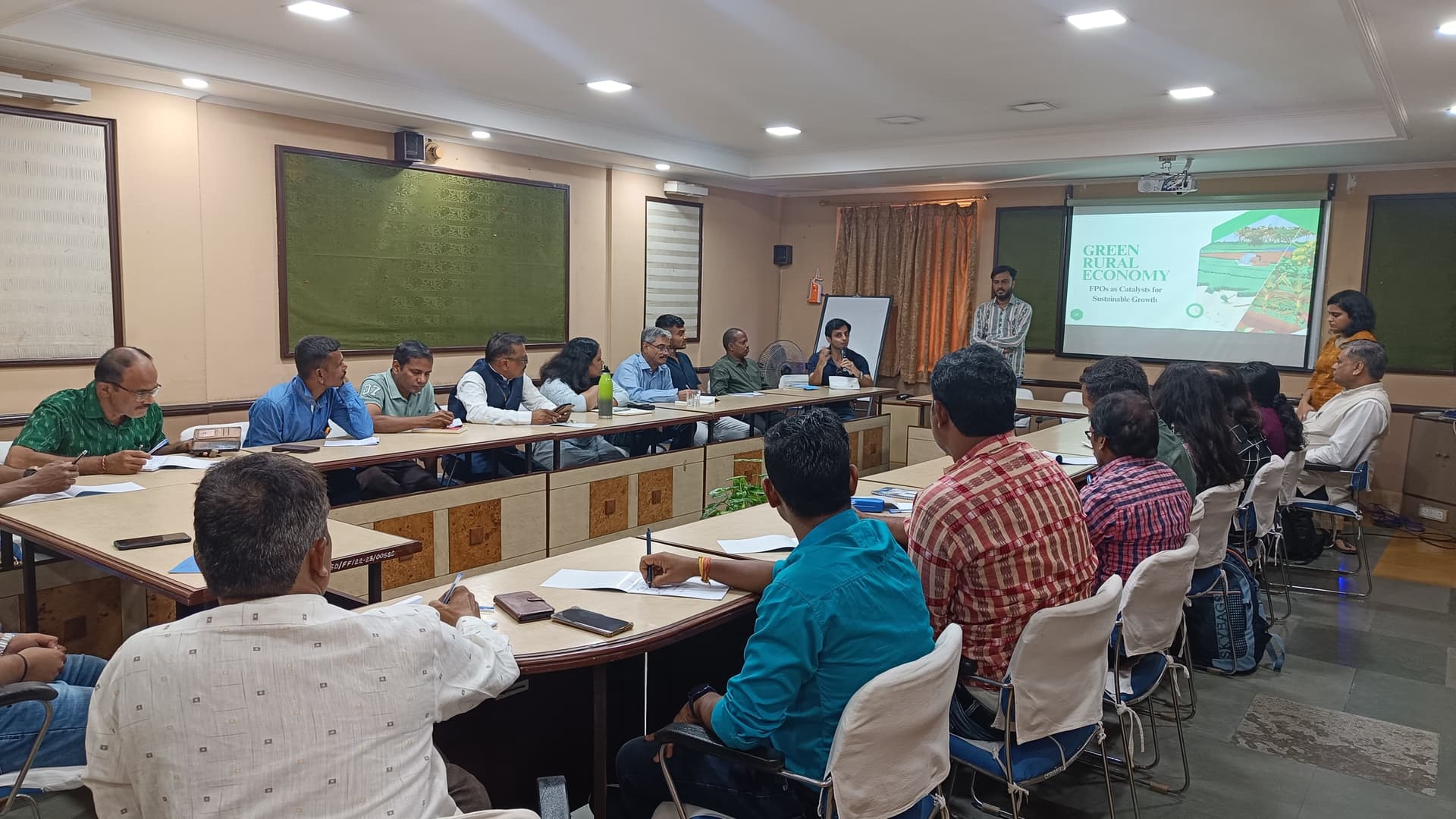
FPOs from different landscapes/districts shared their pain points related to Market, Money, Methods & Machinery, Manpower as a part of FPO Need Assessment
2. Orchestration: Creating Conditions for the Right Response to Emerge
Recognising that no single actor could address this bundled problem, the Odisha Sandbox shifted into its orchestration role. Rather than prescribing solutions, OSB convened reflective and design-oriented spaces where multiple actors could examine the system together.
Through workshops, regional consultations, and ecosystem dialogues — facilitated with Livelihood Alternatives, supported by BCKIC at KIIT-TBI, and informed by continuous FPO engagement — the Sandbox enabled actors to move from complaint to capability.
Importantly, this was also where the ecosystem itself began to identify potential responses. Through BCKIC’s market intelligence and network, Villamart Pvt. Ltd. emerged as a market actor whose operating logic aligned with the needs articulated by FPOs.
3. Response Plug in: Plugging in Villamart as a System Component
Villamart’s engagement was not positioned as an intervention imposed on the system. Instead, it was docked into a problem-ready ecosystem that had already developed clarity, alignment, and readiness through Sandbox processes.
By bringing Villamart into a structured engagement with Livelihood Alternatives (as CBBO anchor) and participating FPOs, OSB enabled:
This plug in transformed a distress-sale problem into a mutual value system:
- FPOs gained income stability, market confidence, and learning-by-doing, Villamart gained a dependable, decentralised supply base, The ecosystem moved one step closer to a resilient rural market architecture through Expanded engagement to 54 FPOs, enabling structured market access for fruits and vegetables, Enabled real-time sales of 8.5+ tons of produce, benefiting ~200–250 farmers directly.
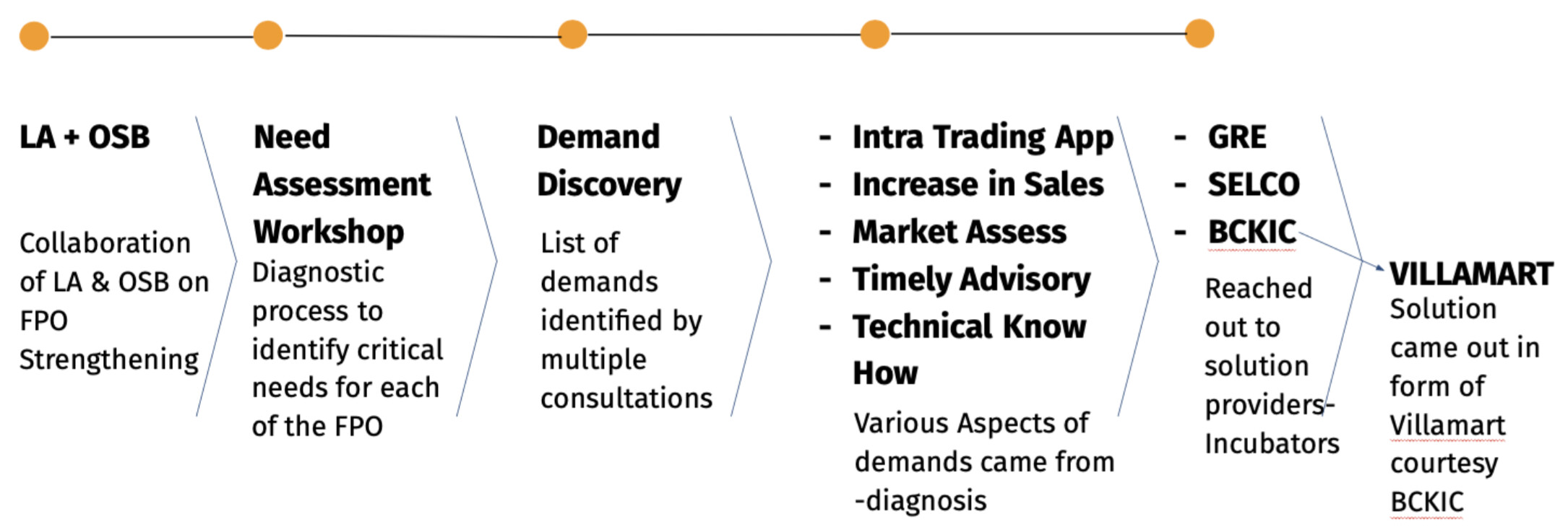
In Sandbox terms, the response worked because it was Plugged in, not deployed.
Partnership with Cocoter Farms
We are partnering with Cocoter Farms, an agritech startup providing end-to-end solutions for commercial integrated coconut farming, as a technical and resource partner for the Integrated Pond Liner Fish Farming initiative in Bagapatia. Under the Amrit Sarovar Scheme (MoRD), a detailed scoping and proposal is being developed for a multi-component model integrating coconut and areca nut farming, pond liner–based fish culture, organic kitchen gardens, and exotic fruit plantations. Beyond on-ground technical support, this partnership is designed to embed Cocoter Farms within broader state-level ecosystems by connecting them with platforms such as the Idea Tank, Odisha Vikas Conclave, and relevant agriculture and livelihood networks. This enables cross-learning, policy visibility, and scale pathways, while strengthening district-led implementation with credible private-sector expertise.
Tribal Landscape | Ecology & Place-Based Development
In tribal regions, a new chapter is unfolding. Atmashakti, with a presence in 17 tribal districts, is stepping in as the anchor organisation for the OSB’s tribal engagement. Known for its rights-based grounding, Atmashakti is now expanding its lens to include place-based thinking - unlocking the potential of tribal geographies through both resources and recognition. Together, these three landscapes - coastal, rural, and tribal - form the core of a grounded yet growing Odisha Sandbox. Each terrain has its own grammar, but the orchestration of collective wisdom remains the common thread.
- Developed a Sacred Groves Position Paper identifying conservation and governance pathways.
- Established convergence with Atmashakti Trust across 17 tribal districts, integrating rights-based and ecological livelihood strategies.
- Initiated landscape-level resource mapping to unlock forest-based and cultural economies.
- Involved in the Indigenous Yatra dissemination process by supporting Atmashakti Trust in different forums like Odisha Vikas Conclave and Odisha Environment Congress.
- Conceptualised and designed with support from Socratus Foundation for Collective Wisdom, Grameen Charcha is being shaped as a people-led dialogue platform that centres Indigenous knowledge, community evidence, and systems thinking to inform governance, markets, and public action. The programme is deliberately hosted in a village setting to anchor conversations in lived practice - food systems, seed knowledge, water stewardship, and community governance. This ensures communities participate as knowledge holders and co-creators, and that outcomes remain grounded, credible, and scalable.
State Architecture Archetype:
Flourishing Odisha in the Era of Climate Change - A State Narrative.
What began as a phrase - Flourishing Odisha in the Era of Climate Change - has now turned into Climate as a grammar for governance and policy making. 2024 saw climate no longer remain on the fringes of political consciousness in Odisha; instead, it moved to the centre of action — informing policy, shaping conversations, and mobilising communities. Through initiatives like the Climate Manifesto, Climate Panchayat, and People’s Climate Atlas, Odisha is setting the stage for a new kind of statecraft - one that is deeply local, scientifically grounded, and people-led.
| Archetype | Partnerships that Emerged | Progress So Far / What Has Happened | Going Forward (Next Step) | End Goal / Narrative Shift (Toward Climate Proofing Odisha) |
|---|---|---|---|---|
| Climate Panchayat, Climate Manifesto, Odisha Vikas Conclave, Odisha Environment Congress | - Sambad Media Group, Bakul Foundation, XIM University, MLA, Journalists, community members – Climate Panchayat & People’s Climate Atlas - Civil Society Networks, researchers, academicians, scientists, practitioners – Climate Manifesto - Ramadevi University & Human Development Foundation – Odisha Environment Congress - Policy practitioners, researchers, entrepreneurs – Odisha Vikash Conclave |
- Climate Manifesto mainstreamed climate across political parties manifestos - Climate Panchayat, hyperlocal climate discourse, MLAs raised climate issues from ground realities in the Odisha Assembly (salinity, mangrove loss, heat stress), - Odisha Vikas Conclave (Nov 2025) reframed state development as Balanced Growth & Climate Resilience - Odisha Environment Congress (Dec 2026) expanded public understanding through youth-led curated platforms like GirlsZen Jury and INNOENVIRON 2025 |
- Institutionalise Climate Panchayat as a Citizen–State Governance Mechanism within VOCGA - Channel insights from OVC & OEC into state policy circles and VOCGA roadmaps - Launch “College Panchayat Odisha” for youth-led climate governance, creating young public problem solvers |
- Reframes climate discourse: From disaster response to governance responsibility. - Builds political and public will for Climate Proofing Odisha — where resilience becomes part of state planning. |
| (Green Economy Odisha with CEEW) | - CEEW, WELL Labs, SELCO, Cocoter, PRADAN, Nature’s Club, Livelihood Alternatives, Atmashakti - FPOs across 10 agro-climatic zones |
- Developed the Common Results Framework with CEEW linking ecology & economy - Piloted Mentopreneur Model — community innovators building regenerative enterprises (bio-inputs, mushroom, neem–guggul agarbatti, coconut processing, integrated farming systems) - Launched DCAP in Kendrapara linking departments, CSOs, and communities for convergence-based livelihoods |
- Scale Mentopreneur ecosystem and align with VOCGA’s Green Economy pillar - Nature-Based Enterprise Clusters across coastal, rural & tribal belts |
- Transitions Odisha’s economy from disaster management to resilience design. - Builds the material base for Climate Proofing Odisha - green jobs, regenerative livelihoods, and circular economies that withstand shocks. |
| Institutional Governance & Climate Finance Archetype (VOCGA – Viksit Odisha Climate Governance Authority) |
- DEFT (technical knowledge partner ) - Climate & Sustainability Initiative (CSI) (finance architecture) - Govt of Odisha (Revenue & Disaster Management, Planning & Finance Depts.) - Civil society & network partners |
- VOCGA proposed under Vision 2036/2047 to institutionalize climate governance - Under VOCGA, Socratus co-curated a Climate Finance panel at the Earth Again Conference 2025 with Sambad and Bakul Foundation, bringing together experts to chart Odisha’s green finance roadmap. - Initiated work on Climate Finance, PES (Payment for Ecosystem Services), and Parametric Insurance |
- Establish VOCGA as a State Climate Governance Authority linked to district frameworks - Create Climate Finance Platform for Odisha integrating PES, insurance & adaptation funds |
- Build climate action from ad-hoc relief measures to systemic, funded, accountable governance. - VOCGA becomes the institutional backbone of Climate Proofing Odisha, ensuring continuous continuity, coordination, and finance at scale. |
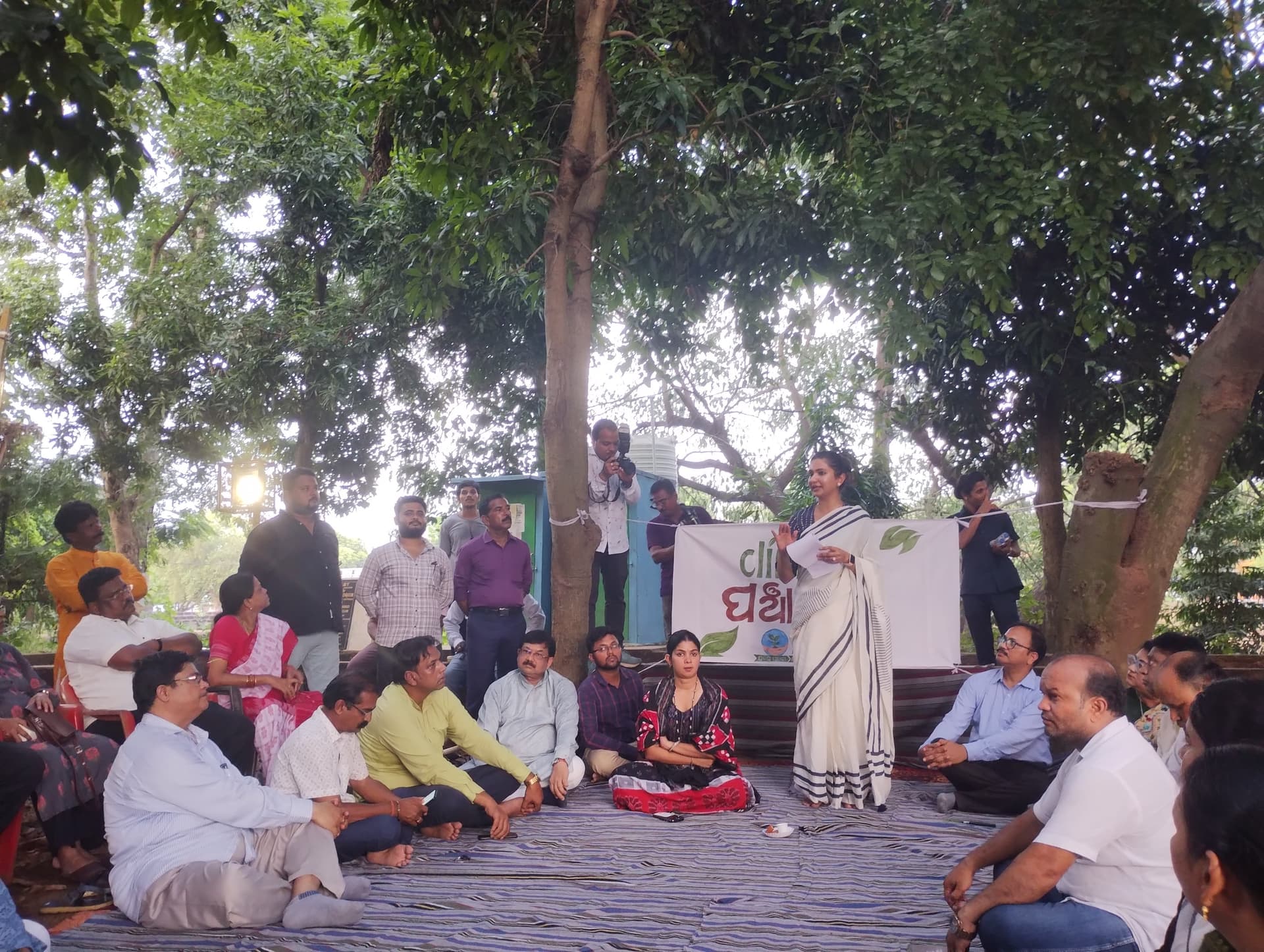
Climate Panchayat session held in Barabati Constituency, led by Hon’ble MLA Sofia Firdous, brought together women, youth, senior citizens, and community members for discussion on hyperlocal climate and environmental challenges. The Hon’ble MLA raised these hyperlocal climate concerns in the Odisha Winter Assembly Session, ensuring that community voices are carried forward into legislative discourse.
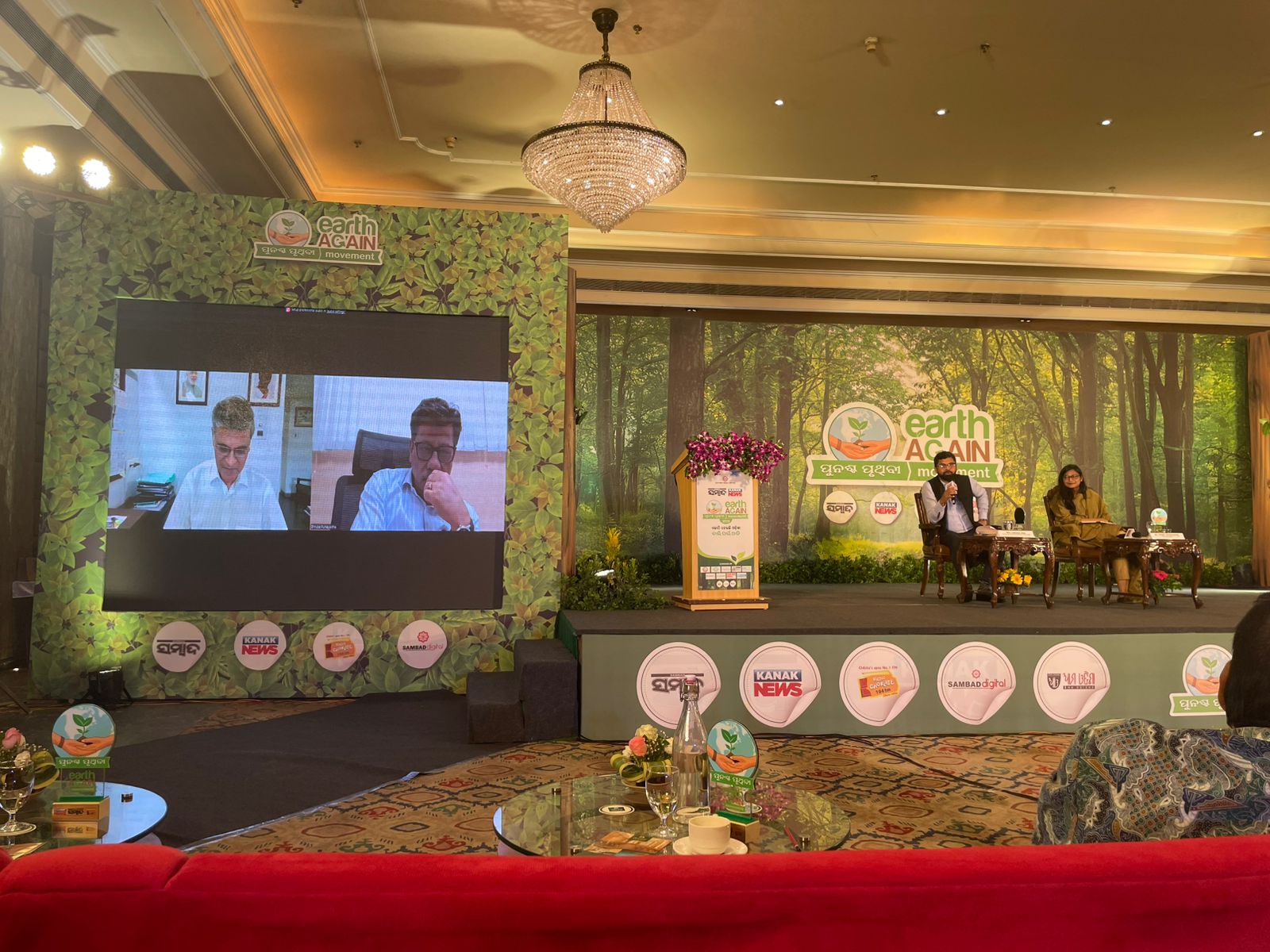
Panel Discussion on “Climate Finance – Contributing to Odisha’s Vision for a Green Economy” at the Earth Again Convening 2025
The session brought together leading Climate Finance experts including Mr. Labanya Jena, Prof. Amit Garg, Dr. Dhruba Purkayastha, and Ms. Gunjan Jhunjhunwala for a focused dialogue on mobilising climate finance to advance Odisha’s green economic transition.
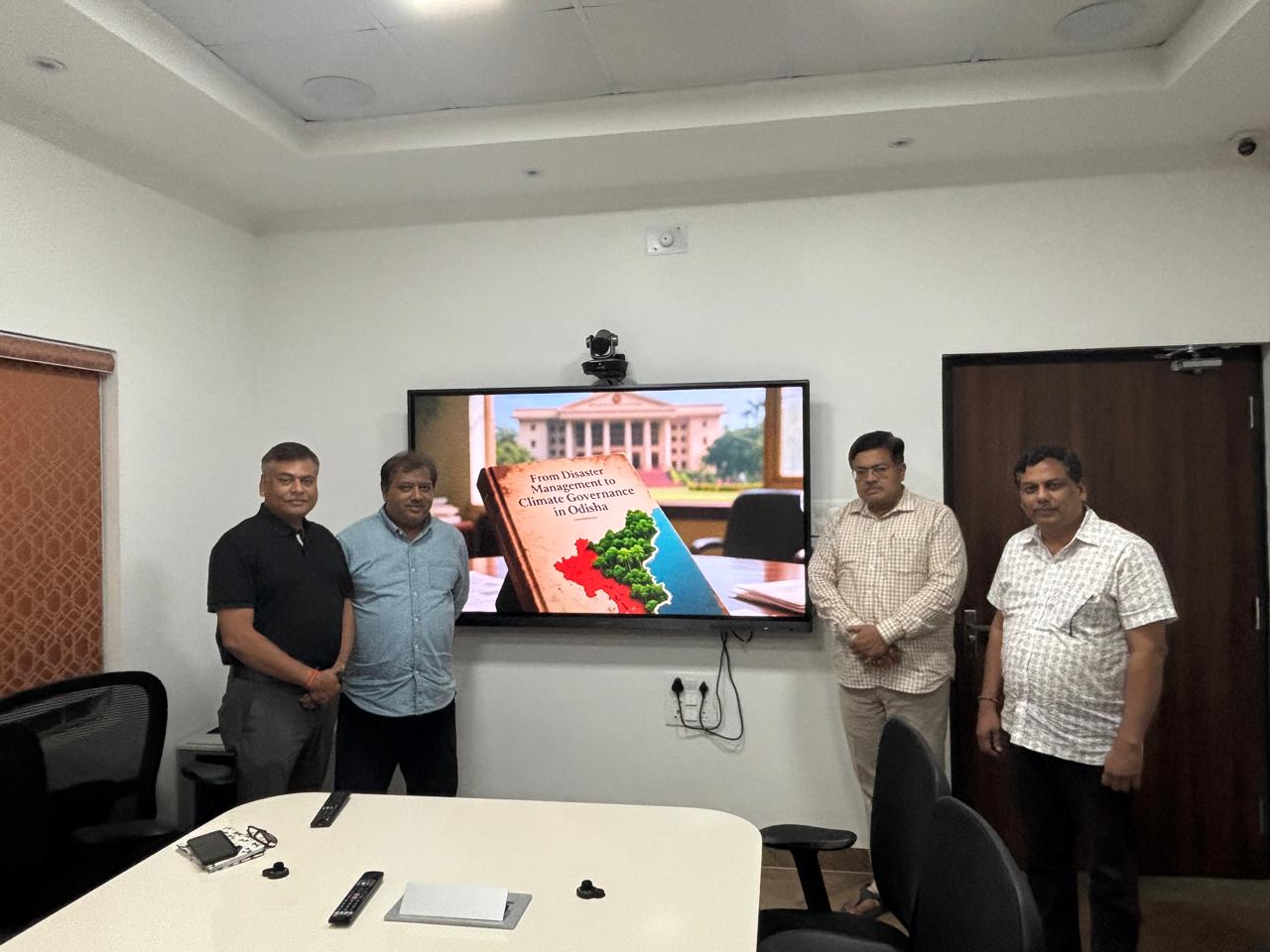
Meeting with Hon’ble Minister Prithviraj Harichandan, Government of Odisha, to deliberate on the establishment of a Viksit Odisha Climate Governance Authority (VOCGA) aligned with the state’s Viksit Odisha 2036 & 2047 vision.
The discussion focused on transitioning from a “Zero Casualty” disaster response framework toward a comprehensive Climate-Proofing model for the State, embedding climate risk governance, institutional coordination, climate finance architecture, and long-term resilience planning within Odisha’s development pathway.
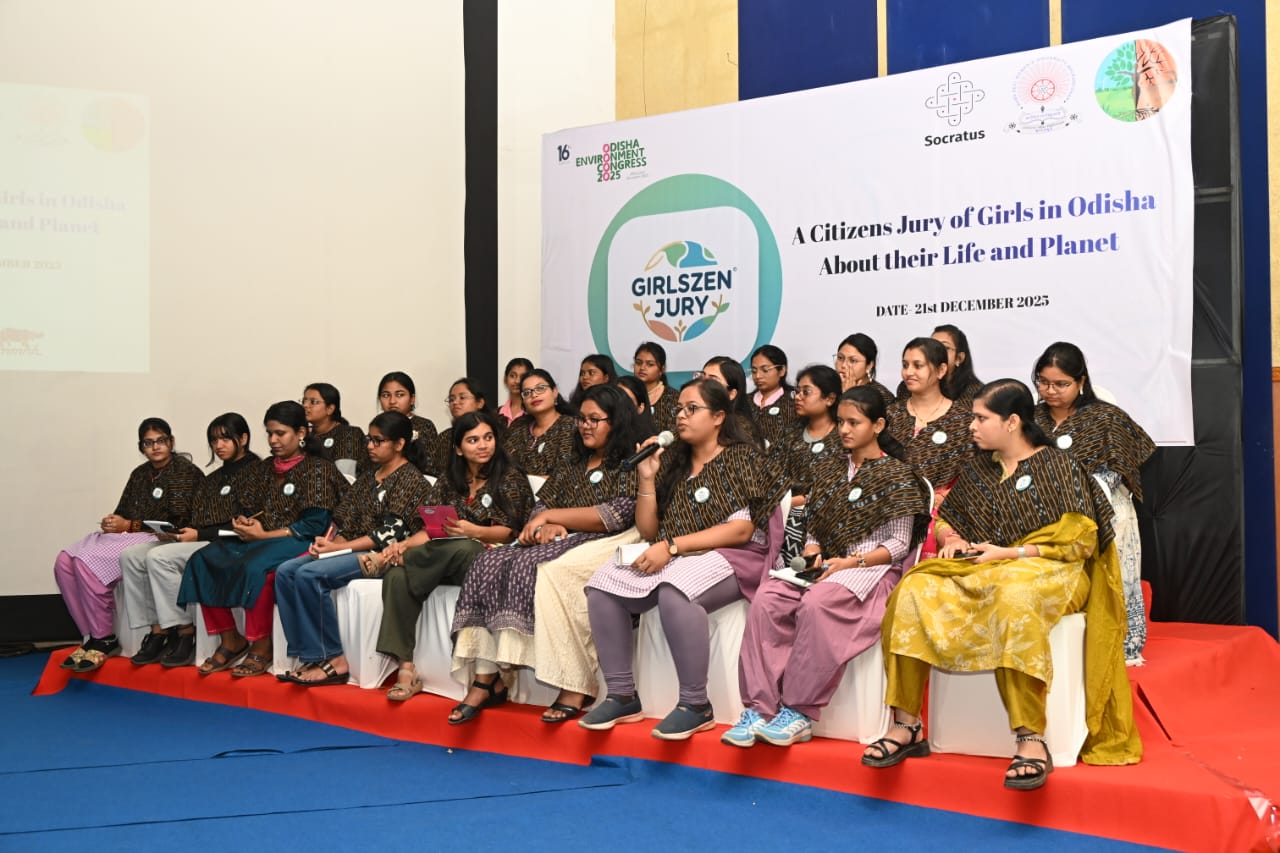
The Citizens’ Jury for Girls Students under the Odisha Environment Congress, themed “Our Traditions, Our Climate, Our Future,” created a democratic space to explore how intergenerational wisdom - especially from mothers and grandmothers - can inform today’s climate action.
It examined the linkages between culture, women’s knowledge systems, and sustainability, highlighting practices such as water conservation, reuse, and simple living as foundations of climate resilience.
The Jury’s deliberations culminated in community-driven recommendations to guide government policy toward a more sustainable and equitable future for Odisha.