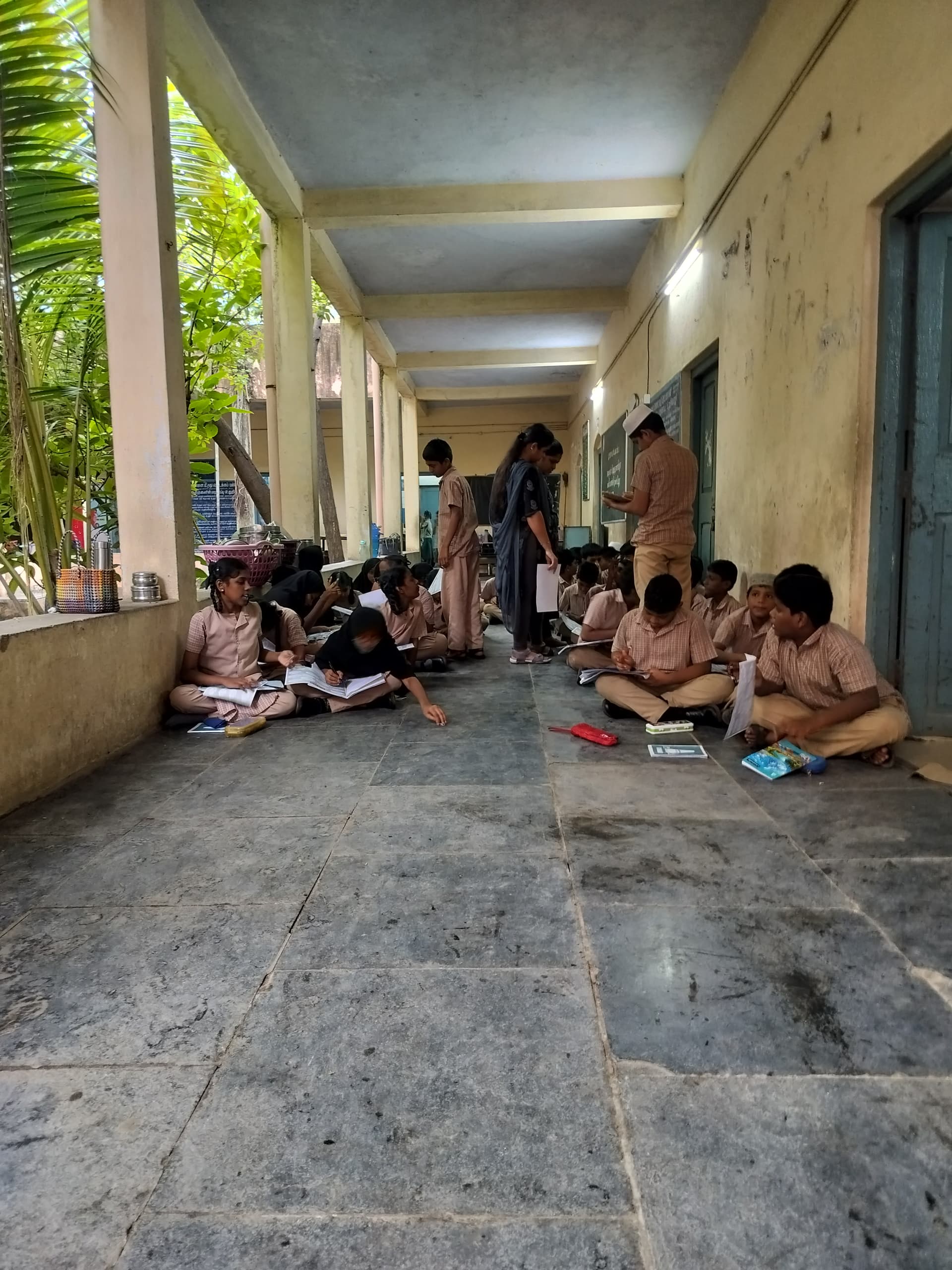
We are thrilled to start the second year of our NBL study in 6 GCC schools for about 300 children this month. The study aims to provide comprehensive data showing a local nature based action based pedagogy helps improve curiosity, intrinsic motivation and with cognitive development in children while also shaping them to be ecological stewards. The last month we have started the second year of the two year study with the same batch of students from last year and we are excited to continue the program and to bring some of our new NBL modules to the children.
Happy to share here that we got an article about the butterfly migration here last week in the New Indian Express newspaper. The migration this year has been extrodinary, and people were able to see around a 100 butterflies/ minute over a 20 meter transect. We spoke about how butterflies can be extrodinary ecological indicators and how chennais changing lanscape has affected them. I’m sharing a link to the article here!
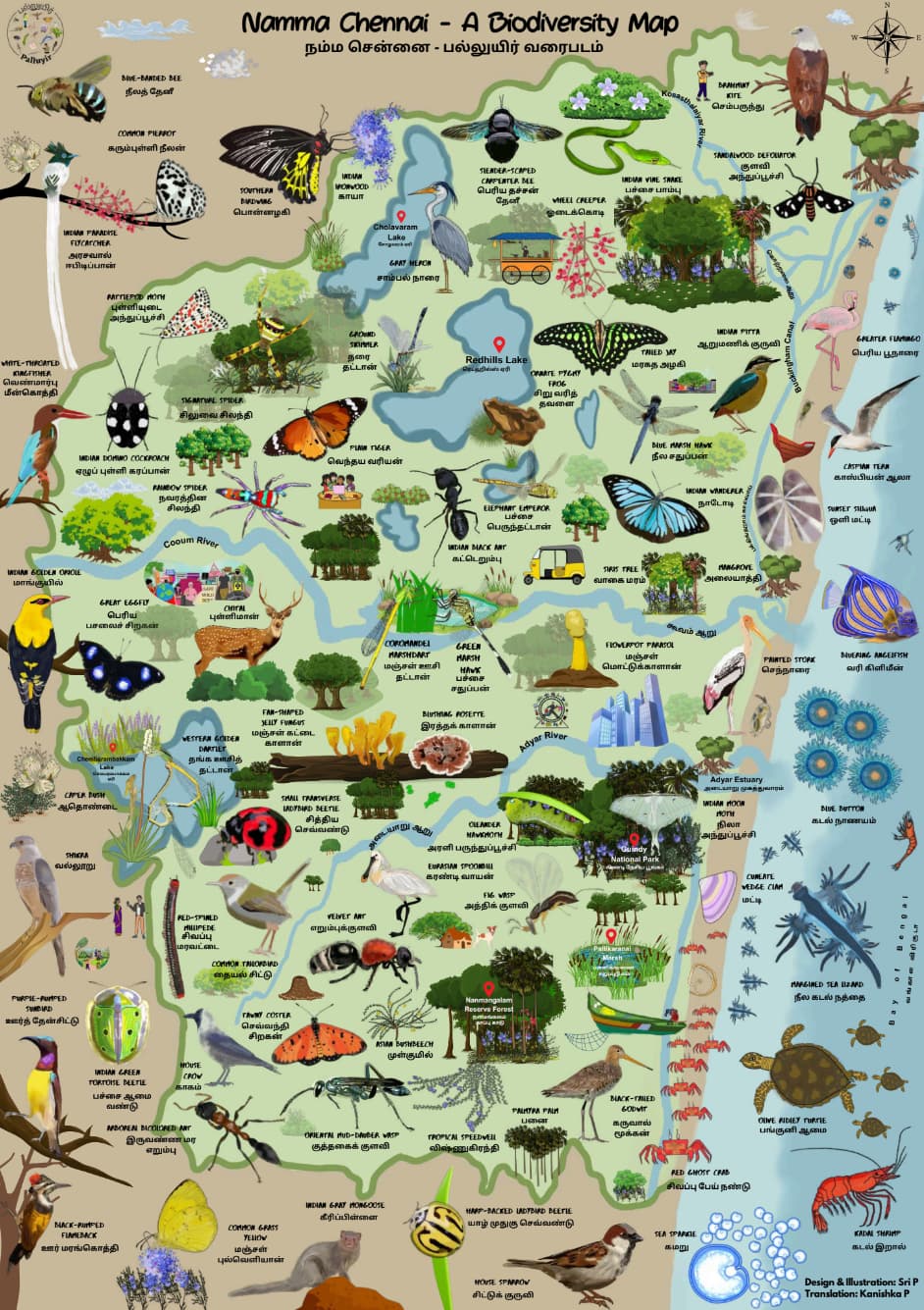
We worked on a illustrated biodiversity map of Chennai, highlighting all the diverse and wonderful variety of life Chennai’s ecologies host. We released it earlier this month and we are thrilled with how it has come out and the responses we’ve recieved since! I’m attaching a screenshot of the poster here and the high quality version of the same can be downloaded from the link below.
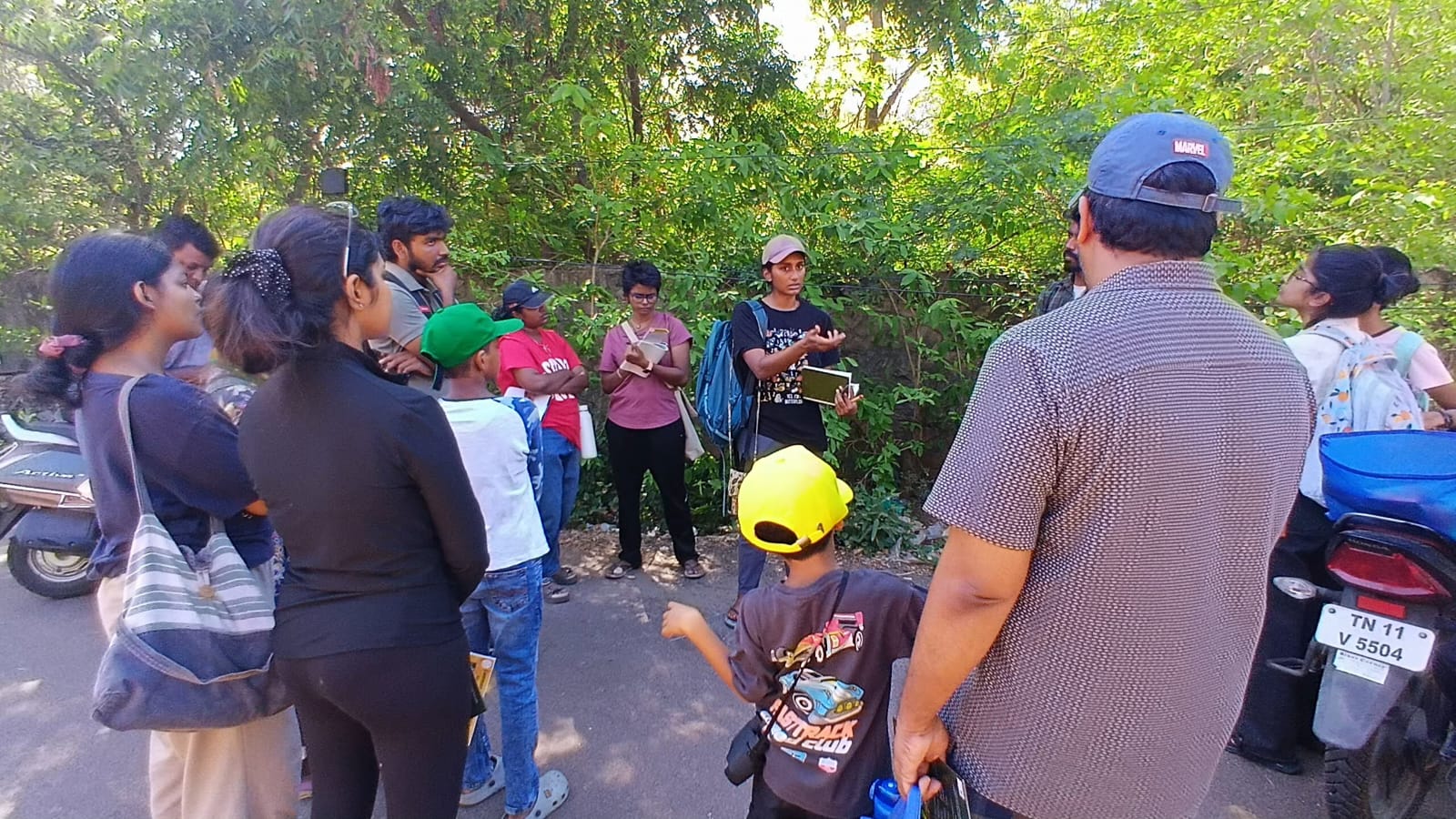
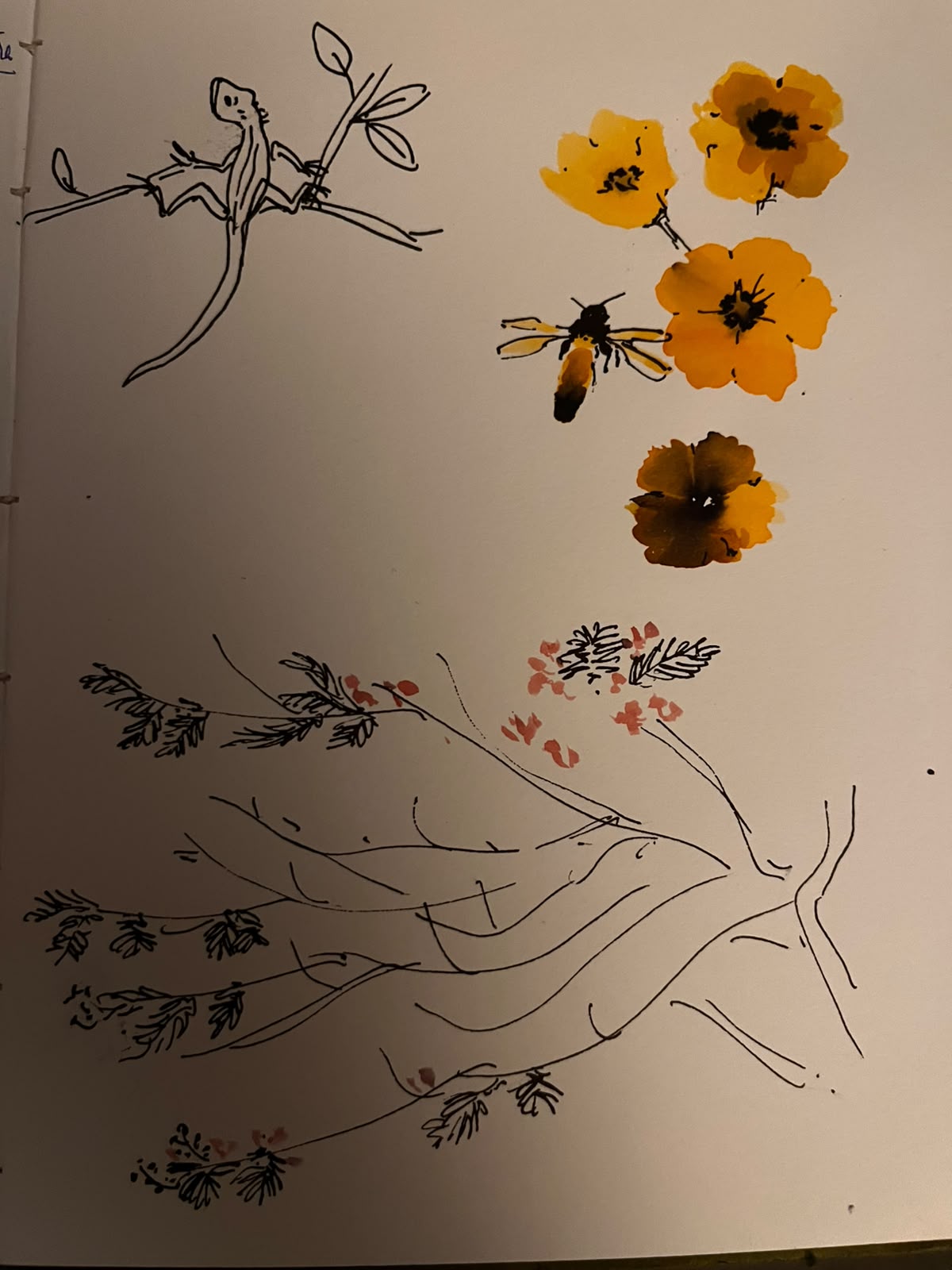
We conducted a session around microhabitats in GCC schools last month, telling the children stories about the wonders such small spaces around their classrooms foster. We gave them pictures of multiple creatures that can be found around their campus and asked them to go find the creature, describe its microhabitat and how the microhabitat is conducive for its survival. We were blown away by how familiar some children were with their campus and their attention to detail. A lot of children were already primed to observe life around their classrooms through our last years NBL study and it was quite evident through this session. They were able to instantly point out where tiny wasp nests were, or where a peepal tree is growing from a crack in the wall in their school campus. A lot of children were also able to think critically and reason how the creatures have adapted to live in their microhabitats.
We are thrilled to announce that Chennai now has released its biodiversity index becoming the first city in the State to have one. Rithika Fernandes who envisioned this has been in close touch with us and has used our materials extensively to help with the document and the same has been released by TN’s Chief minister, M.K.Stalin last month. I’m attaching below the link to download the same, and a newspaper article on this.
This is wonderful to see, many congrats Yuvan! And very glad that the considerable volumes of data avalailable from citizen science (iNaturalist, eBird) have been put to use. Suhel
We are excited to share that we have started the process of creating a People’s Biodiversity Register (PBR) engaging the local youth from Sirudavoor (in the Chennai outskirts) in association with the Madras Naturalists Society. We’ve done 2 walks with them the last month, talking to them about the India’s Biological diversity Act of 2002 and the rich diversity of life that their town hosts. We’ve helped them get familiar with citizen science portals, such as Inaturalist, eBird, pl@ntnet and Merlin. We are planning to do fortnightly walks and we plan to help them to establish a biodiversity management committee and publish a PBR for Sirudavoor in the coming months.
We are thrilled to announce that we are in the final stages of finishing our Vedanthaangal birds field guide and it should be available to download in the next few days. We are doing this in collaboration with the local forest dept and this guide will be used to train folks in Vedanthaangal and to hopefully have local guides for the area in the near future. The place itself has a rich history of people from the town standing up for the birds, getting it declared as a protected area way back in the late 18th century!
This last month we did a shells session, and tried to get a version of our shorewalk in a GCC classroom indoors. Almost every child we have worked with in the elementary- middle school age group is enthralled by anything that has to do with the oceans. We got the children multiple bivalve and gastropod shells, spoke to them about how the beaches are formed, their importance to the city’s water security, stories around the lives of multiple bivavles and gastropods, and they described/ illustrated 7-8 shells, and we played a feel and guess game towards the end of the session. Every child was given a copy of our coastal fauna guide, and by the end of the session they were already thrilled to go to the beach to spot more species of bivalves and gastopods. A lot of children got to learn that the shells were made by living creatures and to see the number of different species found around Chennai in the guide got them quite thrilled. To get them excited about a trip to their local beach in the same way that they would be to go on a trip to the Vedanthaangal bird sanctuary felt like a big win for us.
This last month we have ideated 2 totally new modules that gave us radically new ways of enaging in spaces, with people.
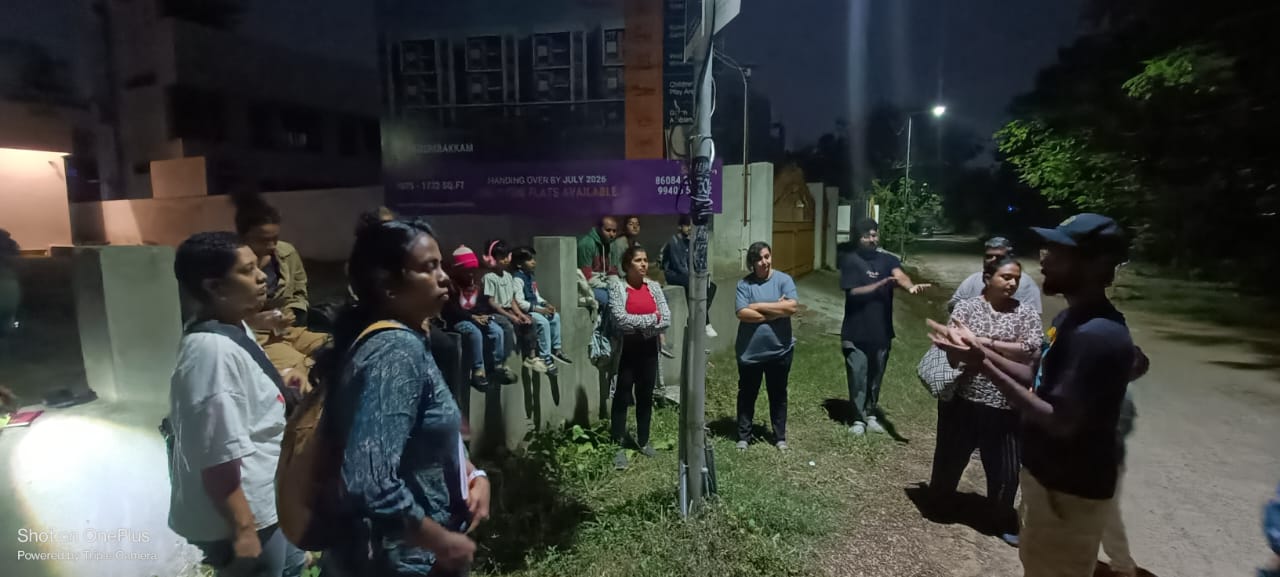
One walk was the night soundscape walk where we got people to listen and describe around 10 frog/ insect calls. We then walked around a residential part of the city completely built on marshlands, and people were immersed in multiple layers of sounds and Ided species. It was a wild experience to have a bunch of people patiently outside a big puddle waiting for this one particular species to call and to celebrate when it did! The space also helped birth a lot of conversations about encroachments and how frog populations have drastically gone down in the city!
`The other walk was the backshore walk where a module was ideated around the vegetation that has grown and adapted to growing on beaches. We have done plenty of shorewalks speaking about life in the intertidal zone and the seaonsal changes that the ocean goes through but this module was totally differnet in the same landscape. The walk helped us talk about the beautification of beaches projects that are constantly proposed, the role of beaches in helping maintain the cities water security and why beaches seem barren but are thriving landscapes.
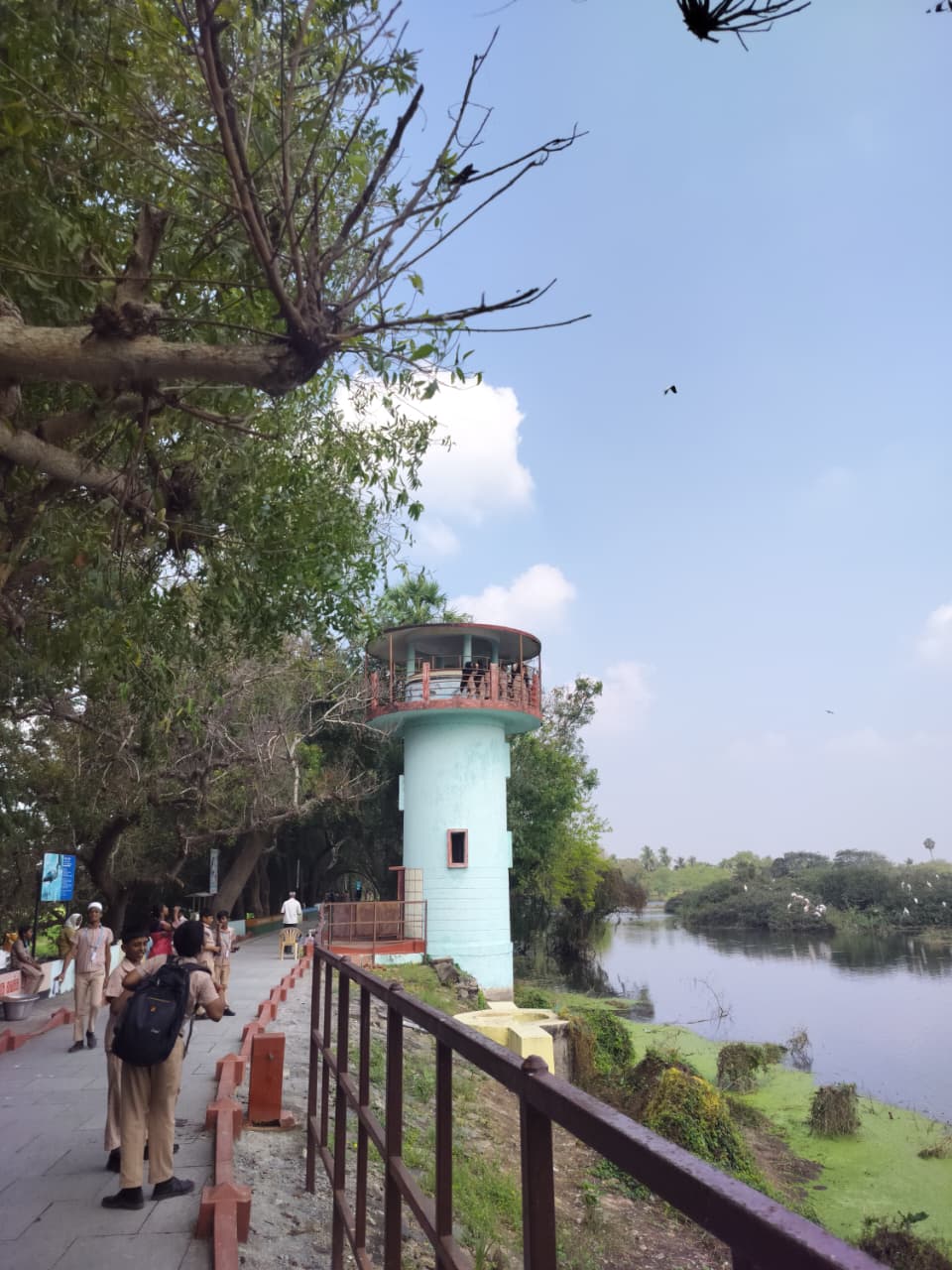
This past week we have been taking children from 6 GCC schools around Chennai to the Vedanthangal bird sanctuary. The sanctuary is the oldest of its kind and has a deep history of the local people standing up for the thousands of their bird kin, with records of protests against bird hunting by the British, all the way back in the late 1700’s. Thousands of birds nesting and raising their young just a couple of hundred meters from a human trail, revisiting the same spot for hundreds of years is magic that speaks to the psyche of most people. We helped children observe behaviours such as, nest site preference, nest building, courtship, parental care, foraging… The children also were able to use our Vedanthangal field guide to identify a lot of birds in the sanctuary. The guidebook can be downloaded from our website using the link below, Booklets – Palluyir
We are thrilled to announce that we are collaborating with CitiesRise on a nature youth program across 6 cities in India. We are currently working closely with their to ideate modules integrating nature and inner development that can be scaled up across different cities. The process thus far has been extremely rewarding, learning about the inner development modules that the citiesrise team has already developed based on the philosophies of Thich Nhat Hahn, and brainstorming integrating our NBL modules with them. We plan to run a 6 month internship program for the youth in these 6 cities in the second half of this year, similar to the UWW program we have been doing in Chennai, and the each city team will opt to do a service project for their city by the end of this.
The People’s Biodiversity Register project in Sirudavoor has been completed and we are elated to share this with you. We envisioned this project with the Madras Naturalists Society last year, given the prevalent encorachment issues in the biodiversity rich area. We have been working closely with the youth in the village to slowly document all the life in their area through the seasons. We handed over the PBR report to Ms.Mita Banerjee, IFS, PCCF and Member Secretary, Tamil Nadu Biodiversity Board. This is a huge milestone for us and we are already working on getting PBR’s in place for 4 other eco sensitive hotspots in and around Chennai! Here’s a link to the PBR report below
We just wrapped up two batches of Young Naturalists summer workshop, one for government school children in collaboration with an organisation called Yein Udaan and one for the public where parents tag along with their children. Both workshops happened over a span of 2 weeks, 7 different nature modules in different parts of the city. Both batches were wonderful to work with and we had different takeaways from each. From our observation working with GCC children the last 3 years, given the free time they have in their younger years at school, the children have a natural affinity towards exploring the life around them (most GCC schools have decent amount of open ground space and trees) Getting to work with GCC children in the city in biodiversity rich spaces like pachamalai, bolleni hills and taking them on a shorewalk has been an extremely fruitful and rewarding experience. The experience other batch with the public has also been similar, and it was beautiful to see parents get their children to these sessions (some live 20-25kms away from some of these locations) on a weekday evening! All of them were given our nature materials and some parents are teachers at private schools in the city and already are planning to take versions of these modules to their schools. We are ideating a version of these workshops to have a monsoon edition sometime later this year also.
We are doing a series of pollinator walks/ insect campaign in green spaces around the city. Given the full onset of the southwest monsoon, we have a huge influx of migrating insects that have started coming to our city. We conducted two public walks the last two weekends and are planning to host a few more this month. We see two core themes being addressed in these walks; one the general fear/ indifference towards insects (primarily bees and wasps) fade away when they get to observe them nectaring closely, getting a glimpse into the umwelt of their world. We see fear slowly being turbated into curiosity and slowly, hopefully turn into love and care. The second theme being conversations around themes of beauty in our green spaces and the widespread normalisation of pesticide use. These conversations have come up organically from the participants towards the end of each walk and it has been enriching letting it grow and expand within that small circle!
We hosted a night soundscape walk yesterday in a lake in the middle of the city. This is one of our first walks that we are hosting on a weekday evening and we were pleasantly surprised to have the registrations fill up in just a couple of hours and have a lot of people asking us to join too. The walk went extremely well, people getting to experience and tune in to sounds that usually lie dormant in one’s subconscious although we hear it all around us.
We helped them listen to and identify different calls initially and let them walk around the lake at their own pace and identify various calls while a few of us walked around, helping them confirm their IDs and telling them stories about each species.
We look forward to hosting another few of these soundscape sessions in the coming weeks!
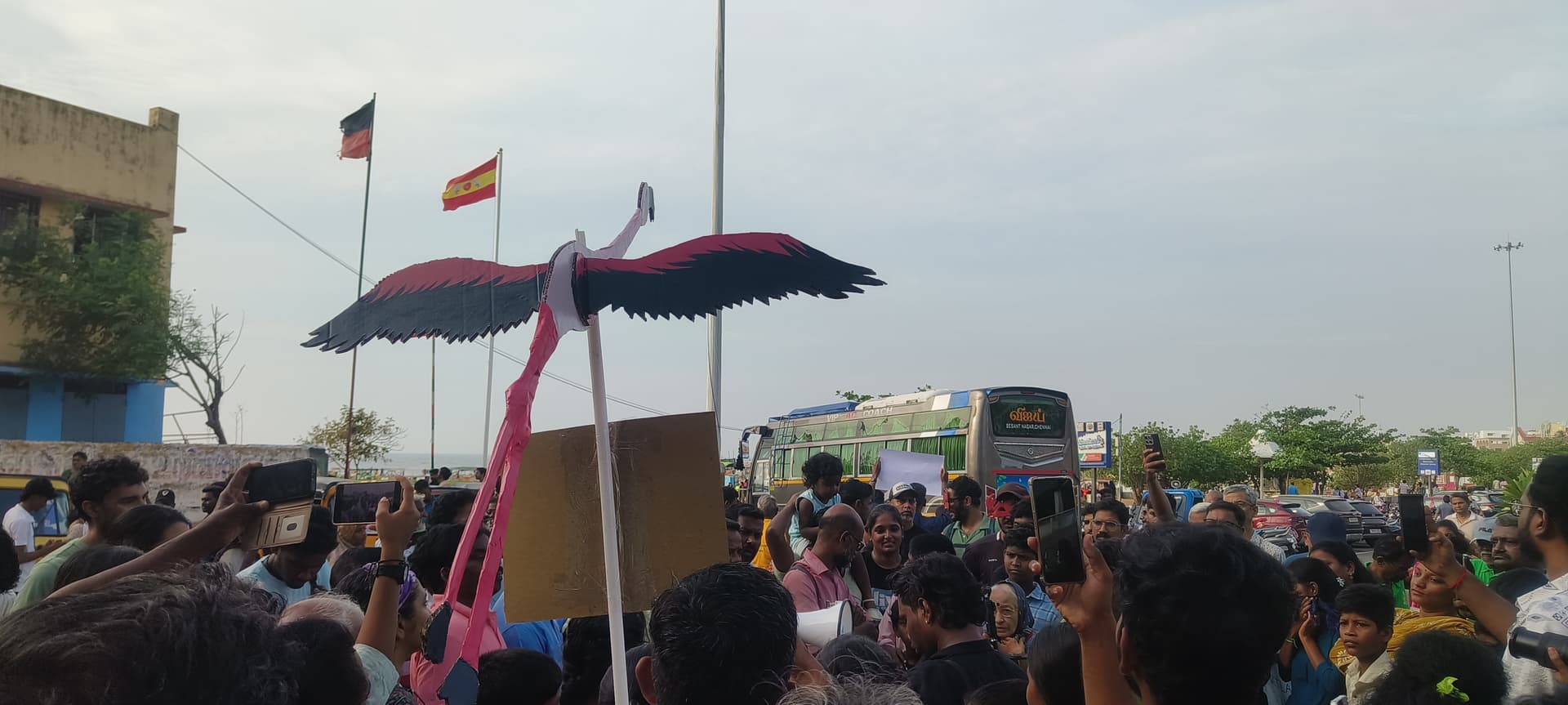
A couple of weeks back, we helped ideate and host a rally against the mamallan reservoir project. The project site lies directly over one of the biggest birding hotspots close to the city, with around 16 fishing villages being affected as well. The freshwater reservoir is also proposed extremely close to the ocean, and the existing backwaters is a crucial storm buffer for the city.
We ideated a water tour module, taking children and public from OMR following water/ drain along the the way till the muttukadu estuary close to where the mamallan reservoir project starts. We discuss the impacts a growing city has on its outskirts, especially to people who’s lives depend on the land.
We also organised two art making campaigns before the rally to be used during it. Along with a few organisations, like CCAG, Suzhal Arivoam, CWAG we helped organise the rally in Besant Nagar beach. A few hundred people showed up, bringing with them beautiful art, slogans and props. We had fisherfolk from the affected villages speak about the impacts on their livelihood. Post the rally an expert committee has been appointed to look into the EIA report in the area.