A few weeks ago we introduced Farm8, a 2.5-acre art and ecology site on the Aravalli outcrop at the edge of Delhi’s Southern Ridge. The land has been tended for twenty years, twelve of them regeneratively, and in that time it has been watched closely but never measured. That is now changing, through an agroecology and soil-health study led by Prof. Usha Mina and her team at the Agroecology Lab, School of Environmental Sciences, JNU.
What the study involves
The site follows a permaculture zone design, running from intensively tended beds near the house to a semi-wild water-harvesting area. That gradient lets us ask how soil life and carbon change as human management lightens.
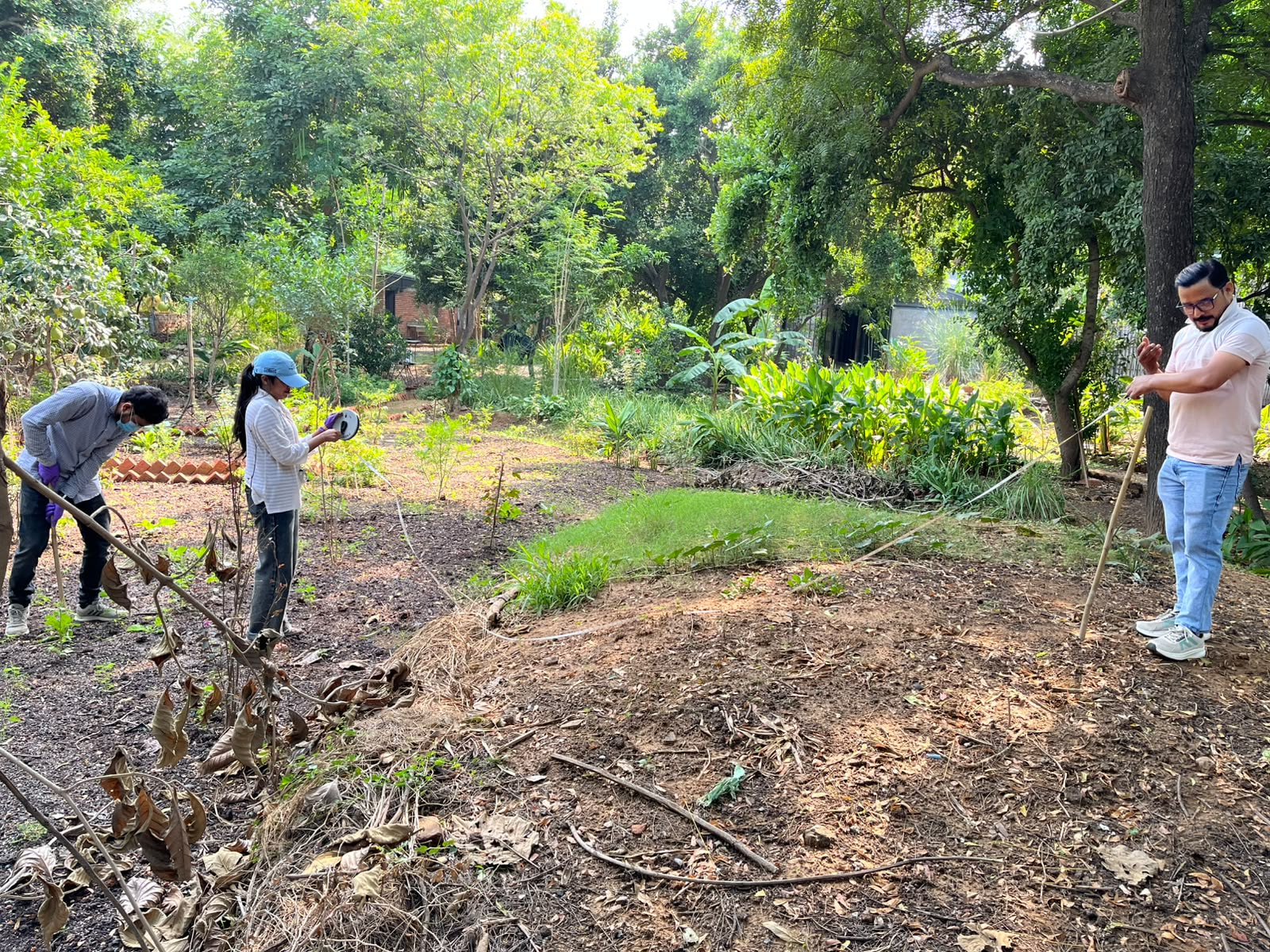
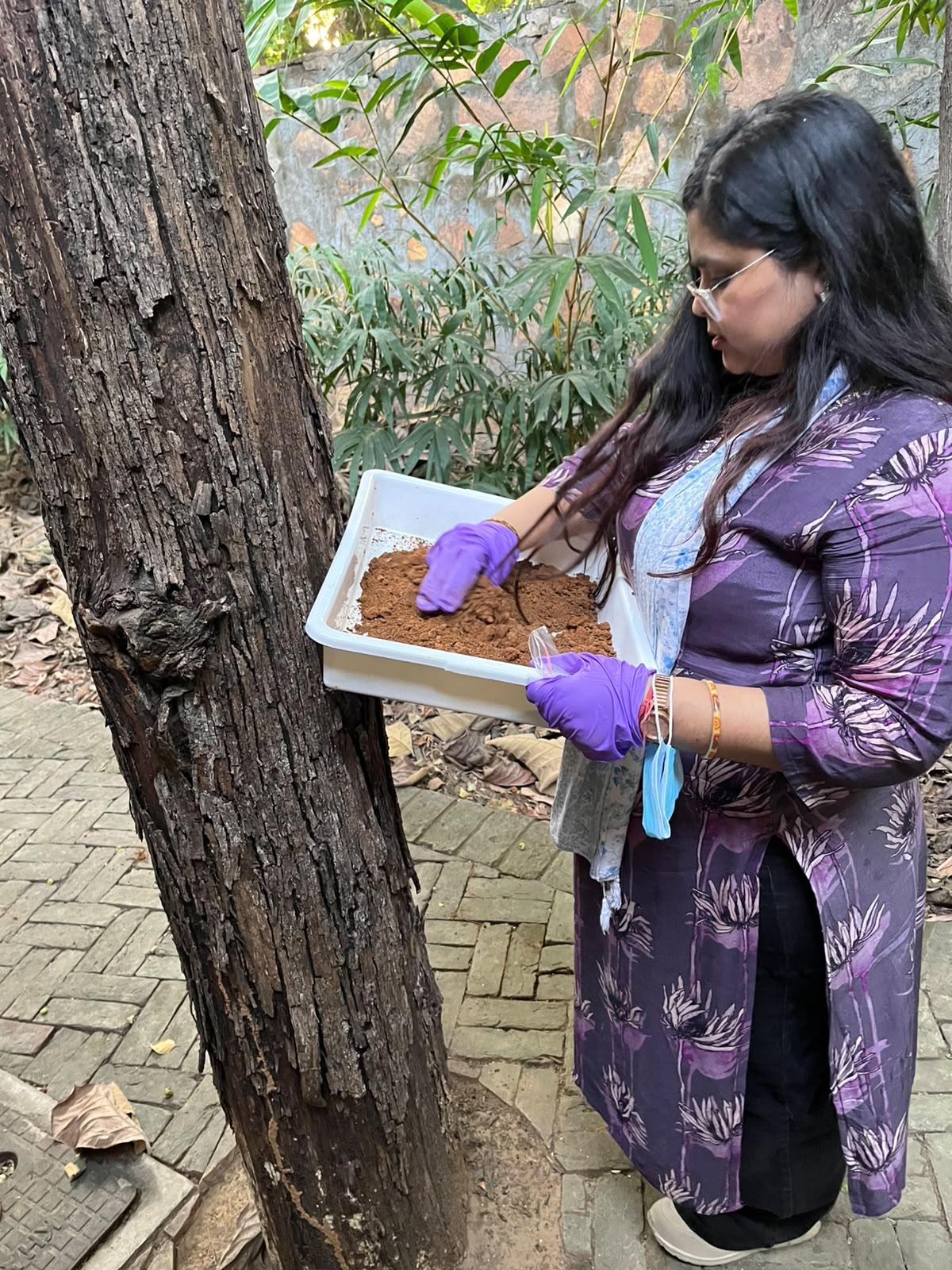
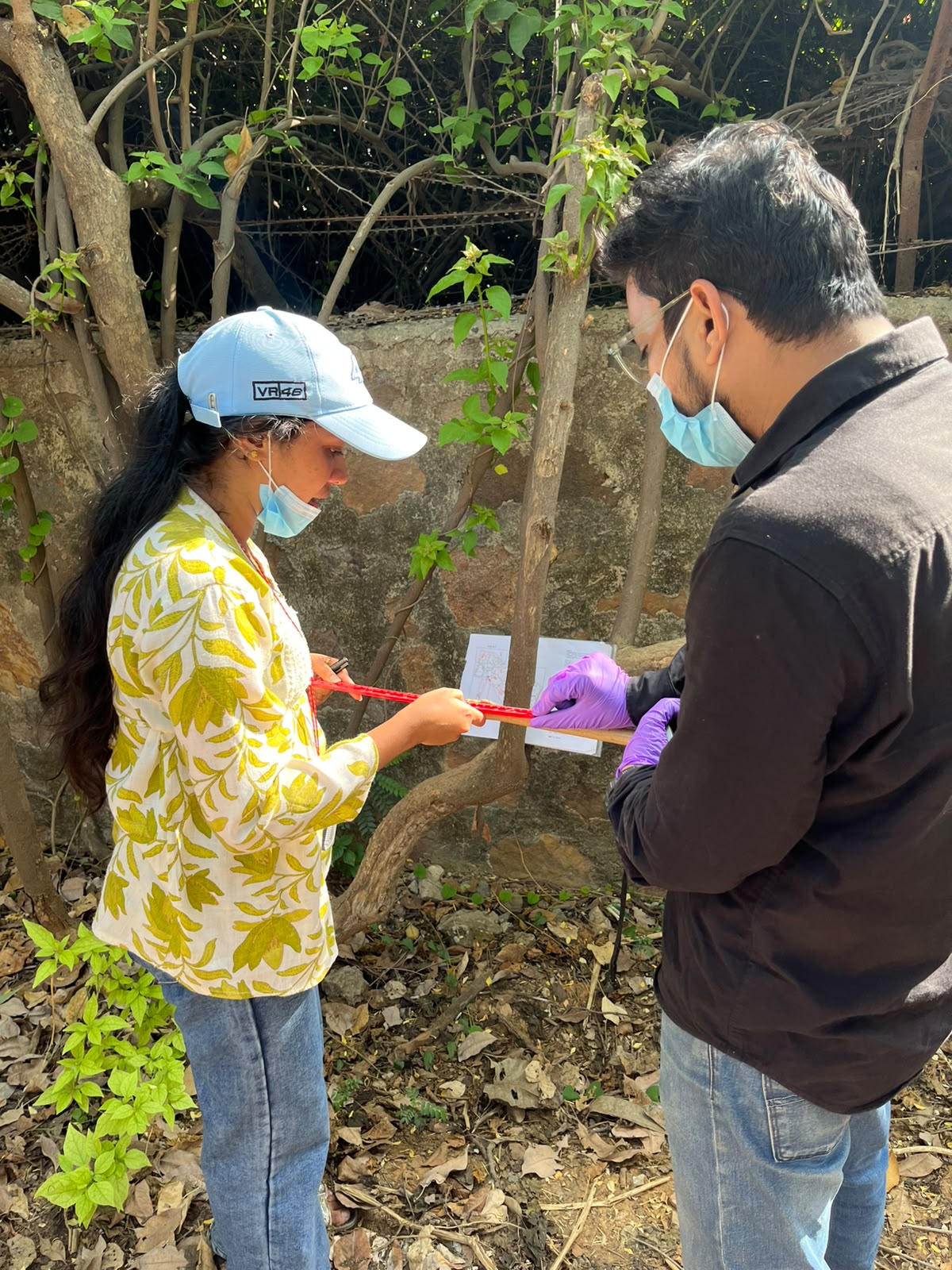
Since the first field visit on 5 September, the team has:
Fixed permanent sampling points by GPS, so every future round returns to exactly the same spots
Surveyed biodiversity plot by plot, zone by zone, with botanical name plates for the trees to follow
Started a tree carbon inventory, measuring every tree over 10 cm trunk diameter
Begun soil sampling (0–15 cm) for physical and chemical properties, plus two indicators of biological health: microbial biomass carbon (MBC, how much life the soil holds) and dehydrogenase activity (DHA, how active that life is)
Two seasons, and an archive
Delhi’s soils swing sharply between wet and dry seasons, so sampling runs twice: post-monsoon now, and pre-monsoon in April–May 2027. Part of every sample is also archived at −80°C, so that when DNA-based methods for reading soil microbial communities become accessible to us, we have today’s soil to compare against.
What we hope to learn
First, a baseline: soil health, biodiversity and carbon across the zones. Over time, repeat sampling at the same points should show change, or the lack of it, and let us connect it to how each zone is managed. We expect some results to confirm what we’ve observed and some to complicate it, and we’ll share both.
Questions for the Grove
If you track soil biology over time, how did you choose your indicators? Have MBC and DHA been useful in practice?
Has anyone set up a soil archive for future molecular work? What would you do differently?
On small or urban-edge sites, how have you handled comparison plots or controls?
We’ll post the next field diary after the post-monsoon round. Researchers, students and practitioners are welcome to visit.