Hello everyone,
Here’s a quick look at what Janaagraha has been working on recently from urban data and AI-ready public data systems to strengthening city finance and enabling citizen participation.
BRICS 2026: Is Our Public Data Ready for AI?
As AI changes how governments collect, manage and use data, one question is becoming increasingly important:
How do we build public data systems that are ready for AI?
At the BRICS 2026 National Statistics Offices Meeting in Lucknow, Janaagraha, as knowledge partner to the Ministry of Statistics and Programme Implementation (GoIStats), anchored a side event on “AI Readiness in the Evolving Data Ecosystem.”
The discussion brought together 100+ participants, both online and in person, with experts and practitioners from Brazil, China, Egypt, India, Indonesia, Russia, South Africa and the UAE.
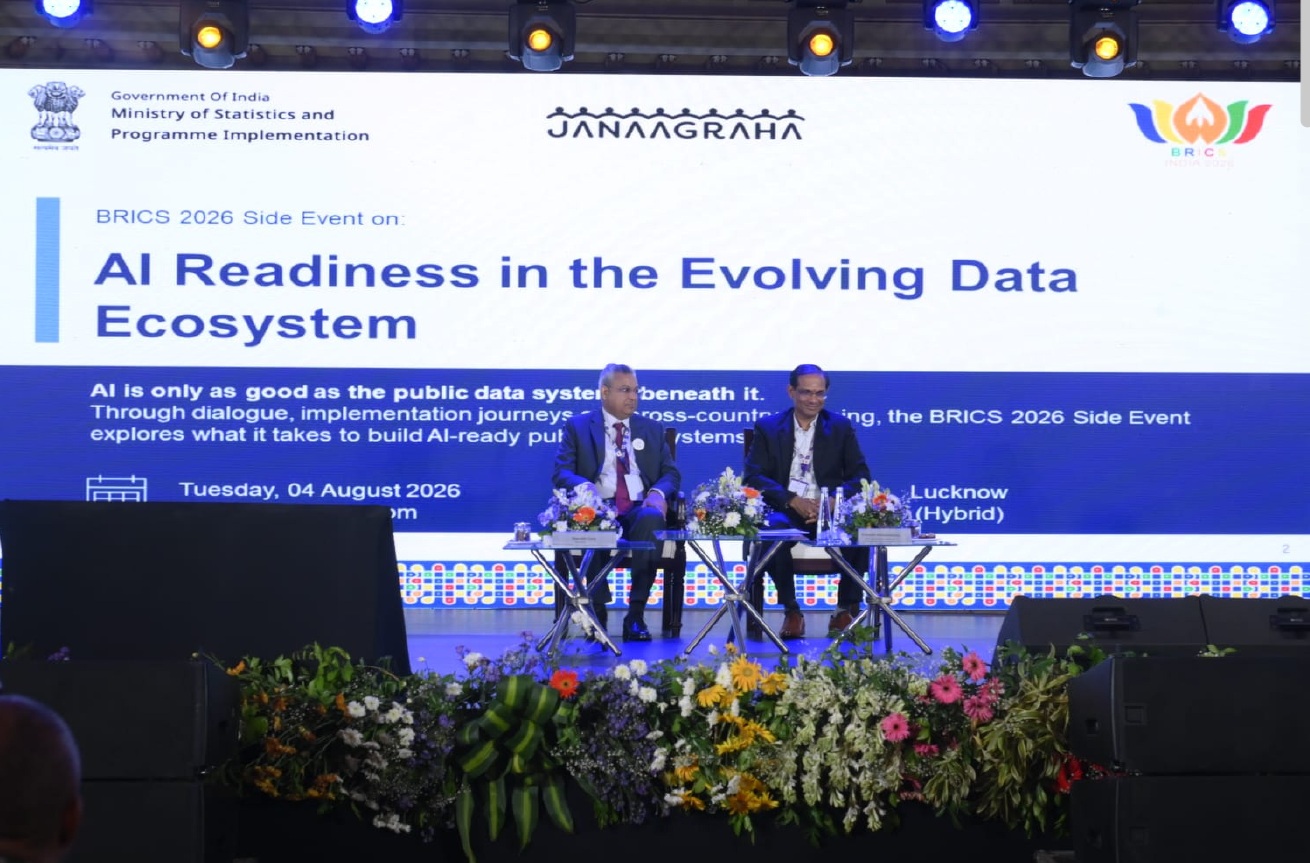
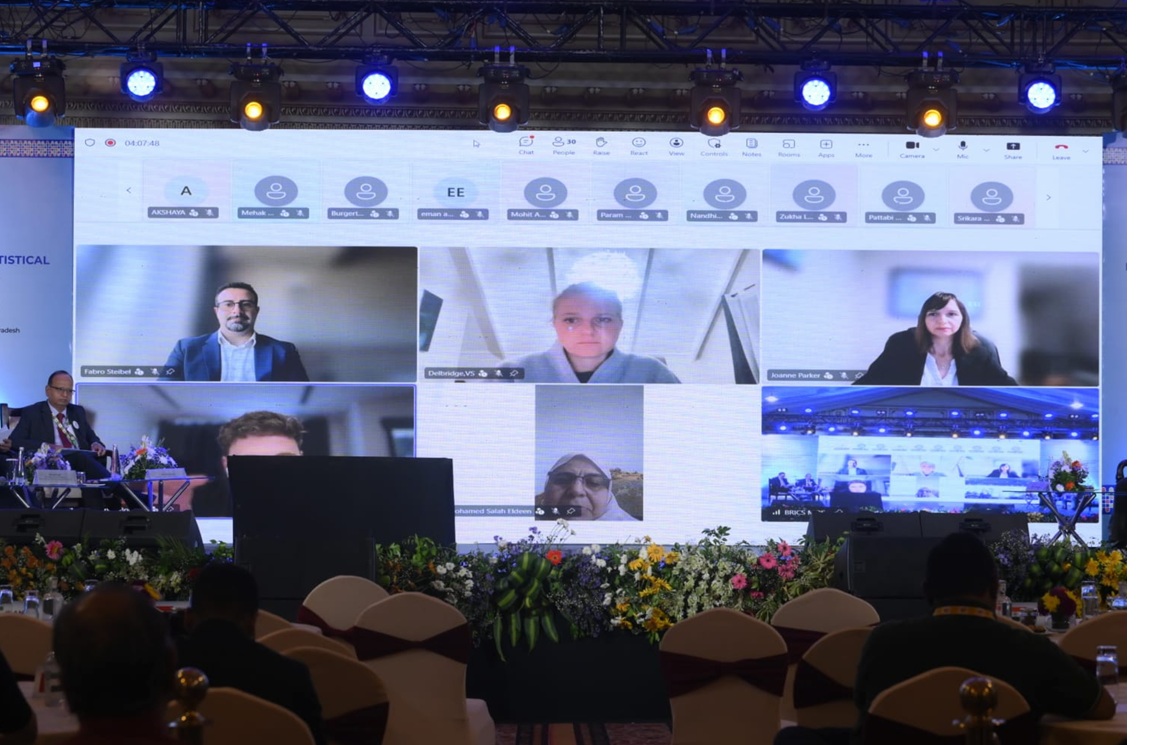
The event opened with remarks by Dr. Saurabh Garg and Srikanth Viswanathan, followed by a roundtable chaired by P. R. Meshram, Director General, Data Governance, GoIStats, and moderated by Anand Iyer, Chief Policy & Insights Officer, Janaagraha.
A key message emerged across the discussions:
AI is only as good as the data behind it.
Participants highlighted the need for:
• Trusted and high-quality data
• Common standards and interoperability
• Regularly updated and granular data
• Stronger institutional capacity
• Systems that are used and sustained not just launched

Janaagraha also showcased the City Data and Analytics Platform (CDAP) which brings urban government data together to make it more accessible, interoperable and useful for data-driven decision-making.
The conversation reinforced a simple idea: AI readiness starts with building a strong public data foundation.
Watch the DD News UP coverage of the event: Link
Explore CDAP: Link
City Finance Dialogues: Can Cities Spend Better?
A road is built.
A few weeks later, it is dug up for a pipe.
It is patched.
Then dug up again by another agency.
Sound familiar?
In Bengaluru, a government audit found that gas pipelines were hit 597 times during road digging because agencies did not have accurate records of what was underground.
The city spent Rs.119 crores on pothole repairs in just three years.
This is not just about one contractor or one road.
It points to a bigger question: how can cities plan, coordinate and manage infrastructure better?
India is now entering a major wave of urban infrastructure investment. Cities will need more money to build roads, water systems, transport and other essential infrastructure.
But the bigger question is:
Do our cities have the systems to use this money well?
This was the focus of City Finance Dialogues | Edition 1, held by Janaagraha on 23 July 2026.
The conversation brought together:
• Amarjeet Sinha - Senior Fellow, Centre for Social and Economic Progress; former Secretary, Department of Rural Development, Government of India
• Beena Philip - Former Mayor, Kozhikode Municipal Corporation
• Shivani Singh - Editor, Urban Affairs, Hindustan Times
• Ganesh Kamath - Civil Engineer and Contractor, Swayam Prabha Constructions
Prabhat Kumar, Director, Public Finance Management, Janaagraha, moderated the conversation.
Key takeaways of the Dialogue:
-
Repeated infrastructure failures are a systems problem.
When roads are repeatedly dug up, patched and dug up again, the problem goes beyond individual contractors. Fragmented responsibilities make coordination and accountability difficult. -
Better planning starts with citizens.
Experiences such as Kerala’s Janakeeya Asoothranam and the idea of “City Halls” showed how bringing citizens into planning early can lead to more transparent and effective infrastructure delivery. -
More funding alone is not enough.
The ₹3.56 lakh crore from the XVI Finance Commission and ₹1 lakh crore Urban Challenge Fund create a major opportunity. But stronger coordination, better processes and meaningful citizen participation will determine whether that investment creates infrastructure that lasts.
City Finance Dialogues is just getting started. Janaagraha will continue this quarterly series to bring public conversations on city finance and urban governance to the forefront.
Watch the full City Finance Dialogue: Link
Citizens’ Manifesto Jam: Shaping Bengaluru’s Priorities Together
Bengaluru’s city corporation elections are approaching. Ahead of the elections, citizens came together to ask an important question:
What should be the priorities for our wards and neighbourhoods?
At the Citizens’ Manifesto Jam, Oorvani Foundation, Janaagraha, Greater Bengaluru Balaga, Bangalore Apartments’ Federation, and Million Voter Rising brought citizens together to:
• Identify key ward- and city-level issues
• Discuss practical solutions
• Co-create a Citizens’ Charter of Demands for candidates and future elected representatives
Held at the*spark, Pullur Centre, Whitefield, on 18 July 2026, the session created a space for citizens to share concerns, exchange ideas and shape the priorities they want to see reflected in Bengaluru’s future.
City Data Analytics Platform: Making Urban Data Work for Better Cities
Good decisions need good data.
But urban data in India is often scattered across departments, collected in different ways, and difficult to access or compare.
The result? Harder planning. Weaker coordination. Missed opportunities to improve citizens’ lives.
That’s where the City Data and Analytics Platform (CDAP) comes in.
Explore CDAP: Link
CDAP brings together data from 4,000 cities, with 100,000+ data points across 15 key sectors, into one accessible platform.
It helps bring scattered urban data together so that governments, researchers and urban practitioners can find, understand and use it more effectively.
CDAP is a microsite of NITI Aayog’s National Data and Analytics Platform, conceived, developed and operated by Janaagraha, in technical collaboration with IBM through the #IBMImpactAccelerator.
At NITI Aayog’s Data Forum 2025 in Bhopal, we brought CDAP into the conversation and asked government representatives, researchers and urban practitioners a simple question: Why do stronger urban data systems matter for India’s cities?
Link to the LinkedIn Post: Link