Hello everyone,
We’re excited to introduce ourselves! We’re Jana Urban Space Foundation (JUSP), Janaagraha’s sister organisation, and we’re working to transform how India’s cities are planned, designed, and built.
A bit about us
Jana Urban Space Foundation is a Bengaluru-based organisation and India’s leading institution working towards transforming the quality of life in urban India through Urban Planning and Design across both Policy and Practice.
We work across the country on a range of projects including land titling policies and spatial reforms, street design guidelines, regional plans, master plans and neighbourhood-level plans (15-minute cities), road infrastructure improvements through Tender SURE (Specifications for Urban Road Execution) guidelines, public space rejuvenation projects (including waterfronts, markets, bus stands, lakes, parks, heritage sites and community centres), affordable housing architecture, and social infrastructure (including crematoriums, marriage halls and community centres). We’ve partnered with the Ministry of Housing and Urban Affairs on land titling and urban planning policies, and right now we’re active across 10 states and 50 cities.
What we do
We work across three interconnected areas:
Policies: Developing frameworks like Tender S.U.R.E. (urban road guidelines), 15-minute neighbourhood toolkits, and spatial planning guidelines
Plans: Creating master plans, climate action plans, and neighbourhood improvement plans for cities across India
Projects: Implementing street redesigns, public space rejuvenation, affordable housing, and community infrastructure
We’ve delivered 500+ km of redesigned streets across 35 cities in six states (Karnataka, Uttar Pradesh, Odisha, Telangana, Tamil Nadu, and Assam), unlocking capital investment of INR 3,540 crores, along with 25+ junction improvements, 1,200+ affordable housing units, 753+ Parichaya community centres in 101 ULGs of Odisha, 12 community centres for urban youth across Odisha and Telangana, 7 parks and plazas, and 3 waterfronts/blue-green infrastructure projects. We’ve also provided capacity building across 50+ cities in 10 states.
Key Initiatives
15-Minute Neighborhoods:
Our 15-Minute Neighborhoods initiative reimagines cities around a simple principle: every resident should be able to access work, education, healthcare, mobility, and leisure within a short walk or cycle ride from home through high-quality pedestrian infrastructure. We’ve successfully piloted this concept in Bengaluru’s Nallurahalli neighborhood.
Tender S.U.R.E.:
India’s first comprehensive urban road guidelines based on “Build Once, Build Right” principles. These standards have been implemented across 500+ km in 35 cities across six states (Karnataka, Uttar Pradesh, Odisha, Telangana, Tamil Nadu, and Assam), demonstrating 150% more pedestrian usage and significantly better flood resilience, while unlocking capital investment of INR 3,540 crores.
CM GRIDS (Chief Minister Green Road Infrastructure Development Scheme) - Uttar Pradesh:
JUSP serves as the Project Management Unit (PMU) for this flagship initiative of the Urban Development Department, Government of Uttar Pradesh. We’re overseeing the redevelopment of 290+ km of roads across 17 ULGs, establishing a scalable, decentralized model for statewide urban road reform. The initiative includes the innovative Green Schedule of Rates featuring 25 green materials and construction techniques, projected to achieve ~12% Cost reduction from using waste-based materials (fly ash, bagasse ash, plastic waste), -13.4% embodied energy reduction, and ~15% Natural resources saved through industrial byproducts (bagasse ash, fly ash, granite dust) and recycled materials (C&D waste, plastic waste).
Doh Shaher Ek Rupayan - Assam:
As technical advisors for this flagship program across 10 cities in Assam, we’re supporting the Government of Assam on climate-focused governance, developing design guidelines for urban roads, markets, waterways, parks and inclusive infrastructure, and identifying lighthouse projects for public space development, market redevelopment, and water body rejuvenation.
Doh Shaher Ek Rupayan is structured around seven core components—solid waste management, safe drinking water, public infrastructure, blue-green infrastructure, traffic management, street lighting, and urban planning—which address key service delivery and infrastructure gaps. These are supported by three enabling levers: manpower rationalization, digital and online service delivery, and financial strengthening of Urban Local Governments.
Nallurahalli Nallah and Lake Rejuvenation - Bengaluru:
This pilot project demonstrates nature-based solutions for nallah rejuvenation using the 4P framework (Protect, Preserve, Promote, Participate). The project aims to improve water quality, ecologically strengthen lake inlets and outlets, enhance public access to lake edges, and co-create solutions with local communities for long-term stewardship.
Odisha Urban Design Hub (OUDH):
A state-level PMU under the Housing and Urban Development Department, Government of Odisha, conceived and operated by JUSP since 2025. OUDH drives a structured, design-led approach to urban growth, playing a central role in shaping Odisha’s existing and emerging cities by integrating urban design, planning, infrastructure, municipal finance, data, and community engagement.
Recent Convenings
Walkable Bengaluru Roundtable
The Walkable Bengaluru roundtable was held on 30 October 2025 at Sabha Bengaluru. Convened by the Jana Urban Space Foundation (JUSP) and Janaagraha, the roundtable brought together urban practitioners, planners, architects, mobility experts, and civil society representatives to discuss reimagining Bengaluru’s streets as safe, walkable, and people-centric public spaces. The discussions were moderated by Srikanth Viswanathan (CEO, Janaagraha and Executive Director, JUSP), with inputs from Nithya Ramesh (Director – Planning & Design, JUSP) and Surjyatapa Ray (Associate Manager – Urban Policy, JUSP).
Key takeaways included:
Strengthen design, implementation, and maintenance
Participants highlighted that scaling walkability across Bengaluru’s 14,000+ km road network requires strengthening internal engineering capacity within the Greater Bengaluru Authority, including recruiting and skilling engineers. The discussions emphasised the need for a single authority to coordinate roadworks and utilities, as uncoordinated utilities and poor stormwater management were identified as major barriers to durable streets. Contractors noted that outdated schedules of rates do not reflect the complexity of urban roads, affecting project viability. Participants also called for clearly defined maintenance budgets and protocols, and recommended moving from L1 tenders to quality-based procurement (QCBS) to improve accountability and outcomes.
Improve first and last mile connectivity
The roundtable noted that most first-mile trips to public transport in Bengaluru are made on foot, underscoring the importance of improving pedestrian access to public transport. Participants discussed the need to prioritise road and footpath improvements based on existing conditions and actual need, rather than applying uniform upgrades across zones.
Leverage technology and digital public infrastructure
Participants proposed the use of citizen feedback systems to rate walkability and report defects in real time. The discussions also highlighted the need to centralise data on road conditions, utilities, cycle lanes, and potholes to guide planning and maintenance, and to use these systems to support more inclusive and seamless pedestrian and multimodal mobility.
Reform traffic management for people
The discussions emphasised the need to shift the focus from traffic movement to people and mobility. Participants suggested changing nomenclature to reflect this shift and highlighted that isolated interventions, such as unplanned medians, create challenges on the ground. The roundtable reinforced the need to align road planning and traffic enforcement functions to avoid fragmented outcomes.
Incorporate community voices
Community representatives highlighted issues such as poorly lit streets and broken footpaths that restrict mobility and employment opportunities, particularly for women. Residents called for greater transparency through visible signboards showing contractor details and project timelines, along with regular updates. The discussions noted that ward-level audits and “walks with officers” have demonstrated how citizen engagement can contribute to tangible improvements in walkability.


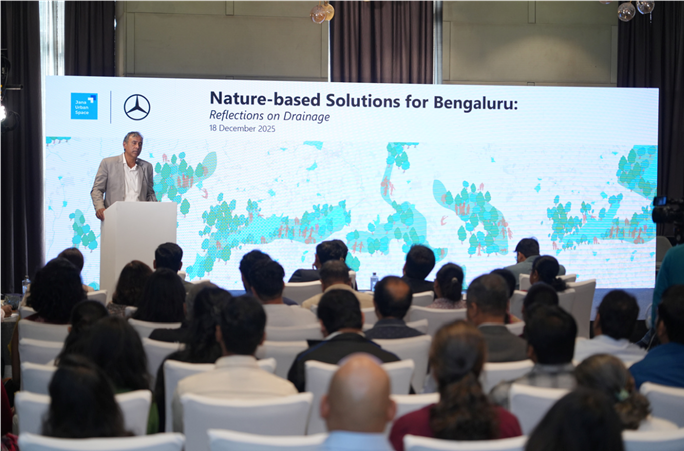
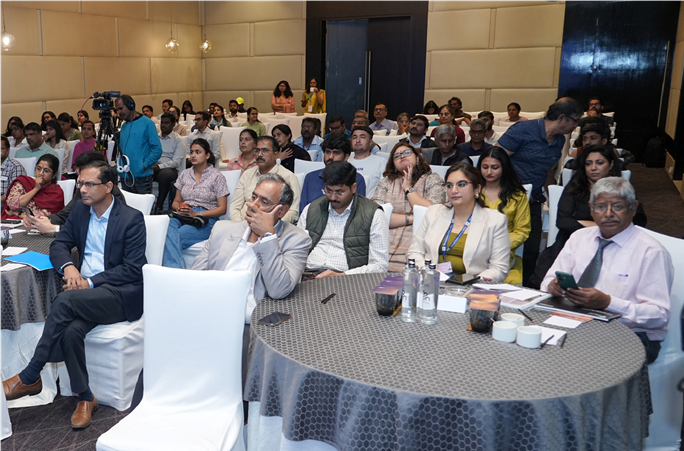
Nature-based Solutions for Bengaluru: Reflections on Drainage (18th December 2025)
This convening brought together 120+ participants from government, practice, academia, and civil society across 20+ speakers and 5 thematic discussions addressing systemic urban water challenges. We launched a draft working paper “Rebuilding Urban Drainage Systems: Learnings from the Nallurahalli Nallah Rejuvenation” to invite informed critique and perspectives, along with a curated site visit linking discourse to on-ground action.
Key takeaways:
-
Drainage is a city-wide system, not a collection of assets, and nature-based solutions must be mainstreamed, not treated as add-ons
-
Community stewardship is critical to sustaining water systems
-
Managing water better means slowing, storing, and reusing, not moving it faster
-
Institutions, financing, and accountability are as critical as technical design
-
Demonstration projects must inform policy and scale
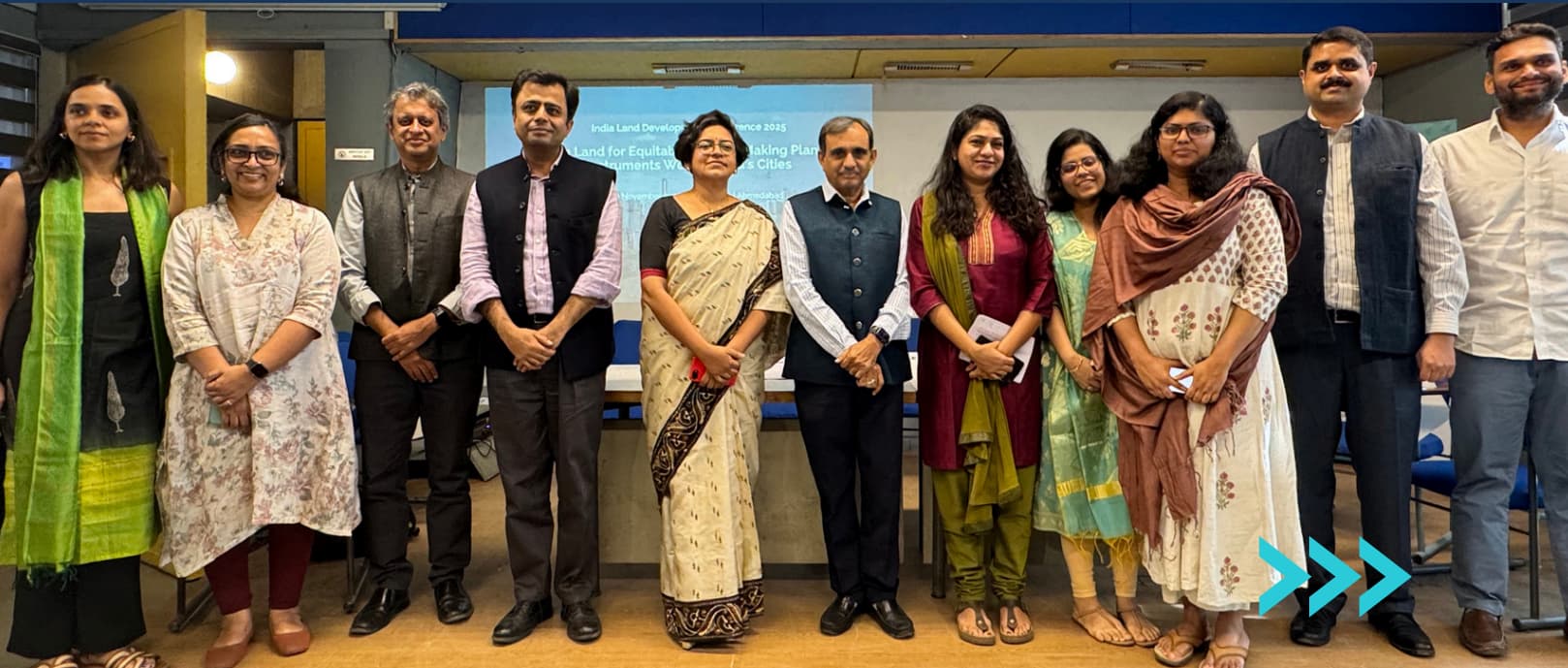
Urban Land for Equitable Growth @ India Land Development Conference (20th November 2025)
This roundtable, held at the Ahmedabad Management Association (AMA), Ahmedabad, was jointly organized by Jana Urban Space and Janaagraha. It brought together leading voices in planning, governance, and real estate to discuss modernising planning tools and reframing development controls. The session aimed to build a shared understanding of the institutional, regulatory, and design reforms needed to align spatial planning with India’s economic and urban transitions.
This session brought together senior government officials, urban planners, economists, and land policy experts to discuss how India’s planning ecosystem can better respond to the 4E challenges: Economy, Equity, Environment, and democratic Engagement.
The discussions emphasized:
-
Cities must dramatically reduce the cost of urban land for both housing and industry
-
Affordable, well-located housing is key to equitable cities
-
Climate action must be embedded in planning from the start; walkability, cycling networks, and heat-mitigation strategies cannot remain add-ons
-
Planning is effective only when political leadership is engaged and elected representatives are involved in the process
We’re grateful to be part of the Rainmatter Foundation’s portfolio and look forward to sharing our journey of reimagining India’s cities and towns with you.