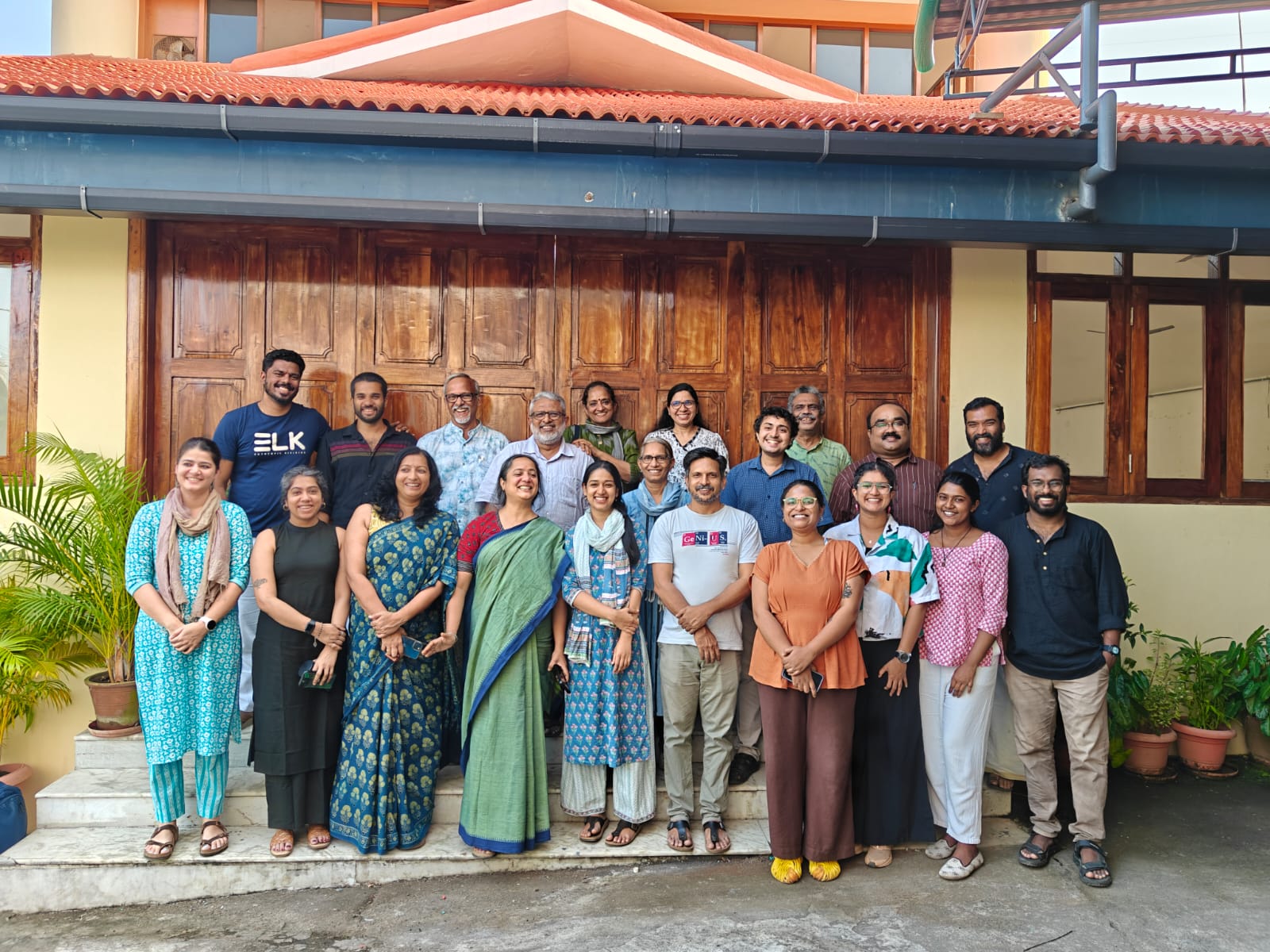
Learning and Collaboration on Climate Action at Swayam Shikshan Prayog, Maharashtra
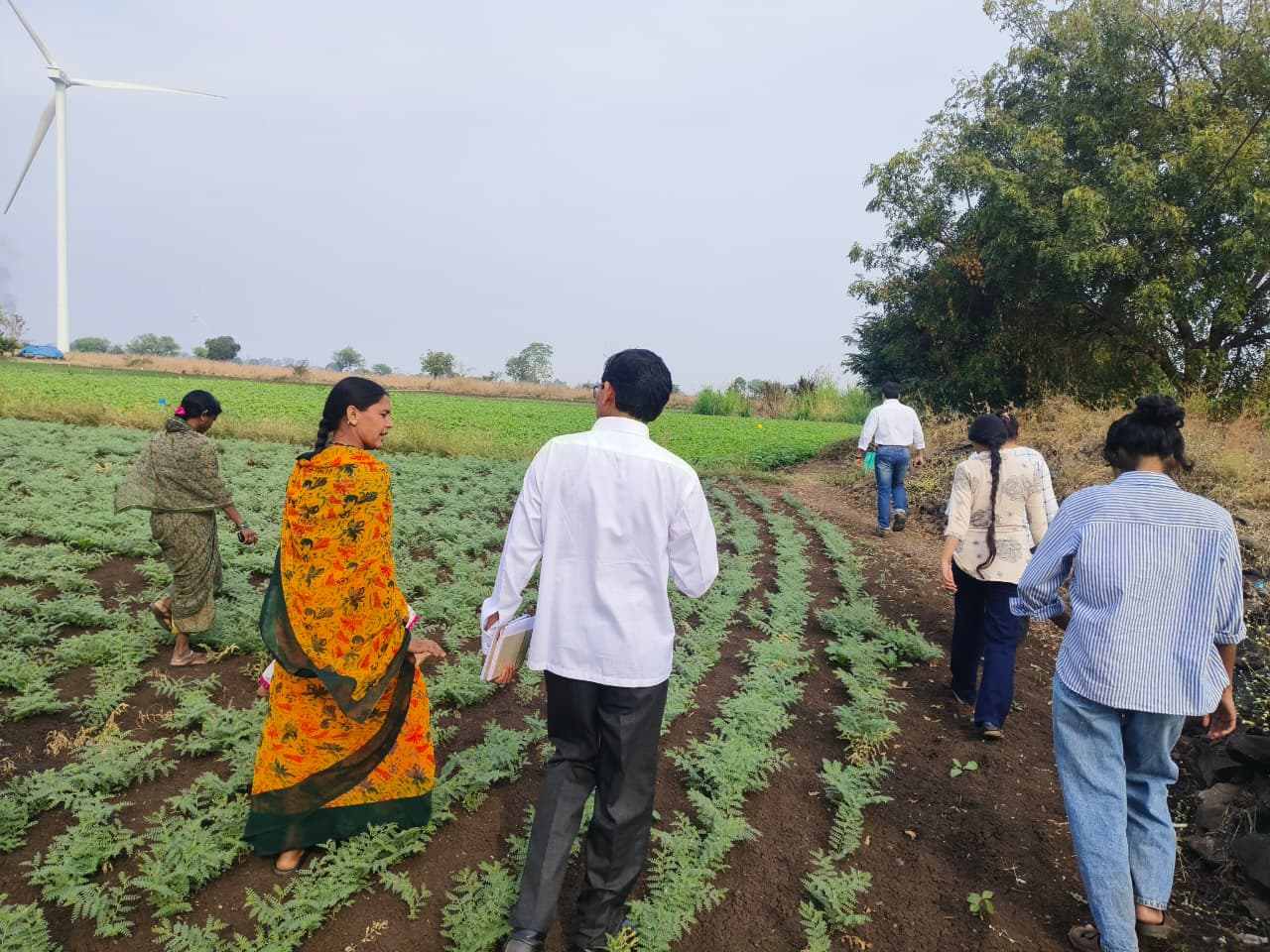
A team from Hume Centre for Ecology and Wildlife Biology visited Swayam Shikshan Prayog (SSP), Maharashtra from 30 November to 4 December 2025 as part of the Climate Action project. During the visit, the team presented the project proposal to SSP experts and engaged in detailed discussions to receive technical and strategic feedback for improving the project’s implementation. The team also interacted with local farmers during village-level field visits to observe community-based sustainable agricultural practices such as soil conservation, crop diversification, and water-efficient farming methods. In addition, the quarterly action plan for the project was finalized with inputs from SSP representatives, outlining key activities and timelines. The team also visited the historic Dharashiv cave region for geological observations and collected iron-enriched rock samples to better understand the region’s geomorphology and its relevance to environmental and climate studies. The visit provided valuable insights into community-driven climate action, sustainable farming practices, and interdisciplinary approaches that integrate ecology, agriculture, and geology to strengthen climate resilience initiatives.


Strengthening Rainfall Monitoring and Data Management through Collaboration with Haritha Kerala Mission
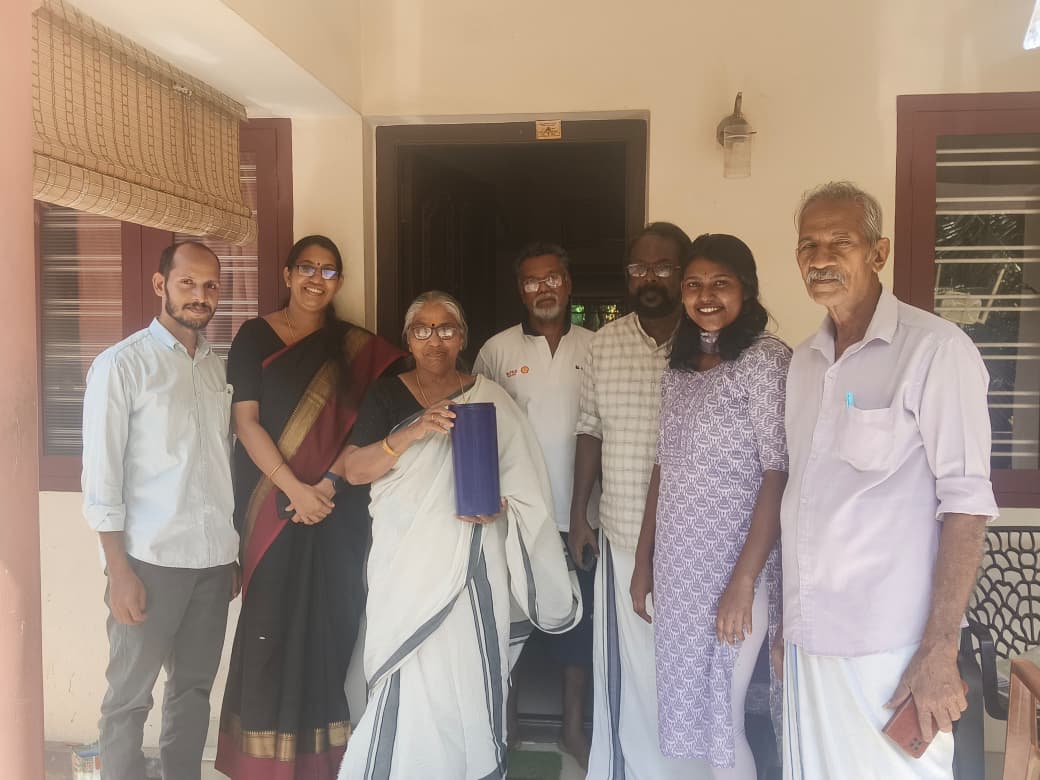
On 18 December 2025, the Hume Centre for Ecology and Wildlife Biology held a coordination meeting with officials from Haritha Kerala Mission in Ernakulam as part of the Climate Action initiative. The meeting focused on improving rainfall data management systems and strengthening field-level monitoring. Guidance was provided to field coordinators on rainfall data entry, updating rainfall graphs, and preparing rainfall maps for analysis and monitoring. A field visit was also conducted to Chengammanad Panchayat, where a manual rain gauge was installed, expanding the rainfall monitoring network to 11 panchayaths, including Amballur Panchayat. During the meeting, a draft action plan was prepared to complete the installation of 40 existing rain gauges by May 2026, with proposed field support from Kerala Sasthra Sahitya Parishad, Rapid Response Team, and Civil Defence India. The discussions also highlighted the importance of district-level institutional collaboration, and a proposal will be prepared to seek additional support from the District Panchayath. A follow-up review meeting is planned after January 10 to assess progress and finalize further steps for strengthening community-based rainfall monitoring.
Climate Awareness and Preparedness Session at Peoples Foundation, Meppadi
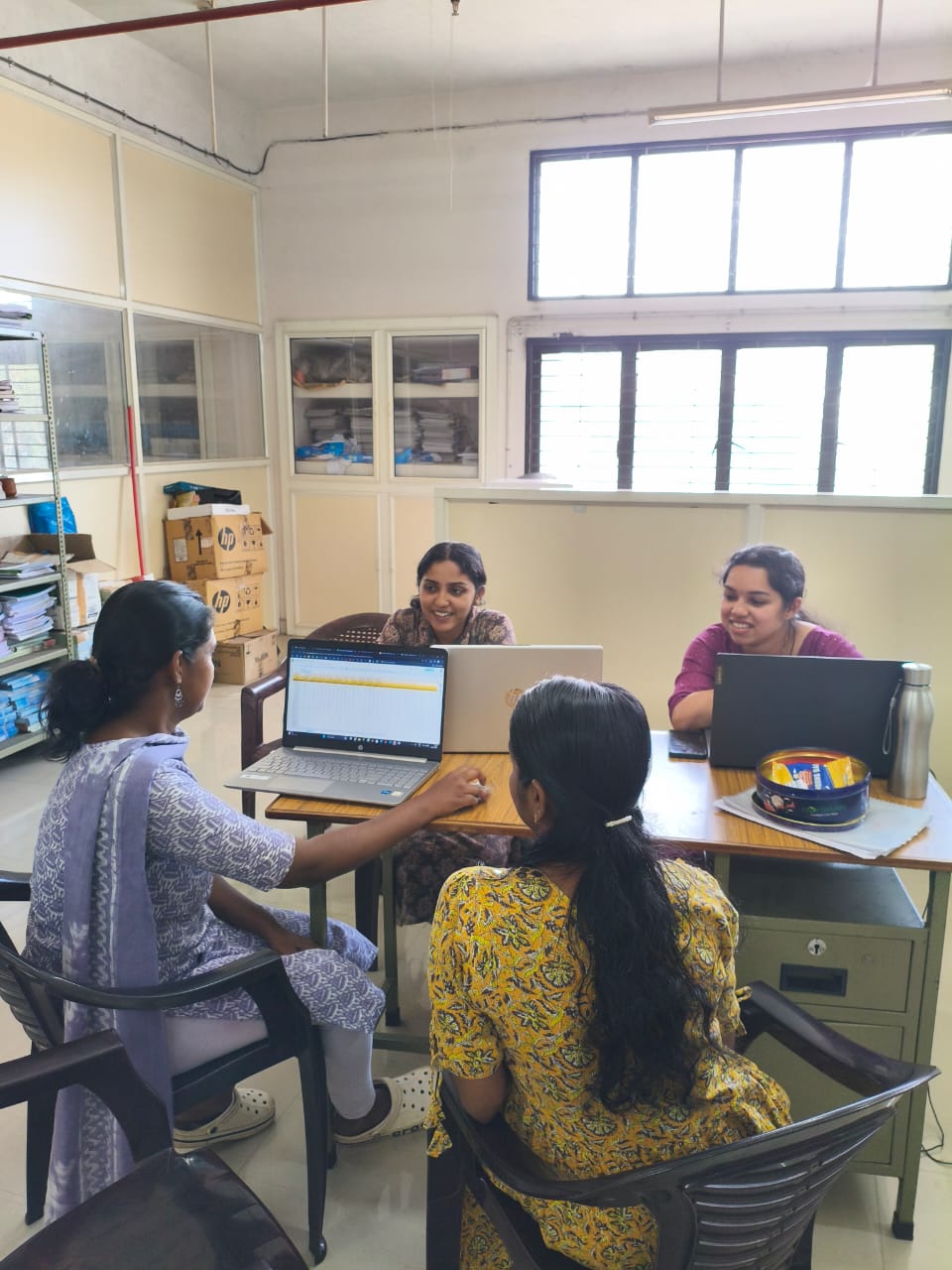
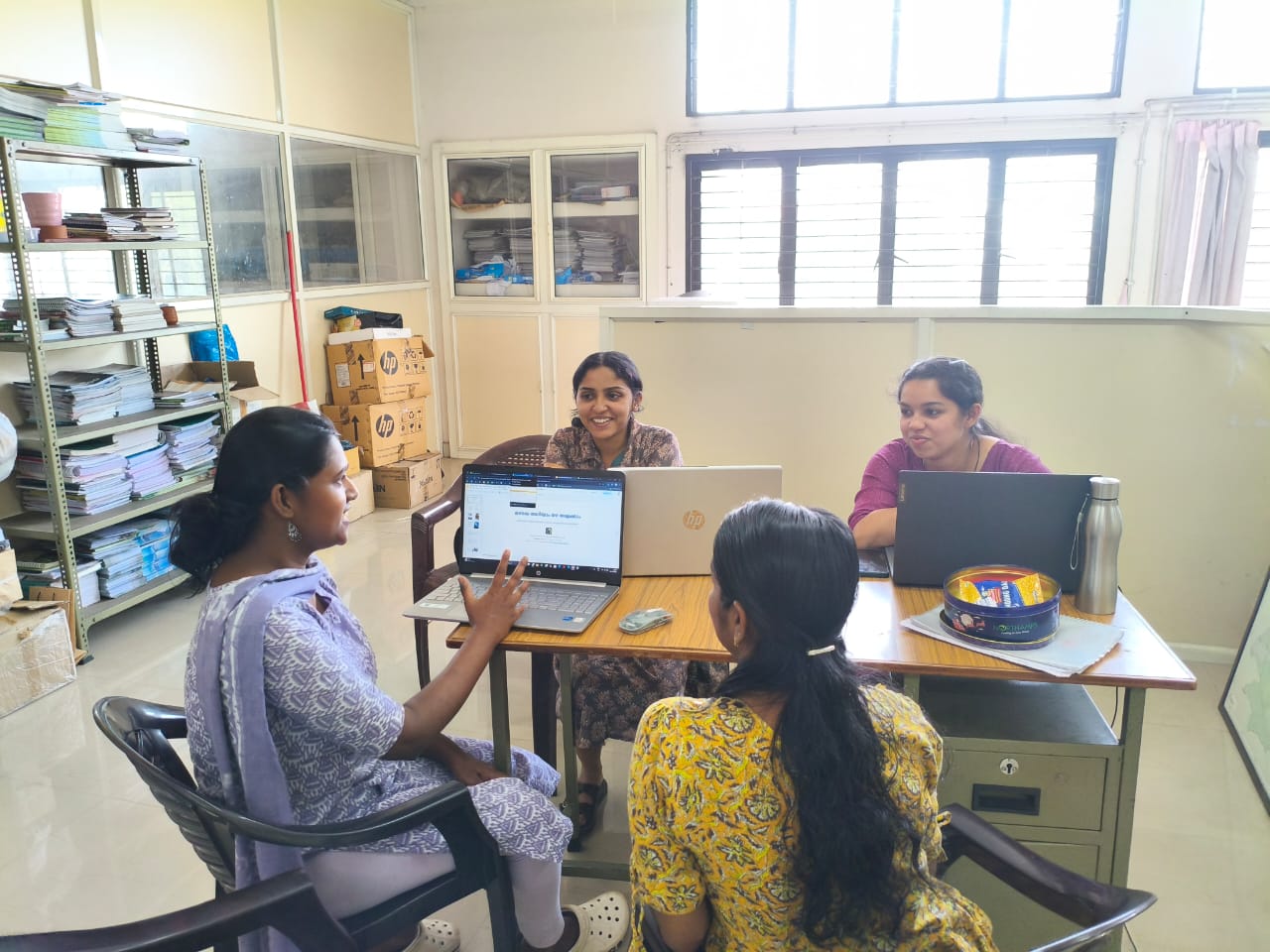
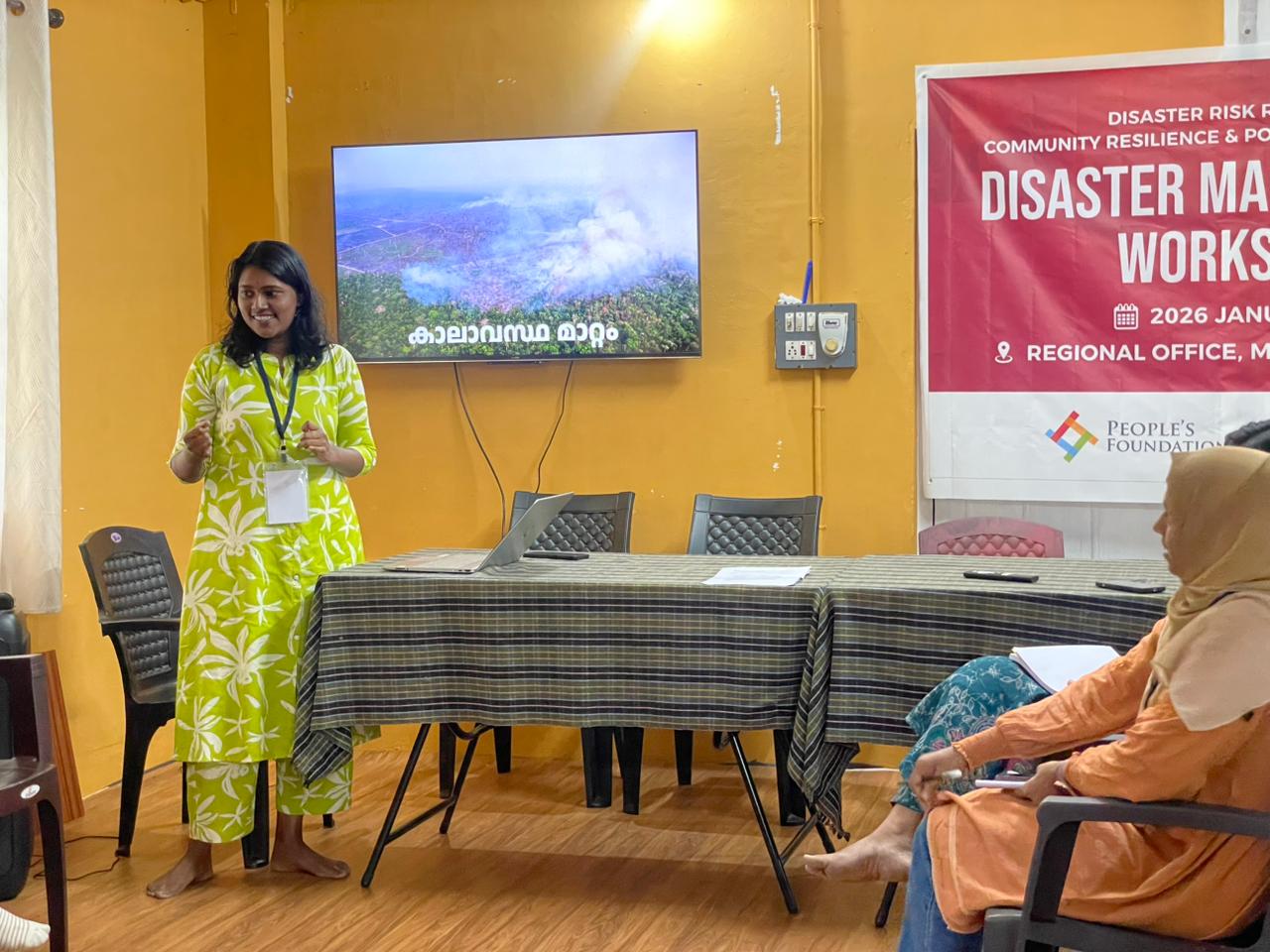
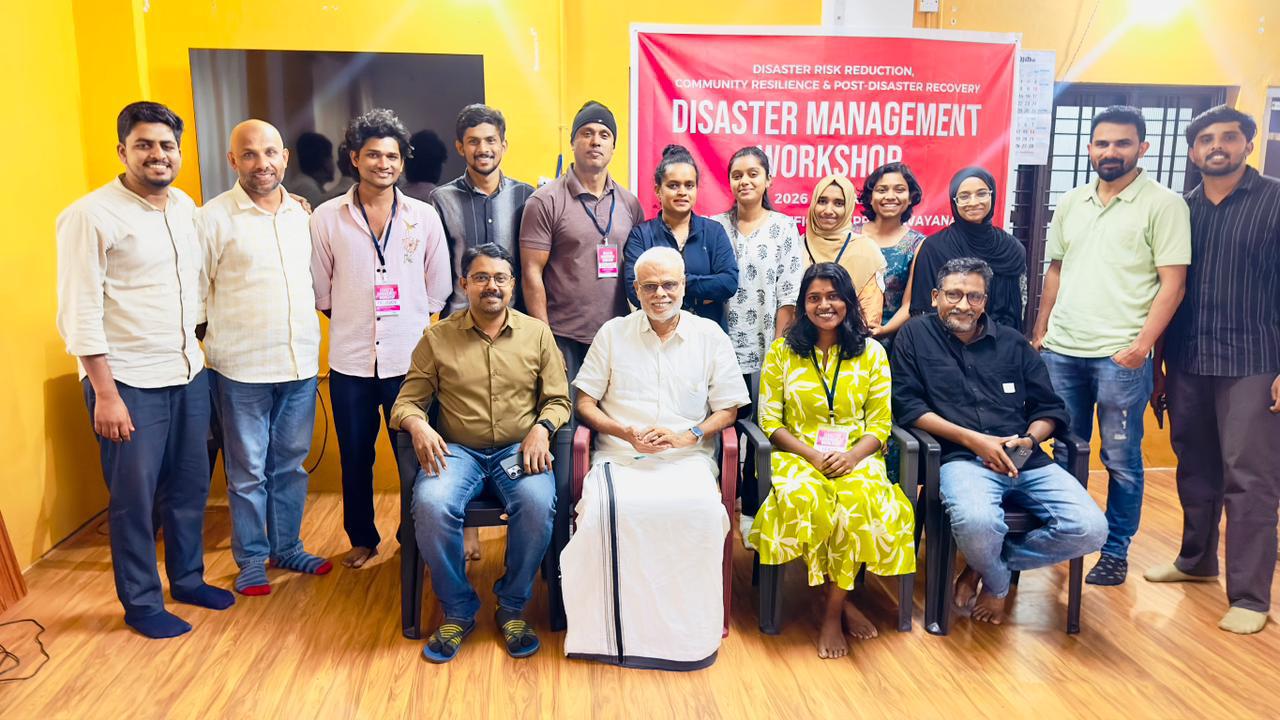
On 4 January 2026, the Hume Centre for Ecology and Wildlife Biology conducted a Climate Awareness and Preparedness session at Peoples Foundation in Meppadi as part of the Climate Action Program. The session was facilitated by Renjini A R and attended by around 20 participants from diverse backgrounds. The discussion focused on the fundamentals of global climate change, observed local climate variations, extreme weather events, and their impacts on agriculture, livelihoods, and everyday life. Participants were also introduced to the Climate Action Program and the importance of community-level preparedness for building climate resilience. The interactive session encouraged participants to share their own observations about changing rainfall patterns, temperature fluctuations, and challenges faced in farming. The programme helped strengthen awareness about climate risks and highlighted the need for collective local action. The discussions also opened possibilities for future collaboration, including GIS-based mapping of agricultural lands in the Mundakkai and Chooralmala regions to support climate-resilient planning.
Learning from Grassroots Climate Leadership at Mumbai Climate Week
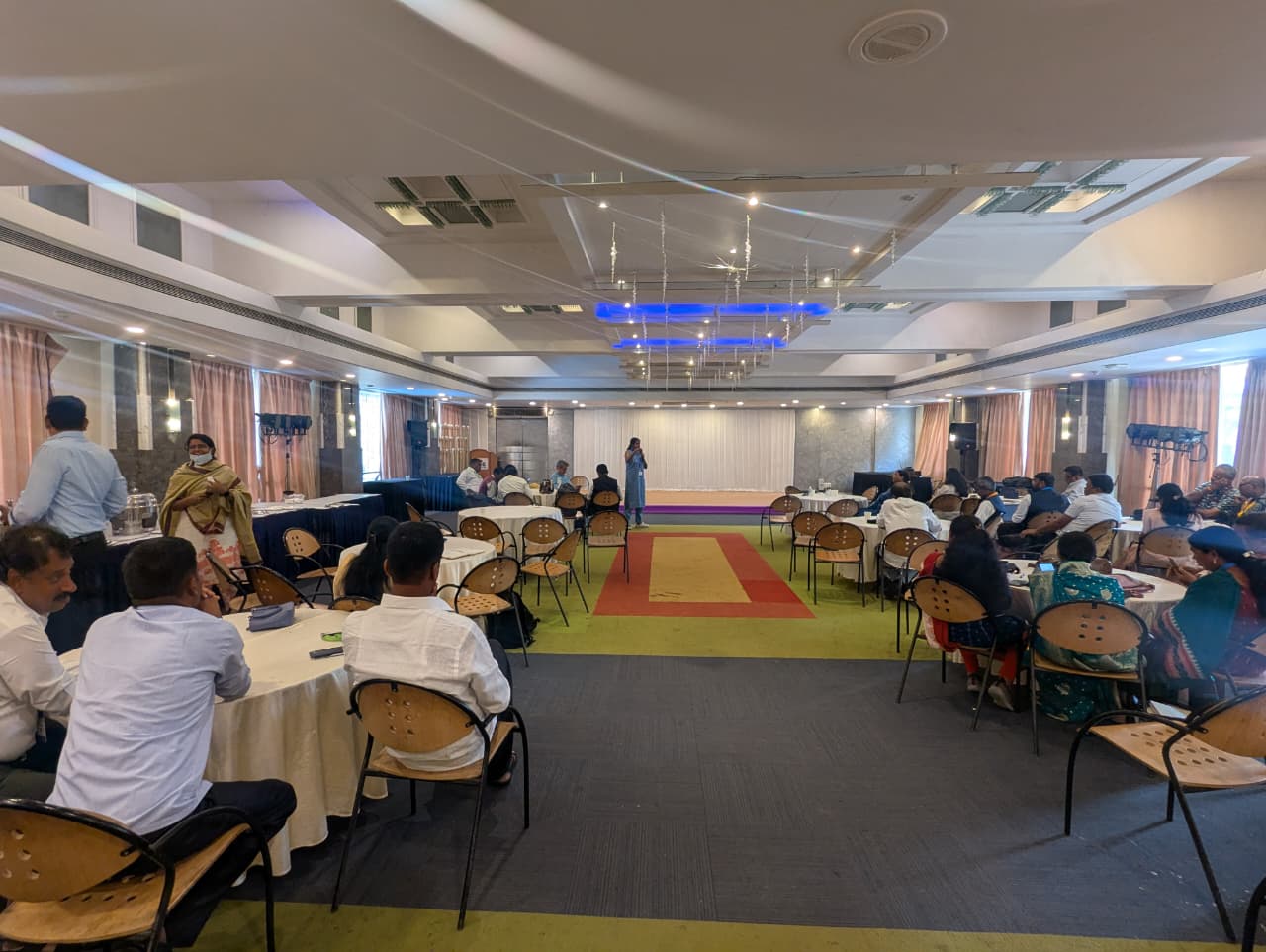
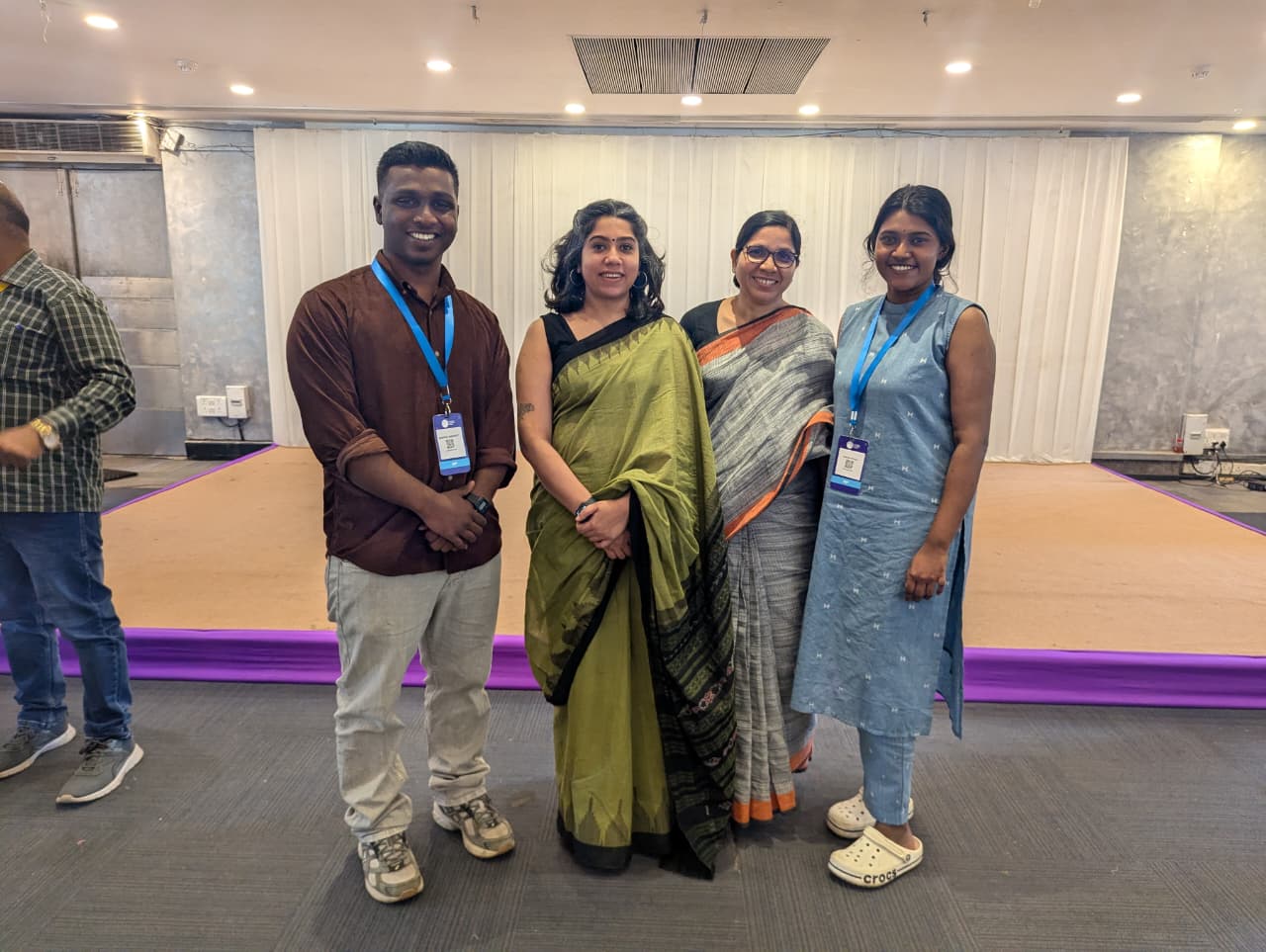
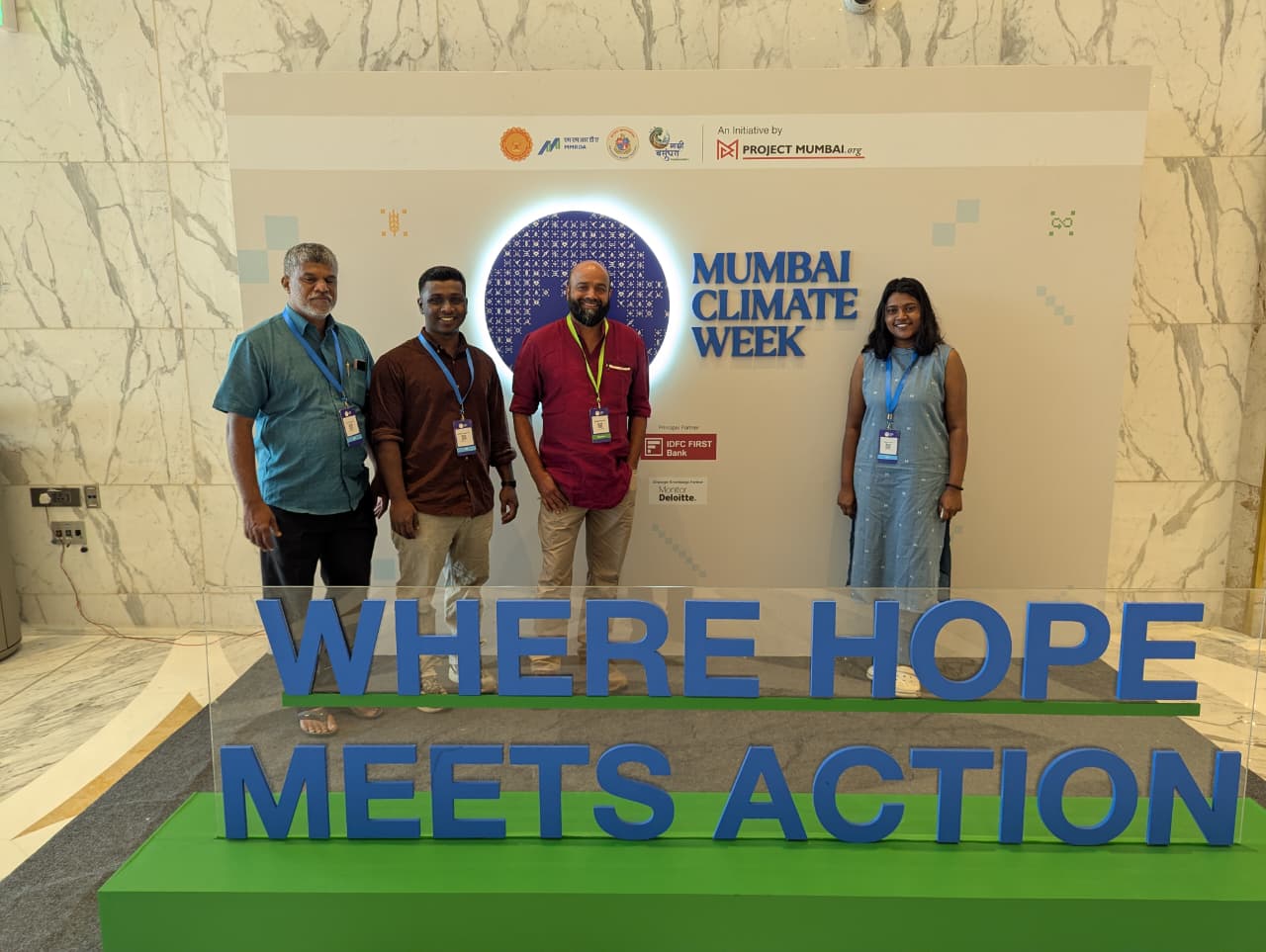
On 19 February 2026, representatives from the Hume Centre for Ecology and Wildlife Biology participated in a climate leadership session held at Jio World Convention Centre in Mumbai as part of a gathering of grassroots climate practitioners. The session brought together community leaders from different regions of India to share experiences on localized climate resilience and mitigation strategies. Case studies included the transformation of Bela into a net-zero village through large-scale tree planting and solar energy adoption, lake restoration initiatives led by Panchayats in Kolar, solar streetlight and irrigation initiatives in tribal areas of Jharkhand, and indigenous women mapping common lands in Odisha to access conservation funds. The discussion also highlighted nature-based solutions such as mud and boulder check dams in Bihar to reduce human–wildlife conflict, and the Solar Gramam model in Perinjanam, where households generate and share renewable energy. The Hume Centre team also interacted with members of the Asar Social Impact Advisors collaboration network and held discussions with the Policy and Development Advisory Group regarding possibilities for weather data automation. The visit provided valuable insights into decentralized climate governance, the role of Gram Panchayats in climate planning, gender-led climate initiatives, and the importance of nature-based solutions for strengthening community resilience.

Hume Centre Wins First Prize at the 38th Kerala Science Congress Exhibition
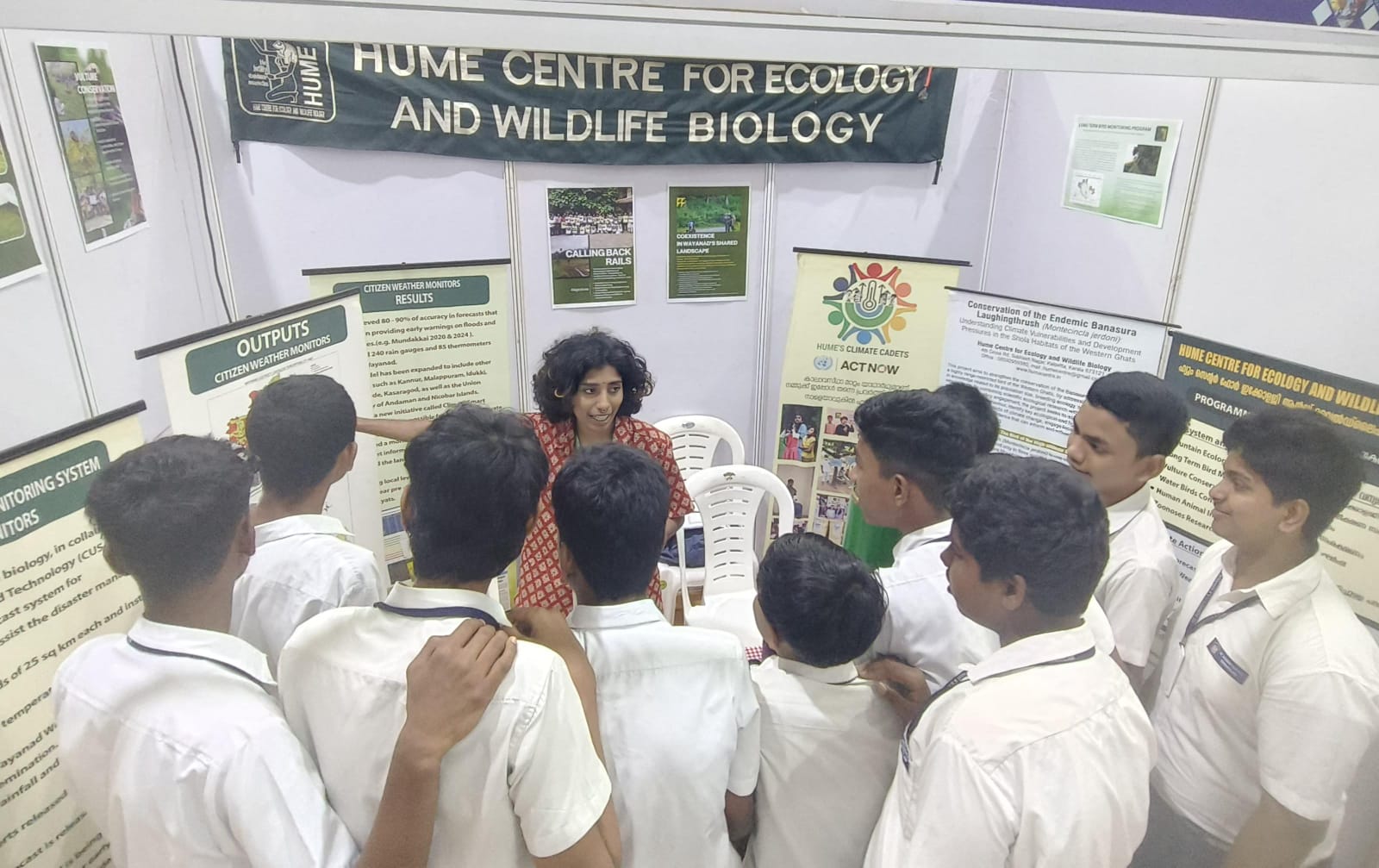
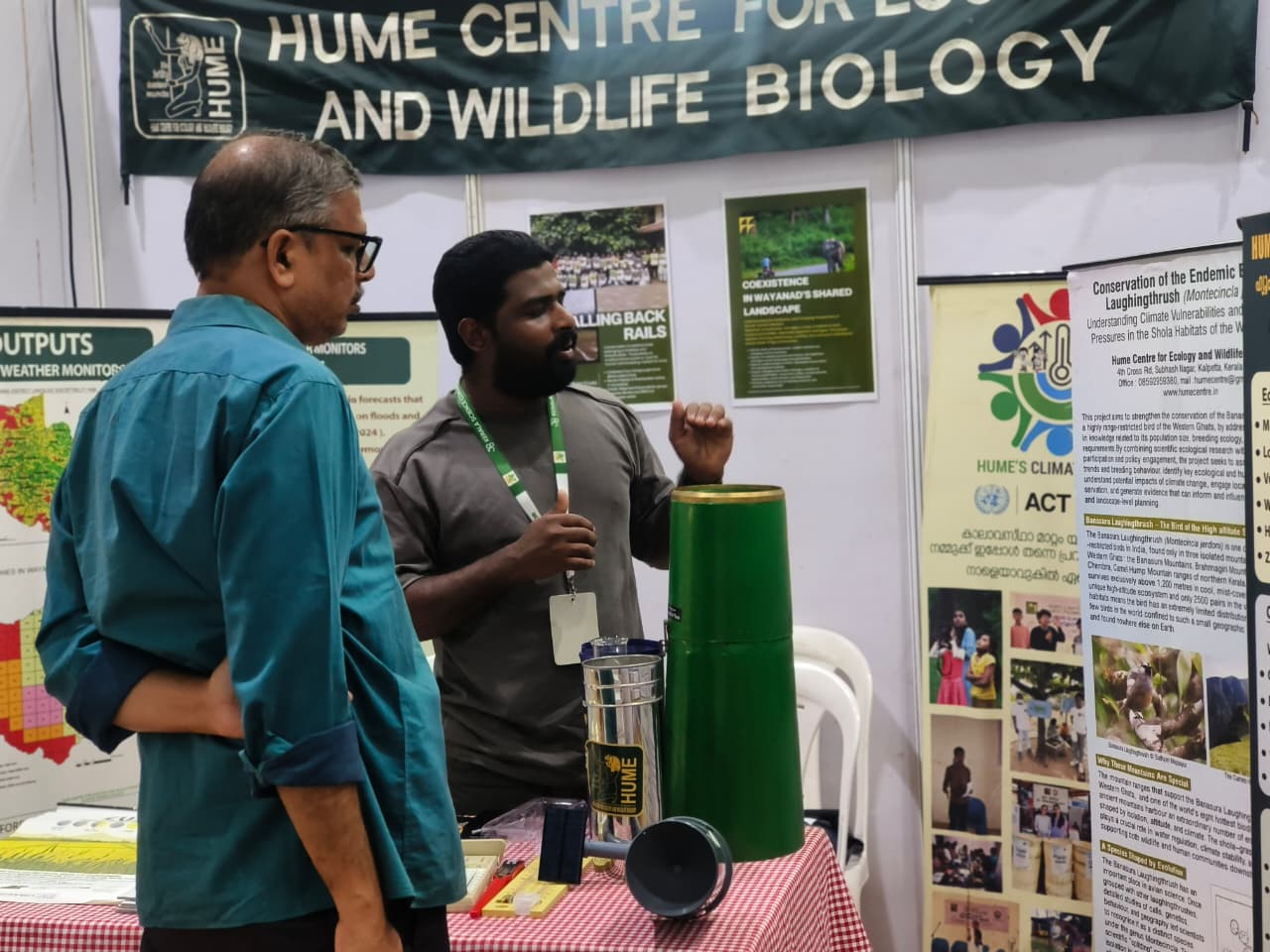
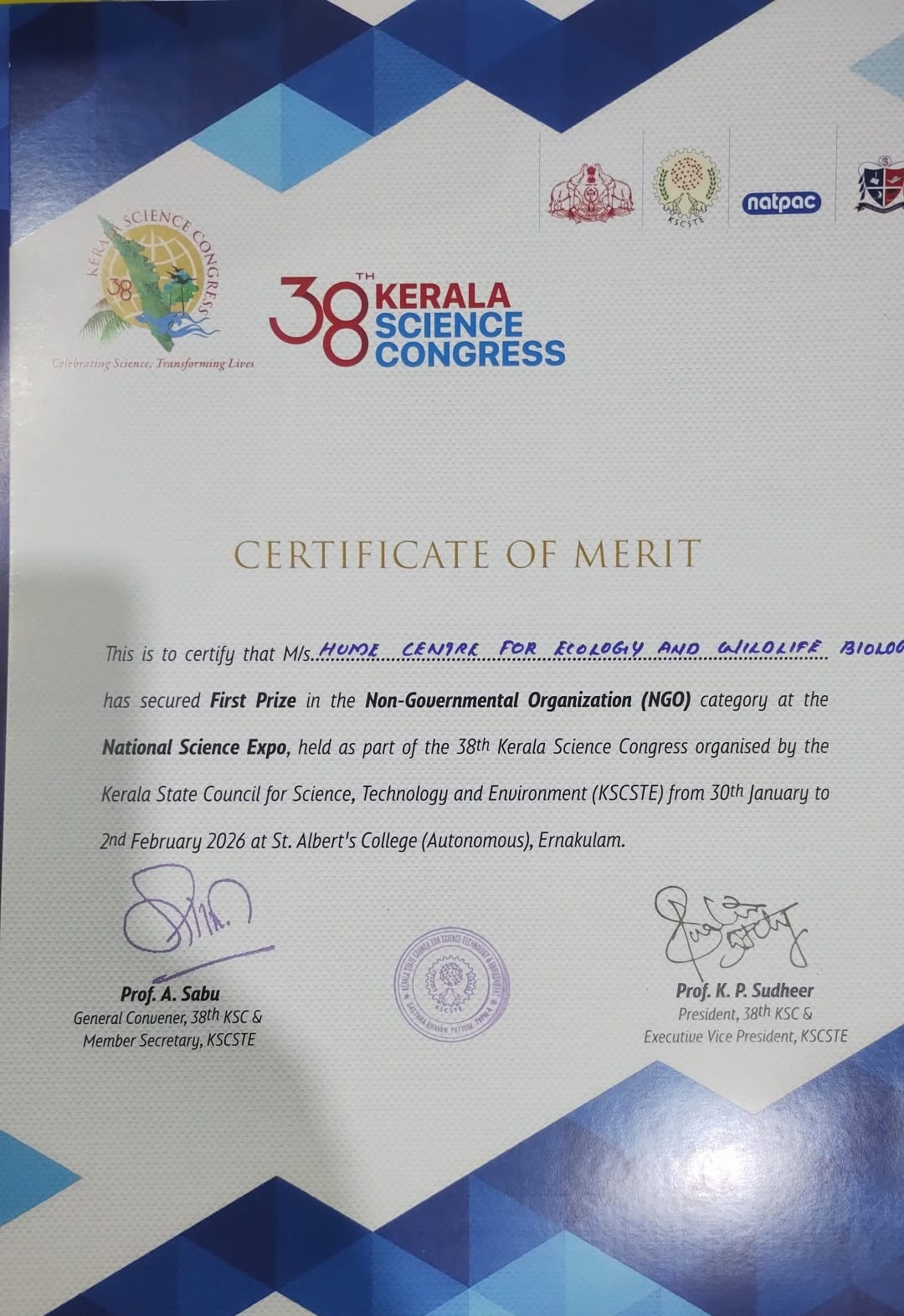
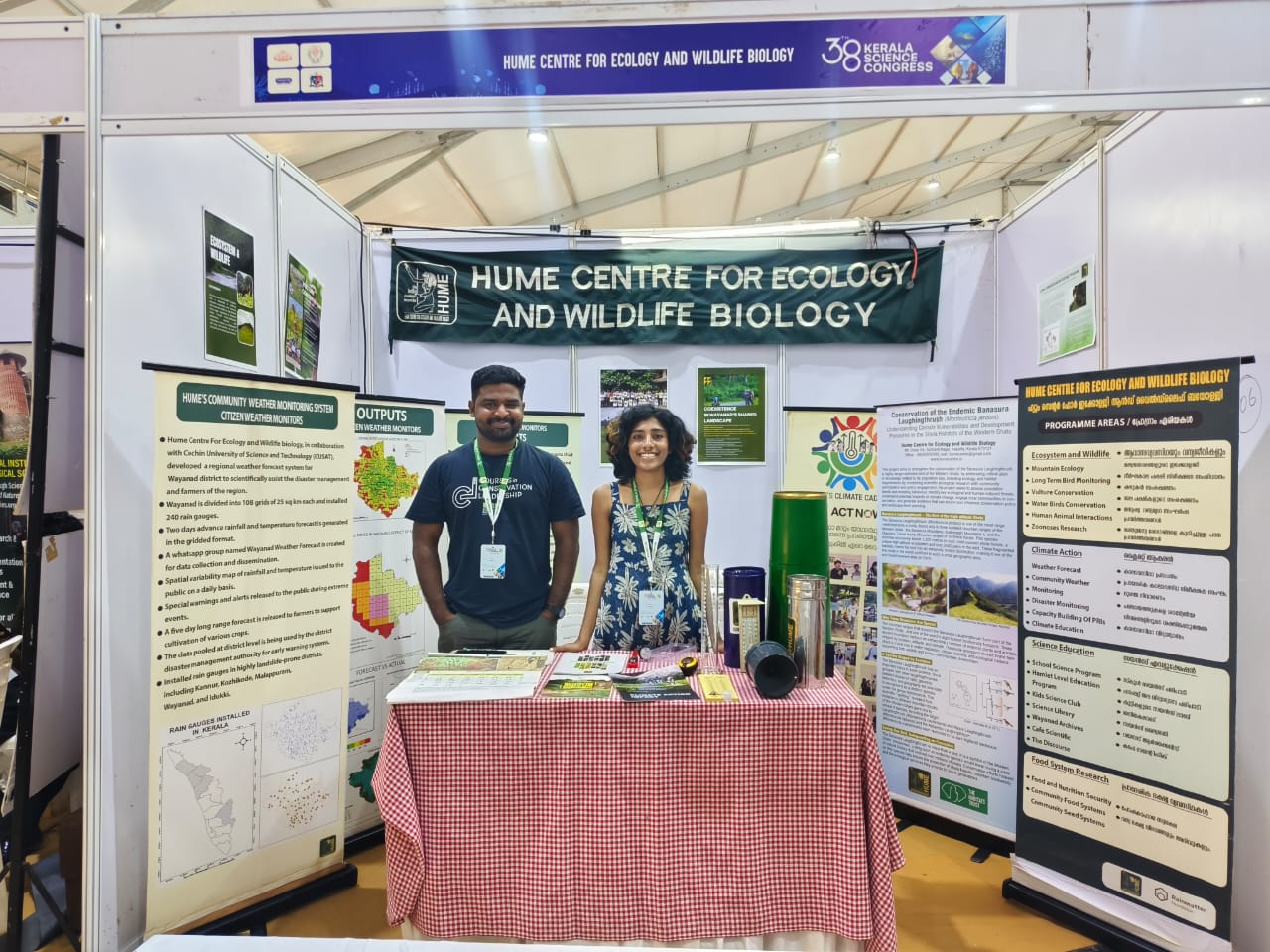
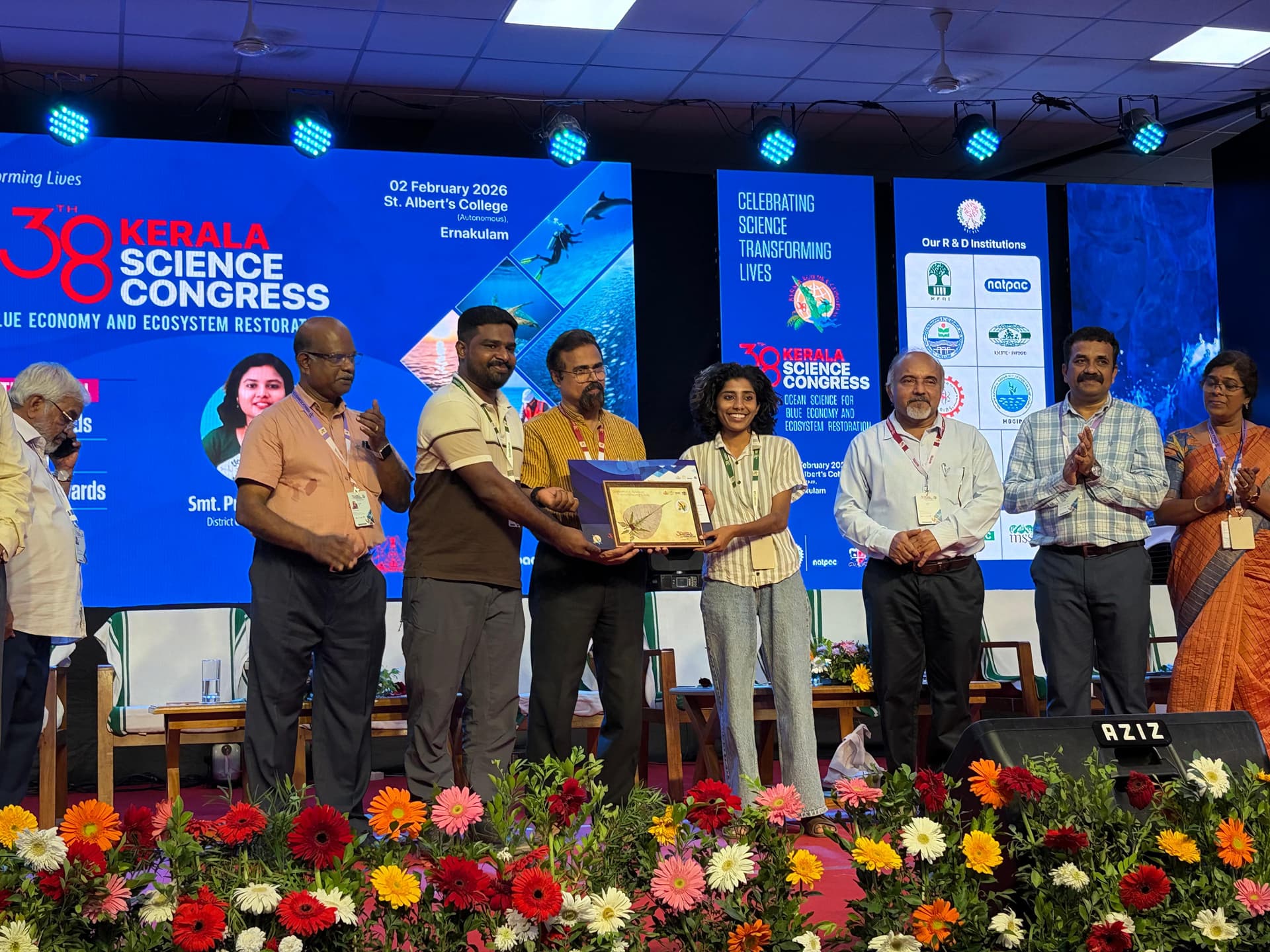
From 30 January to 2 February 2026, the Hume Centre for Ecology and Wildlife Biology participated in the 38th Kerala Science Congress held at St. Albert’s College (Autonomous) in Kochi, Ernakulam, as part of its institutional outreach activities. The Hume Centre set up a thematic exhibition stall highlighting its four core programme areas: ecosystems and wildlife, science education, climate action, and food systems. The stall showcased initiatives such as the Banasura Chilappan project, human–animal coexistence work, vulture conservation, the Rallidae project, and the long-term bird monitoring programme. It also presented science education initiatives including Climate Cadet, Tierra, Kutti Birders, and student-led research projects, along with community-based climate monitoring efforts and traditional food practices of tribal communities in Wayanad. The event provided an important platform for public outreach and networking with scientists, government officials, and representatives from other organizations such as the Hornbill Foundation and the Kerala Forest Research Institute. The Hume Centre stall received the First Prize in the NGO-level exhibition category, recognizing the quality of its research communication and field-based initiatives. The participation also enabled valuable knowledge exchange and the development of new institutional contacts for future collaborations in ecology, conservation, and science education.
Training Climate Volunteers for Community Weather Monitoring in Adimali
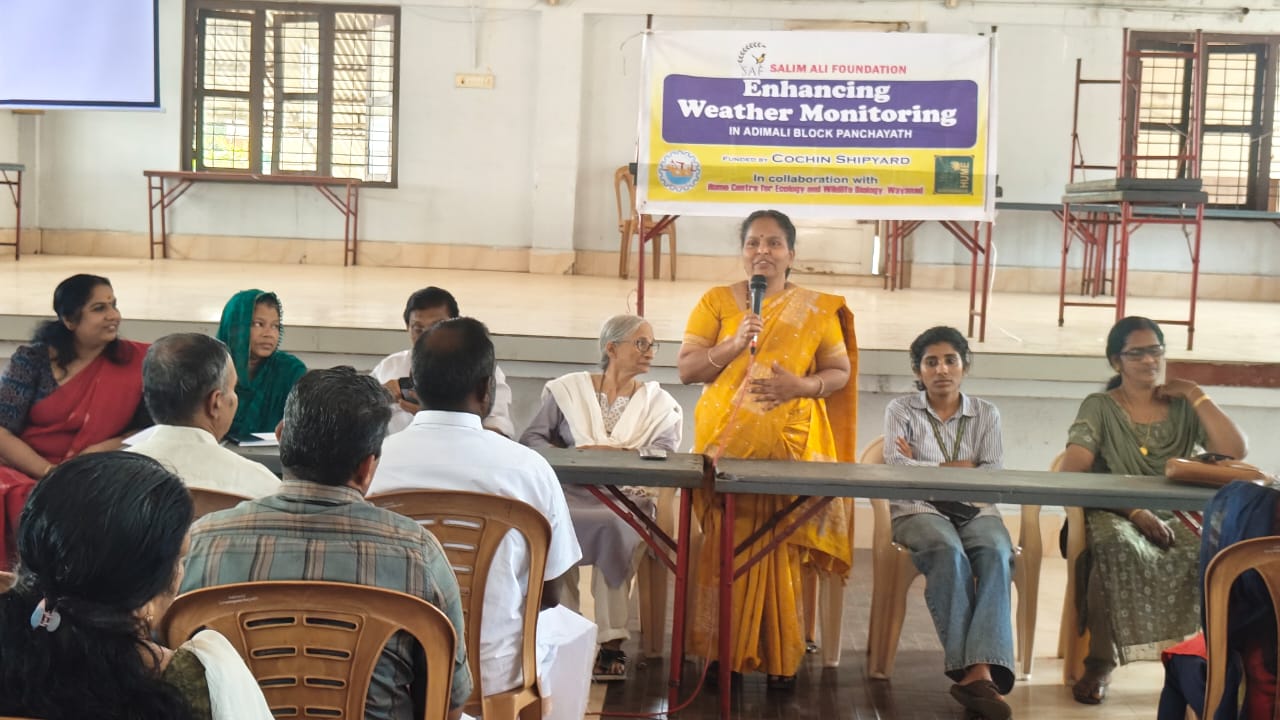
On 6 January 2026, the Hume Centre for Ecology and Wildlife Biology conducted a training and coordination visit to Adimali as part of the Climate Action Program. The programme was organized in collaboration with the Salim Ali Foundation, focusing on building local capacity for community-based weather monitoring. Climate volunteers were trained in daily weather observation and monitoring practices, strengthening their role in collecting local weather data. Discussions were also held with the Agriculture Office and the Secretary of Adimali Grama Panchayat regarding the implementation and expansion of the weather monitoring initiative in the Panchayat. Meetings with Panchayat representatives and other stakeholders helped identify potential weather contributors and climate managers who will support the monitoring network. It was also decided to distribute weather instruments to trained volunteers and initiate daily monitoring activities, with the Panchayat expressing willingness to pass a formal resolution supporting the project. The visit reinforced the importance of partnerships with local institutions and trained community volunteers in strengthening grassroots climate action and localized weather monitoring systems.
Hume Centre Participates in Kerala Mycelium Review and Perspective Planning Meeting
From 3–5 February 2026, representatives from the Hume Centre for Ecology and Wildlife Biology participated in the Kerala Mycelium – Three-Day Review and Perspective Planning Meeting held at KJJM Animation Centre in Kovalam. The meeting brought together members of the Kerala Mycelium network to reflect on shared values, strengthen collaboration, and develop a collective vision for future climate and ecological initiatives. Over three days, participants engaged in discussions on building trust within collaborative platforms, examining funding relationships and institutional partnerships, and identifying guiding principles for the network’s work. Key sessions focused on developing a shared Theory of Change, reviewing ongoing initiatives across sectors such as agriculture, energy transition, community networks, research, and media engagement, and establishing a simple monitoring, evaluation, and learning process for the network’s first year. Representatives from different initiatives including Asar Social Impact Advisors, Climate Leadership Action Network, and the Hume Centre presented their work and explored opportunities for collaboration. The meeting also included field reflections around the coastal ecosystem of Kovalam, highlighting the impacts of climate change and coastal development. The gathering strengthened relationships among network members and emphasized the importance of interdisciplinary collaboration, continuous learning, and collective action in addressing climate, ecological, and social challenges.