GROW+ Field Visit to Ramdevpura and Bhakhri Village, Jodhpur
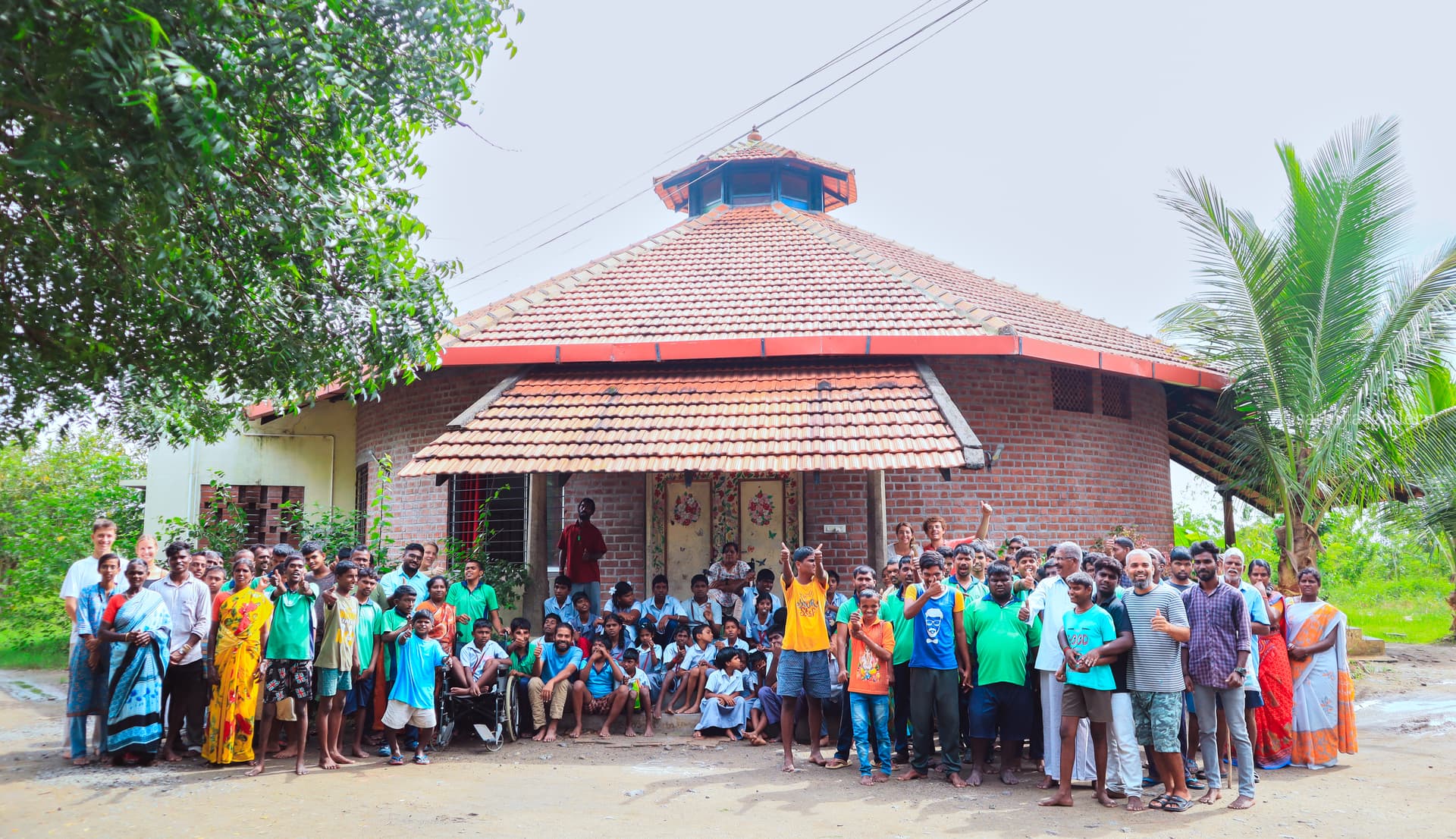
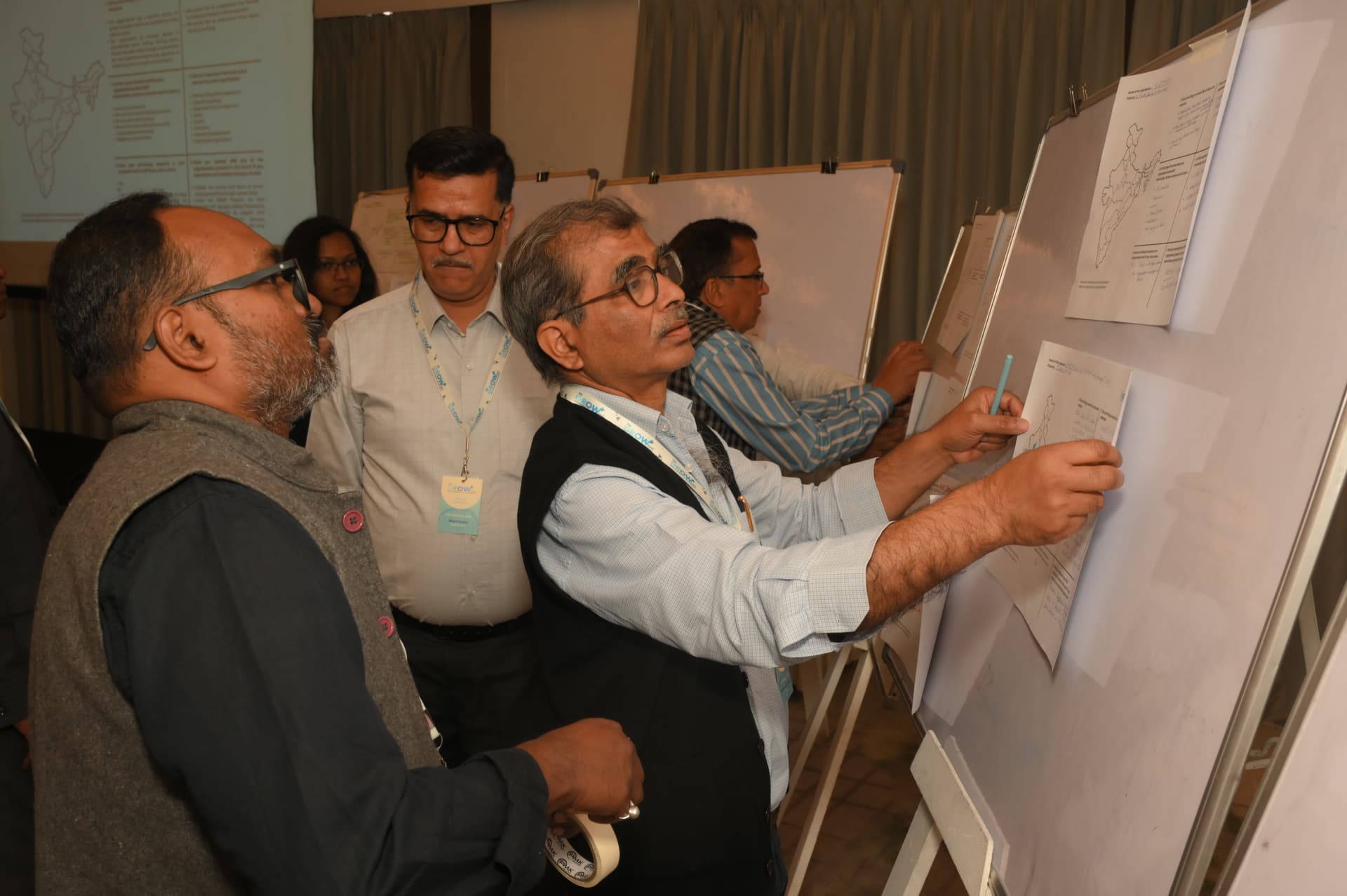
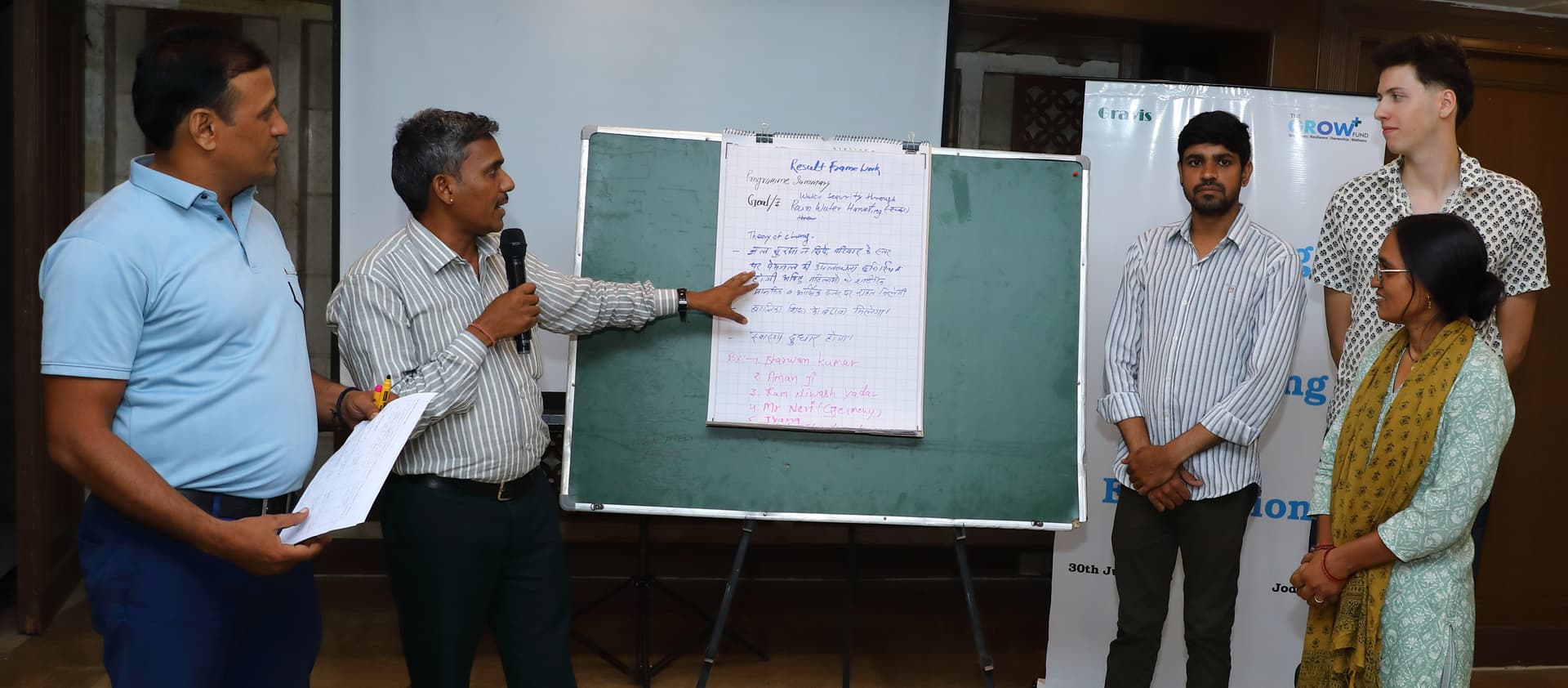
On 30 July 2026, a delegation of philanthropists, corporate CSR teams, Anchor organisations and GROW+ stakeholders spent a day with communities in Ramdevpura and Bhakhri in the Jodhpur region. The visit offered an opportunity to see how communities in this arid landscape are responding to water stress, erratic rainfall and changing agricultural conditions, and how local institutions are helping these efforts grow.
The visit was facilitated by Gramin Vikas Vigyan Samiti (GRAVIS), GROW+’s Anchor organisation for the desert landscape, along with its network partner Vasundhara Seva Samiti (VSS).
Ramdevpura: Water, farming and one household’s experiment
The morning began in Ramdevpura, a village of around 201 families and approximately 1,206 people. The village experiences high temperatures, low and erratic rainfall, recurring drought and saline groundwater.
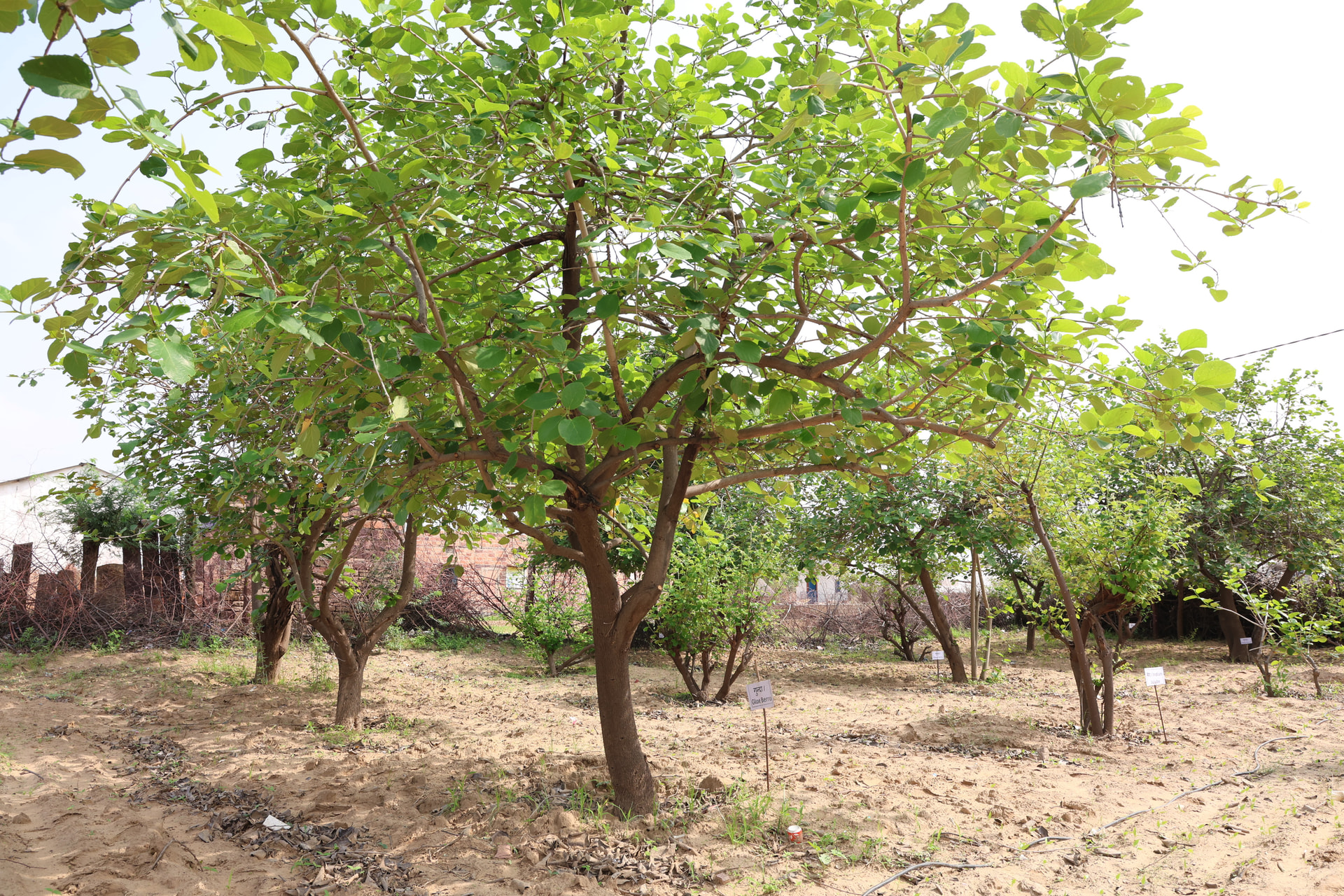
The first stop was the home of Anoparam ji and Pushpa Devi, where the group saw an Arid Horticulture Unit (AHU) developed with support from VSS. The land was initially considered unsuitable for horticulture because of poor soil moisture and low organic matter. Today, the plot has around 105 drought-resistant fruit and fodder trees, including ber, amla, gundi, lasora, lemon, moringa and khejri. The family is also experimenting with mango.
The orchard now provides food for the household as well as an additional source of income. According to the family, earnings can reach close to ₹1 lakh in a good year and are around ₹50,000 in an average year. Produce is sold in Kalyanpur, Jodhpur and Barmer, while some is used at home. The orchard also showed how closely farming here is tied to water availability.
A taanka that supports the household
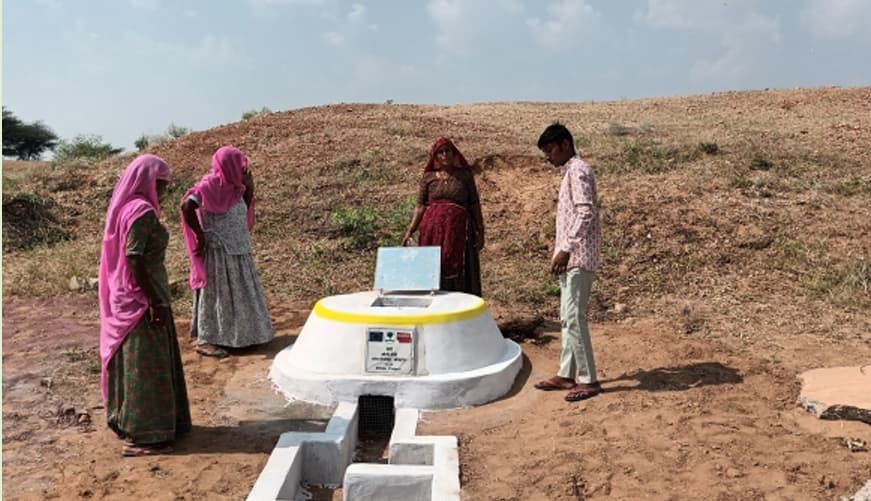
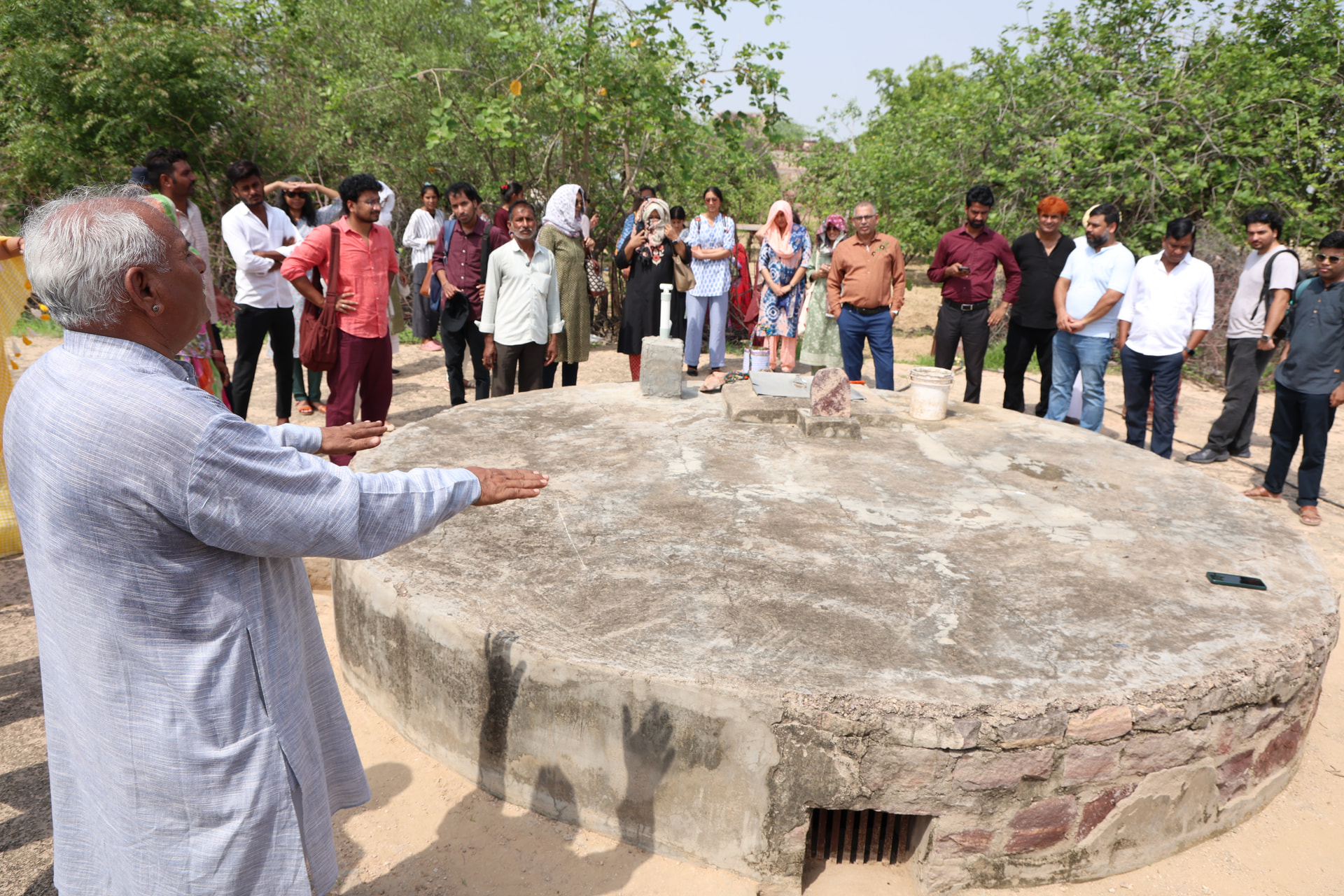
The family’s 30,000-litre taanka, a traditional underground rainwater harvesting structure, collects rainwater through a catchment system and is used for drinking water, livestock and the horticulture plot.
The taanka has supported the household for three generations. But the demand on the stored water has changed. Pushpa Devi shared that water which earlier lasted almost the entire year now lasts around two months, following the addition of a bathroom and toilet. There is no piped water connection to the house, so any shortfall has to be brought in separately.
The group also saw a traditional Kanara/Kothi, used to store grain and seeds through the year. Made from locally available straw, cow dung and clay, it protects stored grain from insects, rodents and moisture.
These practices remain part of everyday life in the village and show how communities have developed ways of managing limited resources using materials and knowledge available locally.
From households to the Village Development Committee
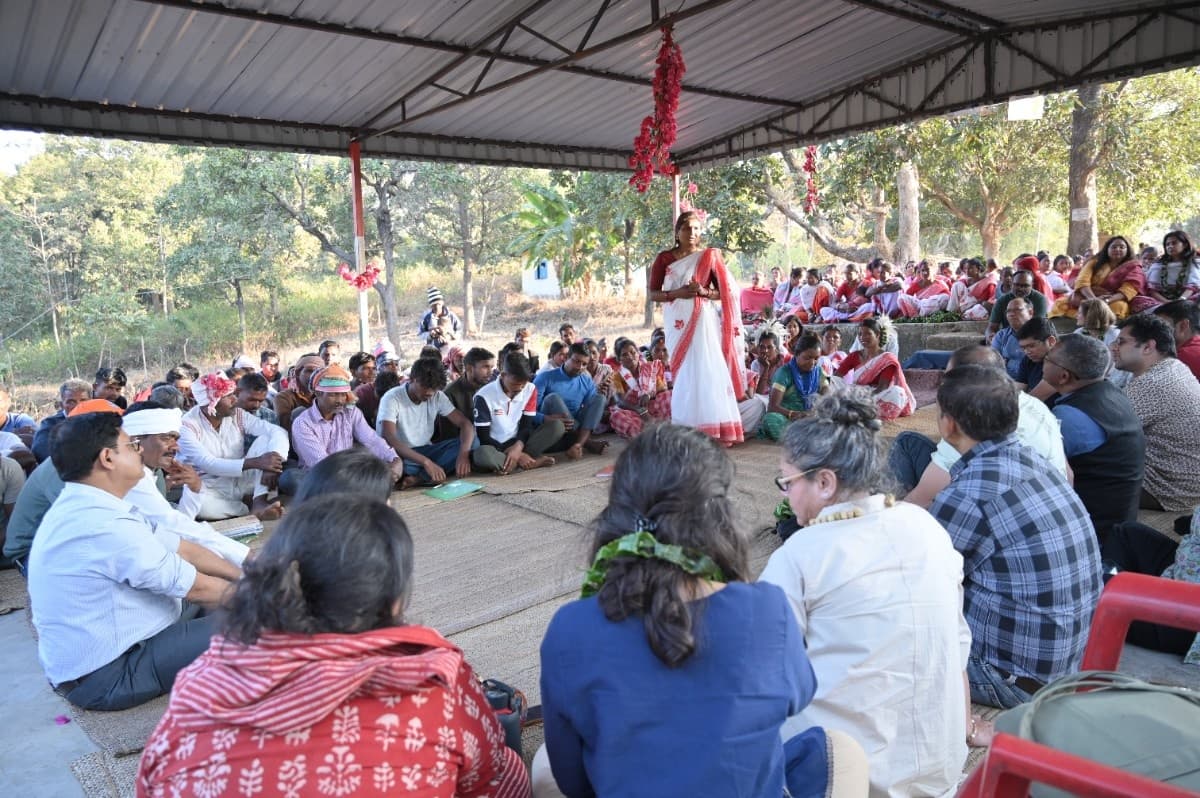
The visit then moved from the household to the Village Development Committee (VDC), which acts as a platform for community decision-making and collective action.
Community members spoke about the VDC’s role in supporting taankas, horticulture units, khadin work and the use of locally prepared compost. The committee has also helped build a Gram Kosh, which has grown to nearly ₹13 lakh.
The fund is used for community needs such as renovating the common hall, restoring the village pond and supporting community events. The village has also been discussing the financial burden associated with some traditional social customs. Money that would earlier have been spent on elaborate post-death feasts is now being channelled into the community fund.
At a larger level, VSS’s work across the villages has contributed to the construction of around 3,200 taankas, 180 community ponds, restoration of 50 wells and ground-level reservoirs, and plantation of 12,000 trees.
Women’s perspectives on a changing landscape
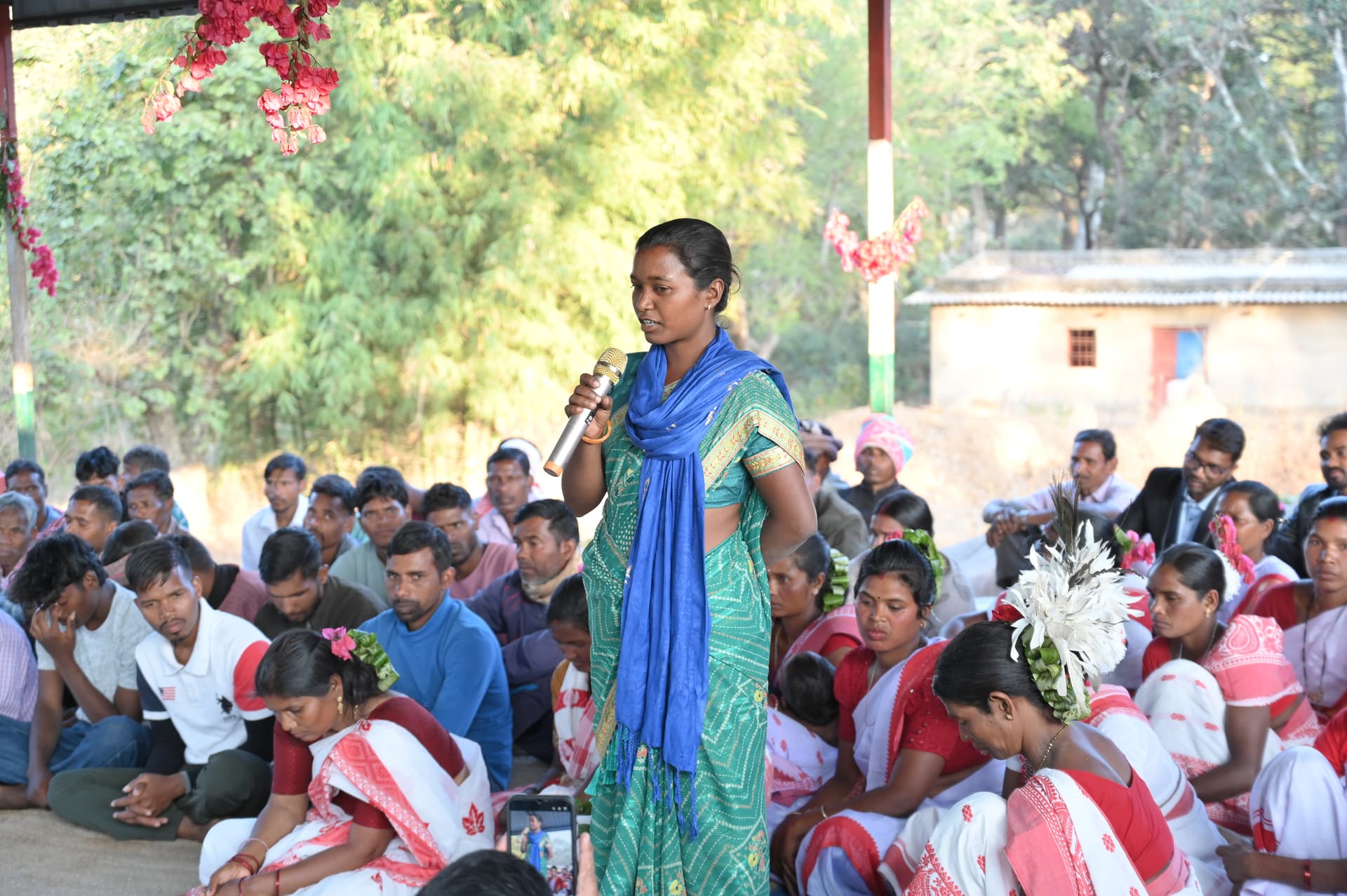
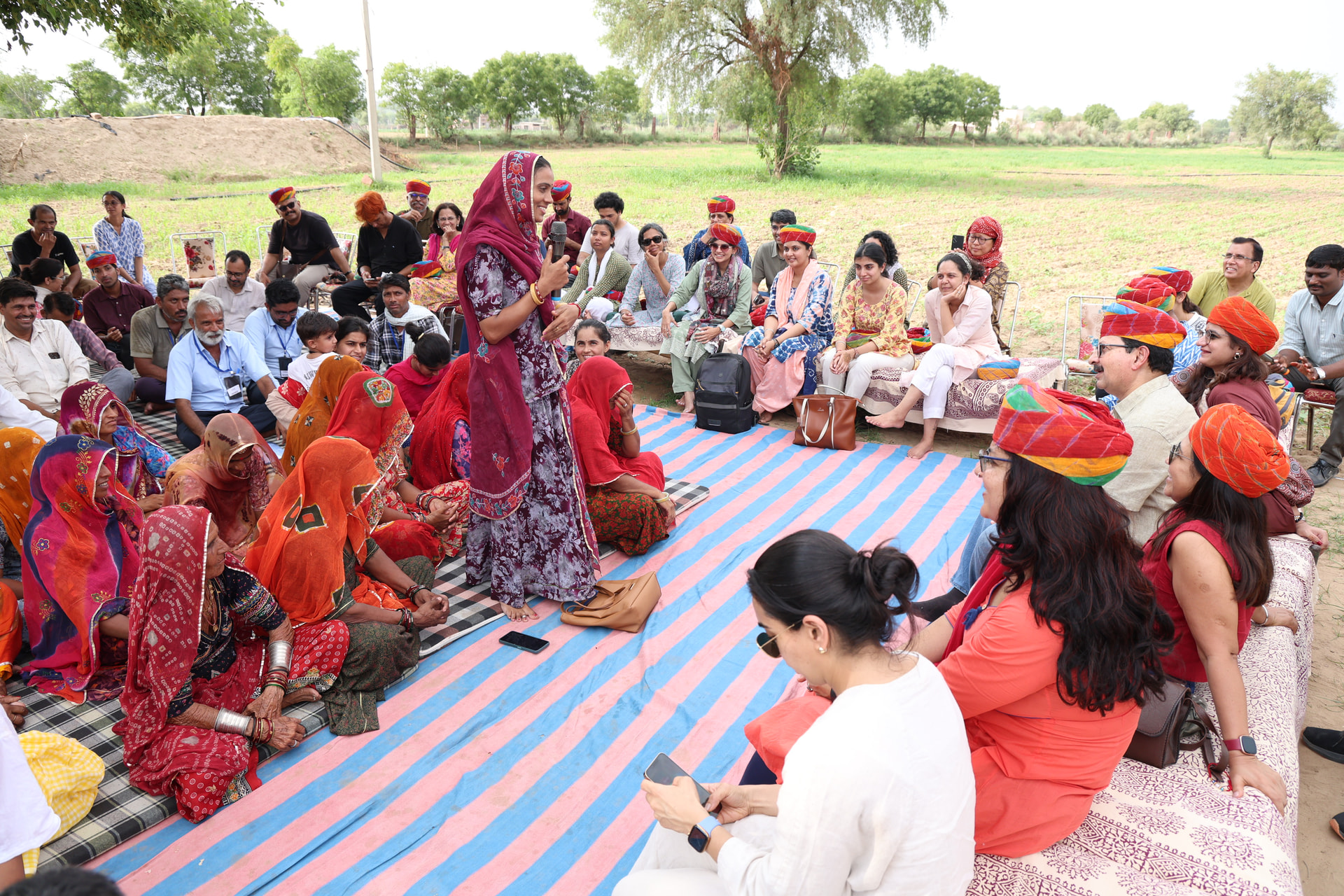
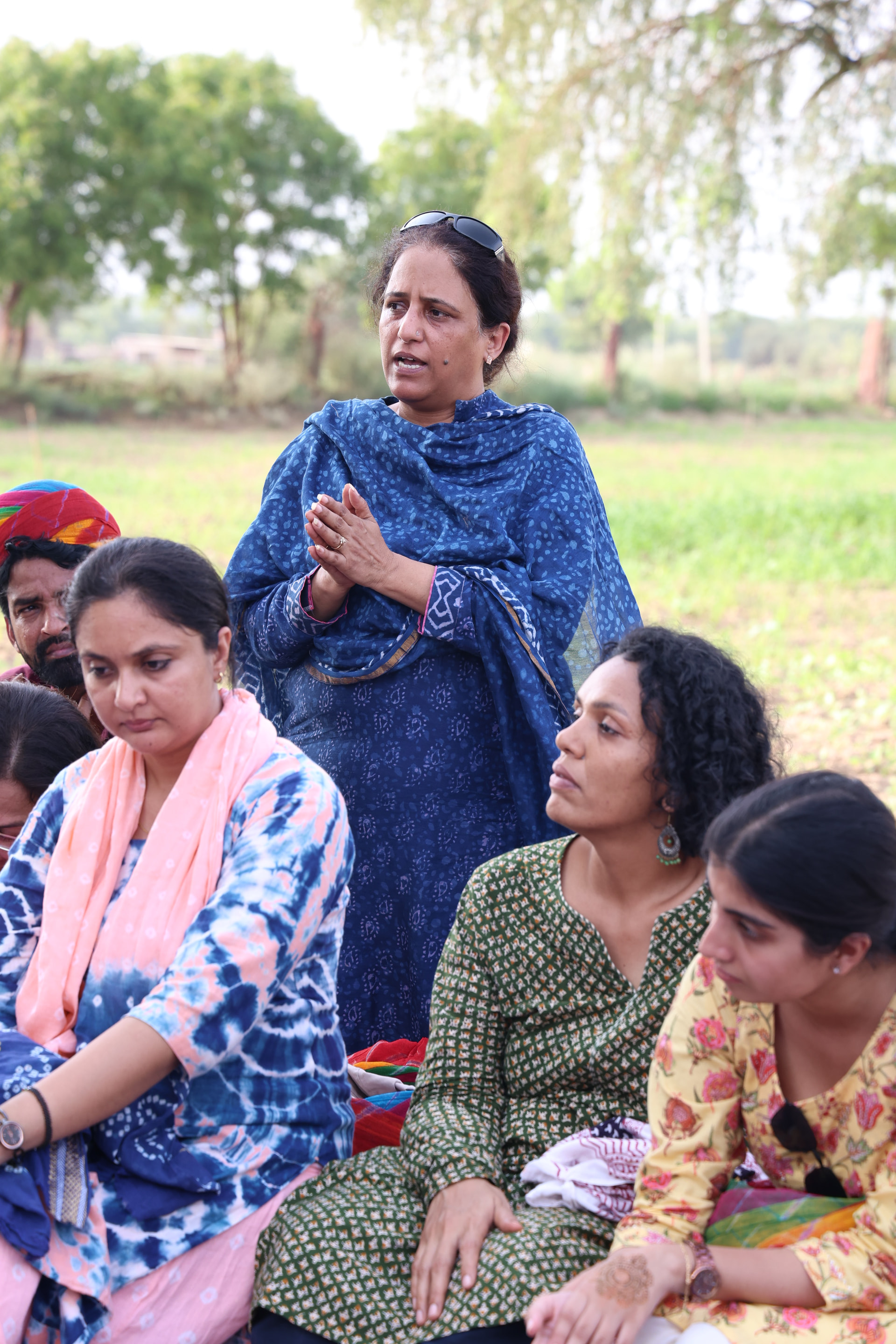
A separate conversation with women from the village brought out another side of the challenges faced here.
Pauchi Devi, 70, spoke about continuing to walk around two kilometres for water and about how rainfall has become increasingly difficult to predict. Lacchi Devi spoke about taking up daily wage and NREGA work when crops fail. Kiran Devi, 25, spoke about her studies, her work as a yoga instructor and the difficulties of following traditional veiling practices in the heat.
The women also spoke about their role in farming. Sowing, weeding, harvesting, processing and grading are all part of their work, even though much of this labour remains less visible once produce reaches the market.
Bhakhri: Building collective systems around farming
By afternoon, the group had reached Bhakhri, where the conversation moved towards farmer collectives, seed management and women-led enterprises.
Farmers spoke about the changes they have seen in water availability. Traditional systems of diverting surface water have increasingly given way to tubewells, drip irrigation and sprinklers as groundwater levels have fallen.
This year’s delayed monsoon had added to the pressure. Rain arrived only in the last week of July and remained below the seasonal average. Farmers reported that borewells that earlier reached water at around 20–30 pipe-lengths now sometimes need to go down to around 40.
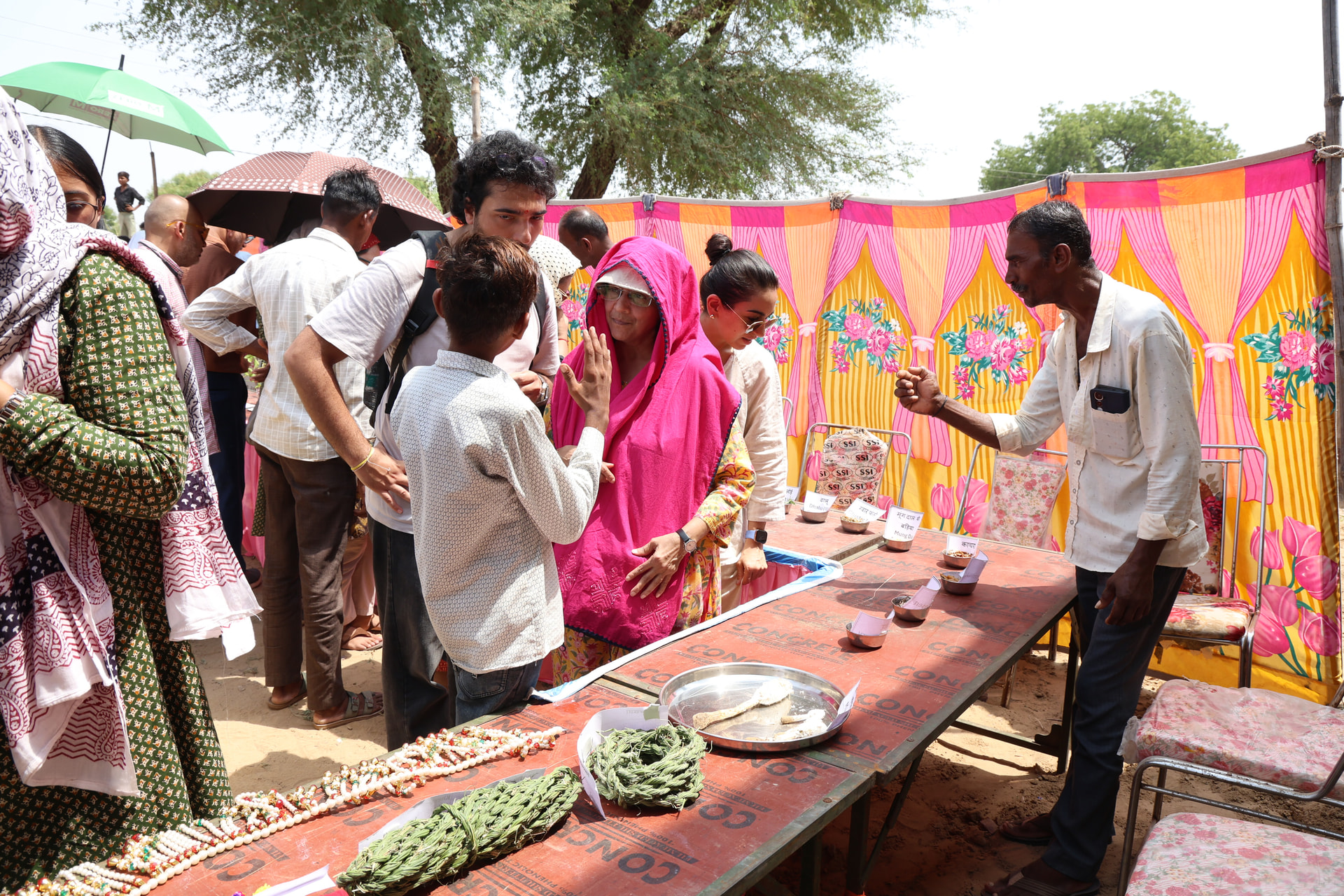
The group then visited the community seed bank, where cumin seed is stored with ash and neem in sealed mud pots. One pot held around 70 kg of seed. Farmers access the seed at the cost of grading and storage and return twice the quantity after harvest, allowing the seed bank to continue operating each season.
From FIGs to an FPO
The seed bank is part of a wider network of Farmer Interest Groups (FIGs). Around 20–25 FIGs operate in the Osian cluster around Bhakhri, with another 25–30 in Phalodi.
The groups provide a simple form of collective support. Farmers can turn to other members when they need seed, labour or information, rather than having to look outside the community for every requirement.
These groups have also contributed to the growth of the Harimala Farmer Producer Organisation (FPO), which now has around 500 members, up from 250. The FPO mainly trades in groundnut, cumin and wheat and allows farmers to sell collectively.
Each member contributed around ₹1,000 when the FPO was formed. Over time, member contributions and trading margins have helped build a reserve of approximately ₹5 lakh, including to meet statutory audit costs.
Women building their own enterprises
The final interaction was with women from Self-Help Groups (SHGs), who spoke about running tailoring units, flour mills, dairy activities and small businesses.
One SHG has grown from members contributing ₹30 a month to a loan pool of ₹5 lakh. Members borrow from the group at around 1% a month and use the money to run or expand their enterprises. Members reported monthly incomes of around ₹5,000–8,000 from their respective activities.
The interaction also brought out the growing confidence among women to speak about their businesses, incomes and role in community life.
What the visit brought together
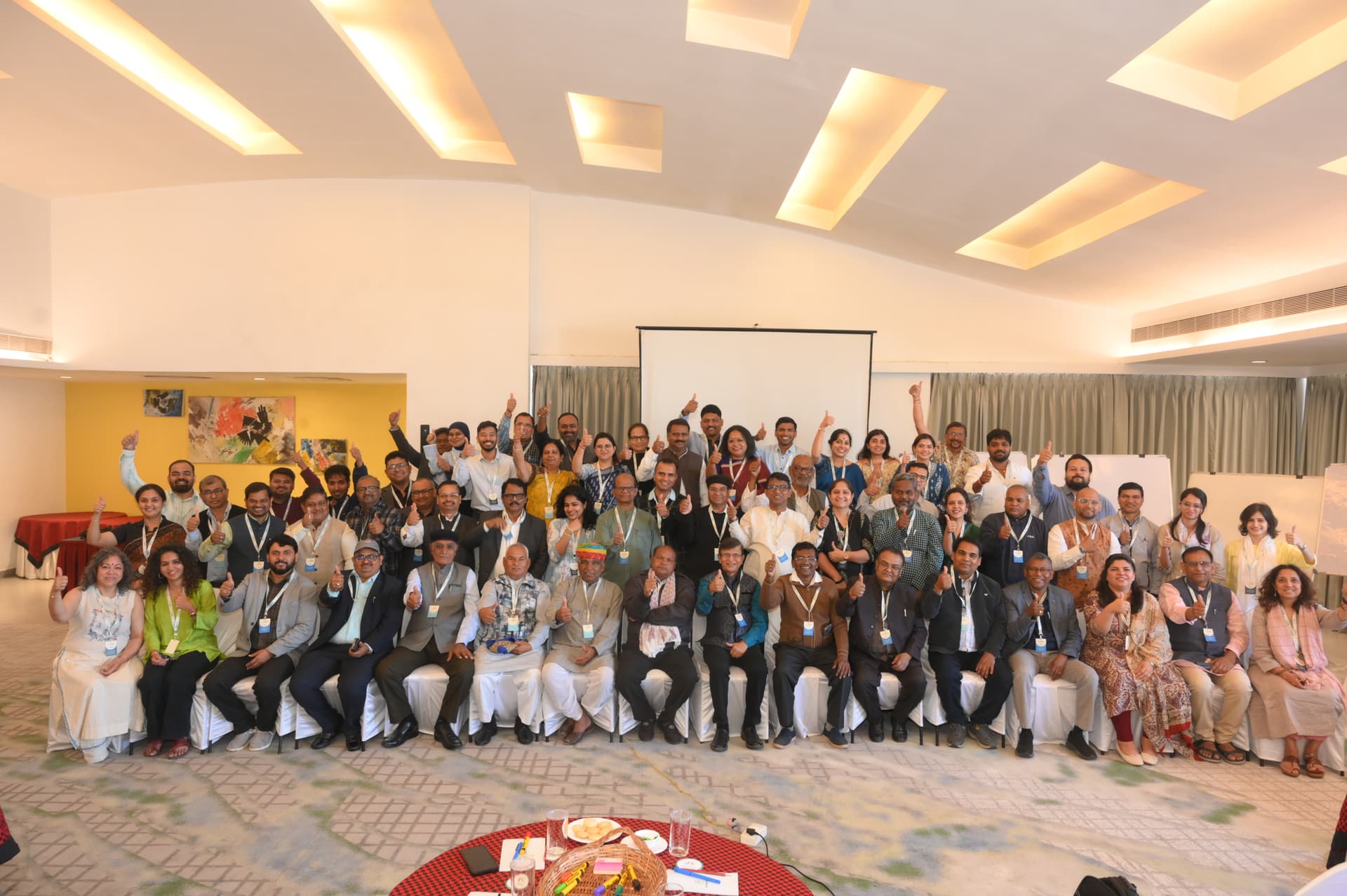
By the end of the day, participants had seen several layers of community action — from a household taanka and orchard to a Village Development Committee, seed bank, FIGs, FPO and SHGs.
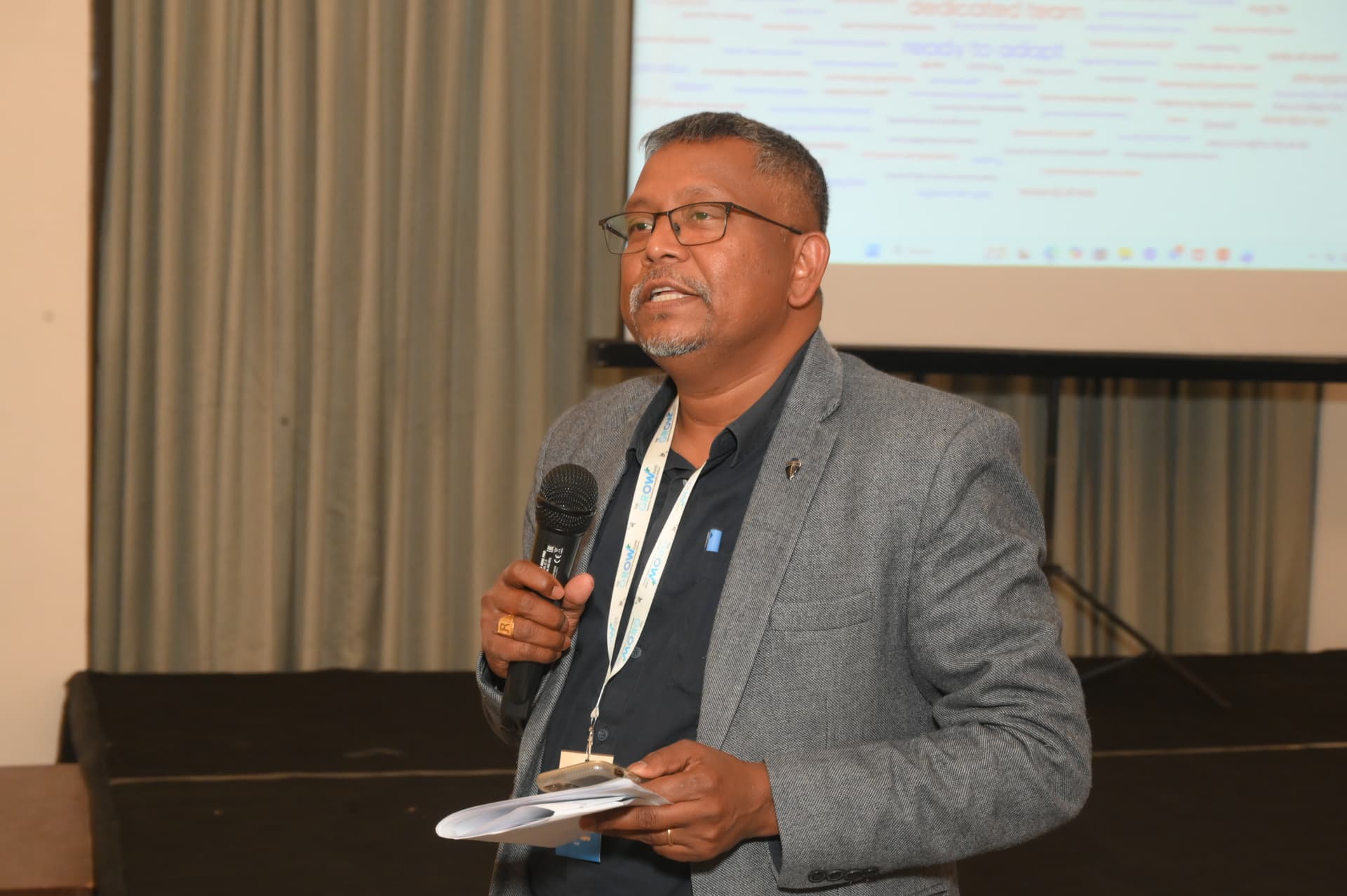
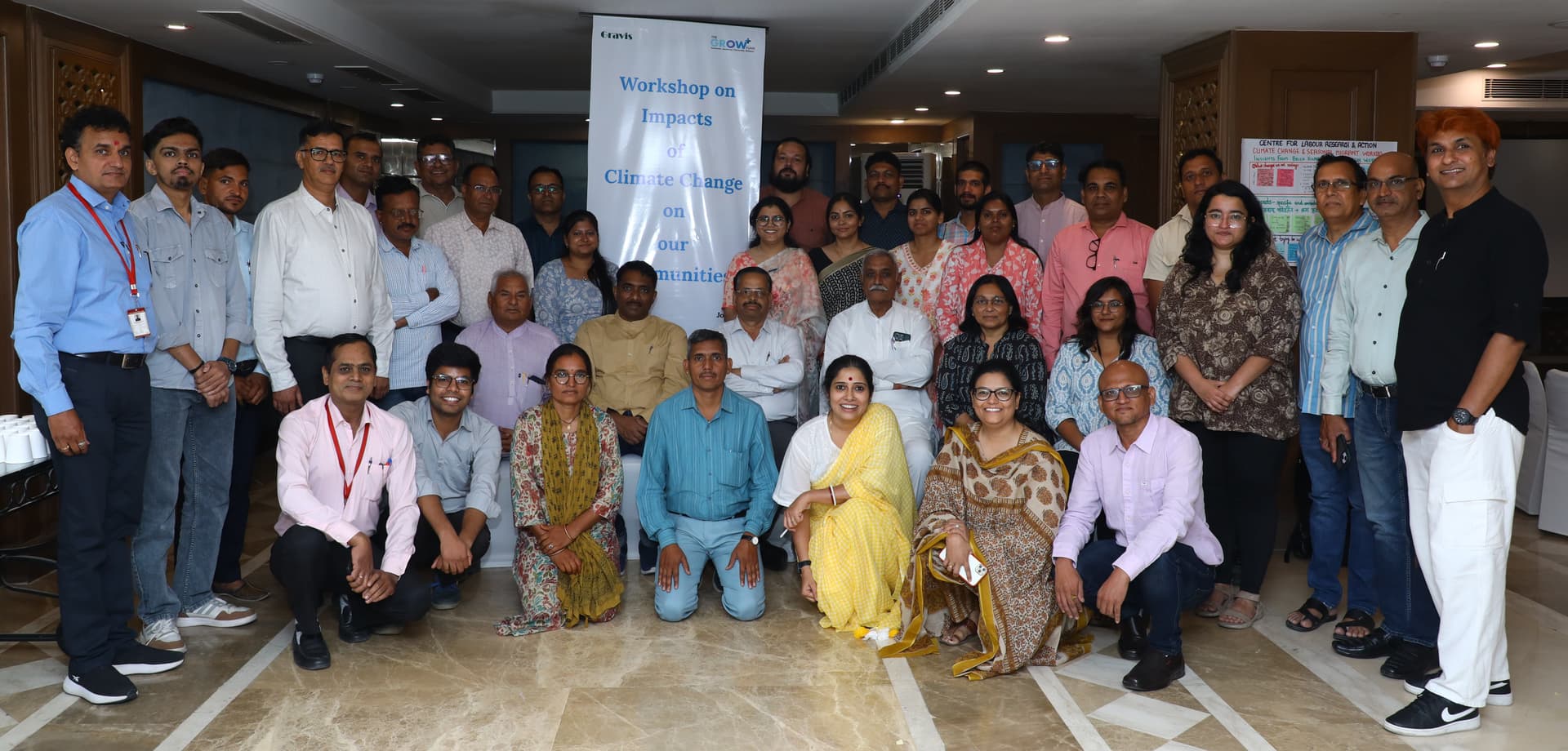
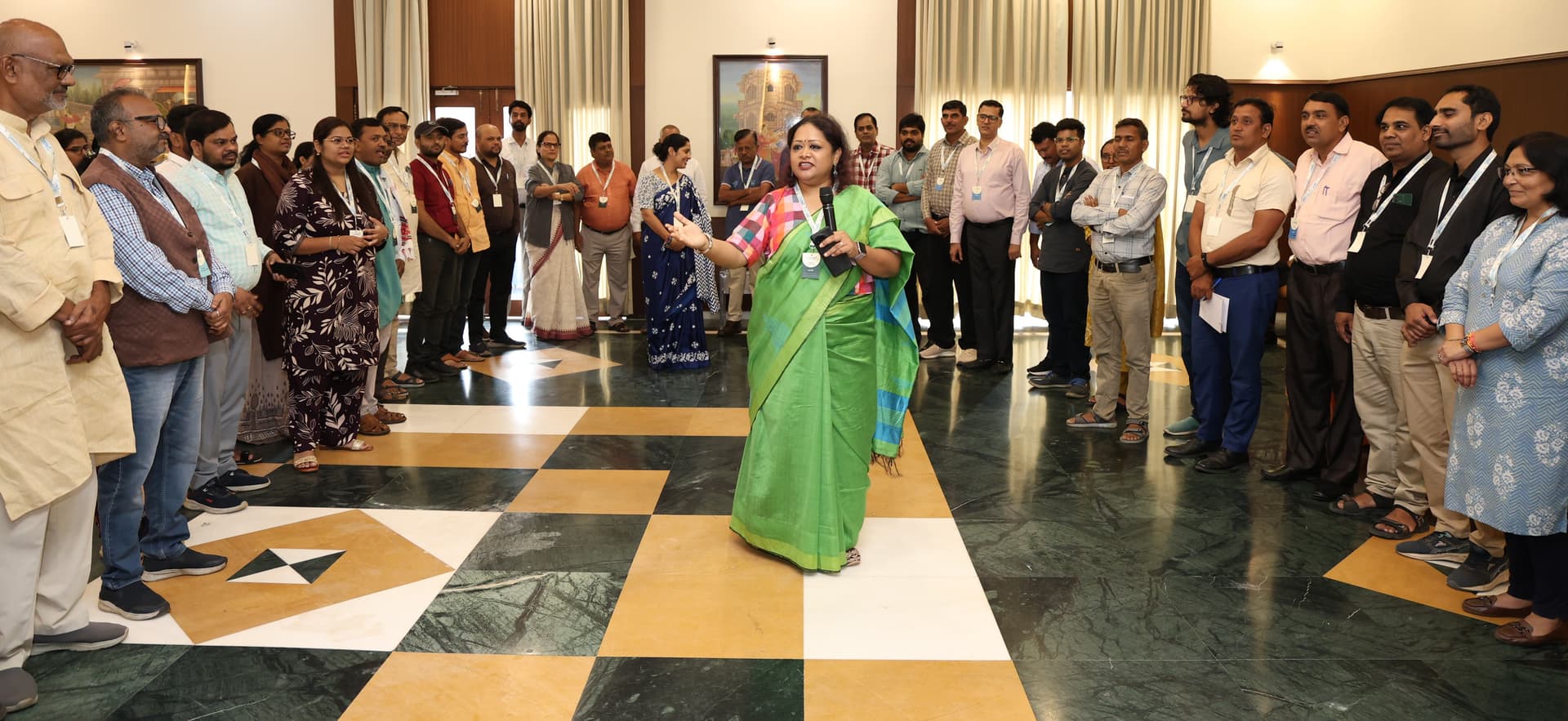
The closing discussion brought together more than 30 participants from different organisations. A common reflection was that communities already have considerable knowledge of their local challenges and have developed their own ways of responding to them. What is often needed is sustained institutional support to strengthen and expand these efforts.
For GROW+, the visit was an opportunity to see this progression on the ground. A household-level response to water scarcity can influence others in the village. Community groups can build systems that continue beyond an individual project. Farmer groups can come together to create larger institutions. Women can use collective savings to build their own enterprises.
The experiences of Ramdevpura and Bhakhri offered a close look at this process and at the work of VSS and GRAVIS in supporting communities and institutions over the long term.
Read the full convening and field visit reports here