Over the past few months, the Commons Sensing podcast has emerged as a space for reflecting on the Commons moving beyond being a static category, but as something continuously shaped through practice, negotiation, and lived experience across landscapes.
At a time when responses to the triple crisis (livelihoods, climate, and social equity) are often framed through centralised systems or market-led approaches, these conversations return to a quieter but more foundational question: what does it mean to organise our economies, governance, and everyday lives around what we hold in common?
Bringing together practitioners, researchers, and community-rooted voices, the series traces how Commons are understood, contested, and sustained across contexts, from forests and rural economies to legal systems, markets, and cities.

This is a conversation podcast hosted by Kanchi Kohli and produced by Asar and the Common Ground Initiative, bringing the idea of Commons out of policy documents and academic debates into lived, everyday realities.
The series begins with a conversation between Jagdeesh Rao Puppala (Living Landscapes) and Huda Jaffer (SELCO), grounding the idea of the commons in decades of work across land, energy, and community institutions. What emerges is not a definition, but a way of working—one that is shaped by collective decision-making, local stewardship, and the ability of communities to respond where both markets and state systems often fall short. The episode situates the commons within everyday practice, showing how it is sustained through relationships, rather than managed as a resource alone.
Watch here: https://youtu.be/QmGt5oCTguE

The second episode, featuring Raghunathan N (CMS/Vrutti) and Vinuta Gopal (Asar), turns to the uneasy relationship between markets and the commons. Drawing from work across value chains and climate finance, the conversation reflects on how market systems intersect with collective ownership—sometimes enabling, often fragmenting. Rather than resolving this tension, the episode holds it in place, asking whether it is possible to engage with markets without eroding community agency, ecological balance, and equity. It points to the need for institutional arrangements that are shaped by communities themselves, rather than imposed upon them.
Watch here: https://youtu.be/m2UByBpIvAw

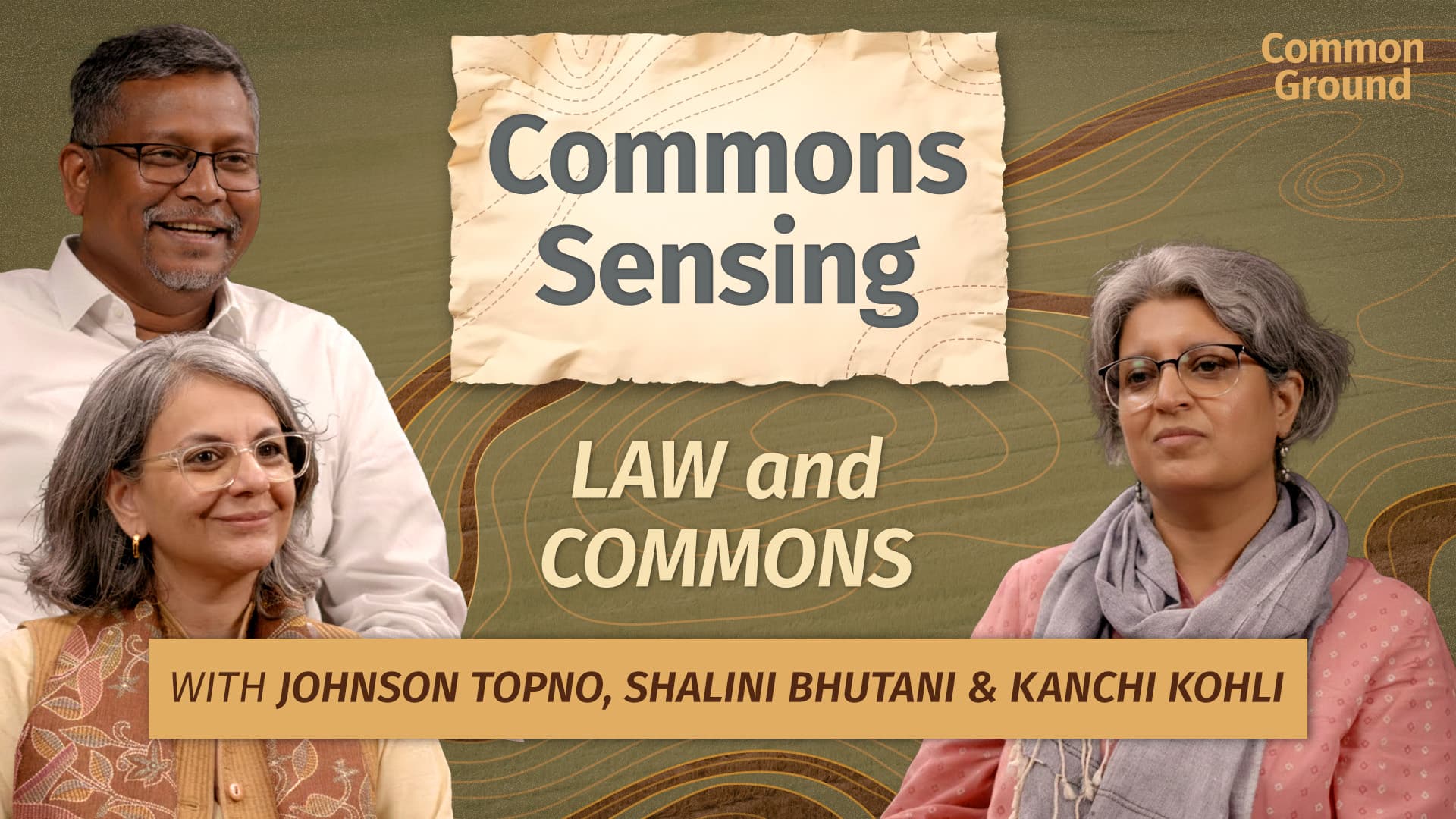
Questions of power and access come into sharper focus in the third episode, with Shalini Bhutani and Johnson Topno (PHIA Foundation). Here, the commons is examined through the lens of law, policy, and institutional frameworks. The discussion traces how legal systems define, recognise, and at times restrict commons, while communities continue to assert customary rights and governance practices. What becomes visible is an ongoing negotiation—where recognition is not guaranteed, and where the act of governing the commons often involves sustained engagement with legal and administrative systems.
Watch here: https://youtu.be/21lzJAiSKx8
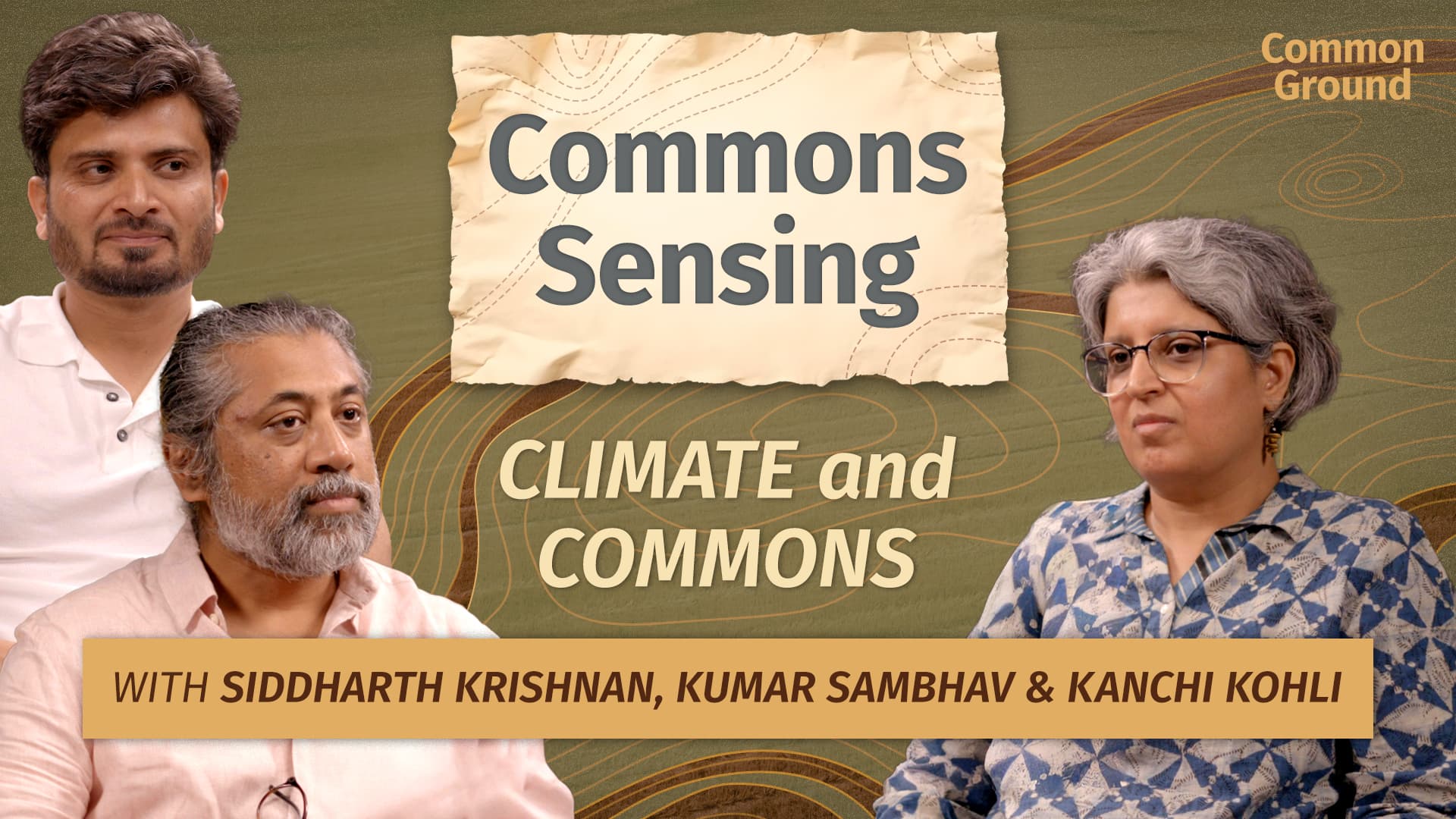
In the fourth episode, Siddharth Krishnan (ATREE) and Kumar Sambhav (Land Conflict Watch) bring climate change into this conversation, not as an abstract global phenomenon, but as something experienced through land, livelihoods, and conflict. As renewable energy expansion, land acquisition, and ecological stress reshape rural landscapes, the pressure on commons becomes more visible. The episode reflects on how community-managed systems offer pathways for resilience, particularly where top-down responses fail to account for local contexts, histories, and dependencies.
Watch here: https://youtu.be/I2RwCNqZZ7k
The fifth episode shifts the lens to urban contexts, with Shweta Wagh and Swati Janu exploring the idea of the city as a commons. Through rivers, coasts, housing, and public spaces, the conversation highlights how urban commons are shaped by planning decisions, inequality, and contestation. At the same time, it points to emerging practices that reimagine cities as shared spaces—where access, belonging, and ecological considerations are negotiated collectively, even within dense and unequal environments.
Watch here: https://youtu.be/omTnMRzYOjc

Across these conversations, a few threads begin to align. The Commons are not simply about shared resources but about shared systems of governance, collective memory, and the everyday work of stewardship with communities at the centre. It is shaped as much by institutions and policies as it is by relationships, norms, and local knowledge.
What the podcast makes visible is that commons-based approaches are already present across landscapes, often quietly, and often without formal recognition. The challenge, then, is not only to document these practices, but to create pathways for them to inform wider decision-making systems, from local governance to national policy.
As the series continues, there is an opportunity to deepen this bridge, bringing more voices from community institutions into the conversation, and ensuring that the discourse on commons remains rooted in lived realities while speaking to broader systemic shifts.
In this sense, this conversations series is part of a larger effort to build a shared language around the Commons, one that travels across regions while remaining grounded in place.