The Chakravyuh, as described in the epic Mahabharata, is a complex battle formation: a trap that is difficult to enter, navigate and escape. The climate challenge we face today can feel much the same, a complex web of interconnected ecological, social, economic and human challenges where the way forward is not always clear. That is why we came up with ChakraView.
Climate ChakraView began in August 2025 with 23 organisations exploring how climate action could be integrated into their existing programmes and community-led work. Through reflection, cluster coaching and Climate Action Prototypes, organisations identified practical ways to respond to climate challenges within their contexts. This journey led to the collective idea of the Climate ChakraView Festival, held in Udaipur on 26–27 September 2026, creating a platform for young social entrepreneurs, climate practitioners and artists to demonstrate their leadership by curating experiences for a wider public.
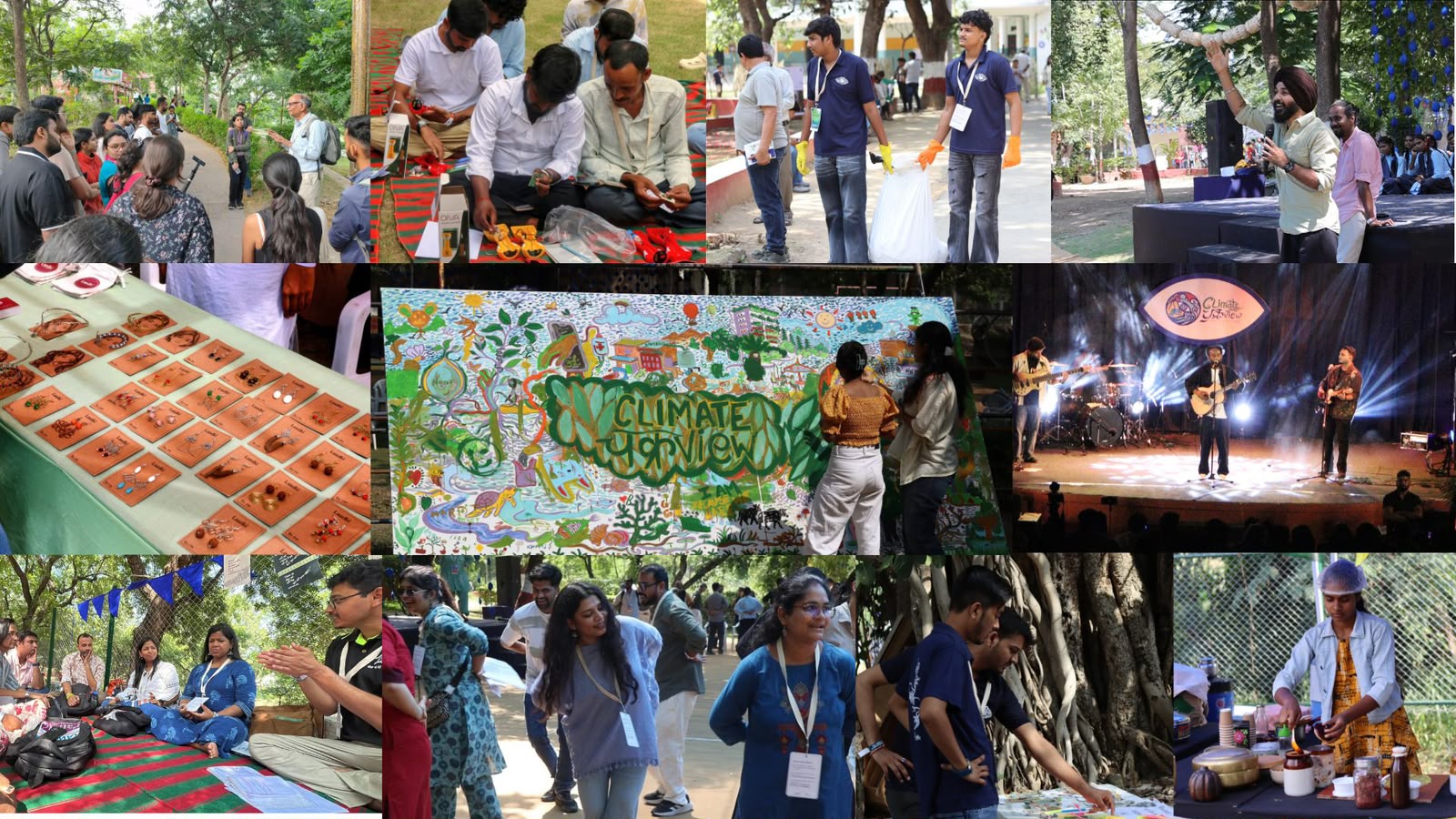
Built on the principles of Nourishing Now, the festival brought together 2,500+ participants through 70+ hands-on experiences at Vidya Bhawan and 13 natural spots across Udaipur. Bringing together students, families, educators, artists, climate practitioners and citizens, the festival transformed the city’s lakes, gardens, farms, forests and neighbourhoods into spaces for exploring the connections between climate, ecology, culture and everyday life. Designed as an immersive and participatory experience rather than a conventional conference or awareness event, it invited people to experience the interconnectedness of climate challenges and discover pathways towards collective action.

Creating Different Pathways to Engage with Climate
The festival was organised around three pathways of engagement: Seeing (आकाश), Doing (पृथ्वी) and Being (प्राण). These offered participants different ways of approaching climate and ecology, depending on their interests and comfort levels.
Climate engagement was not presented through a single subject or format. Participants could encounter it through nature, food, waste, energy, creativity, craft, music and everyday practices. This diversity allowed people with different levels of familiarity with climate action to find their own entry points into the larger conversation.
Making Participation an Interactive Journey
To encourage exploration across the festival, participants used a gamified Climate Passport. Each experience offered an opportunity to collect a stamp, while the festival’s three pathways helped participants navigate the programme. A live leaderboard added a playful dimension, encouraging participants to discover more experiences and chart their own journeys. The top 30 participants were recognised during the closing session on 27 September at Vidya Bhawan.
The passport connected a range of experiences into a larger festival journey. Rather than attending a single activity, participants were encouraged to move between experiences, encounter different perspectives and engage with multiple dimensions of climate and ecology.
Young People as Facilitators and Creators of Experiences

An important dimension of ChakraView was creating opportunities for young people to move beyond participation and take active roles in facilitating public engagement. The festival provided a platform for them to bring their interests, knowledge and experiences into activities that connected others with climate and biodiversity.
One such example was Daksh Rathore, a 19-year-old B.Sc. student associated with City of Birds, who co-facilitated an insect walk with Shoaib at Sitafal Farms, Badgaon, on 27 September. Beginning with a short meditation, the walk invited participants to slow down and observe insects and plants in their surroundings.
It concluded with Daksh sharing his taxidermy collection and responding to questions. The experience highlighted how curiosity, observation and taking responsibility can become pathways to youth leadership, while Shoaib’s contributions enriched the shared learning.
Collective Participation and the Scale of Engagement
The festival’s delivery depended on the active participation of curators, volunteers, Changeloomers and members of the wider ChakraView ecosystem. More than 100 volunteers supported participant guidance, coordination, photography, mobilisation and other on-ground responsibilities across venues. Their involvement helped the festival function across multiple locations and supported participants in navigating the range of experiences available.
The festival also brought together people across generations and professional backgrounds. Students and young people participated alongside families, educators, artists, civil society representatives and climate practitioners. Activities such as nature walks, repair-based experiences, craft-making and collective performances offered opportunities for people to learn alongside one another.
Learning Beyond the Festival
Climate ChakraView brought climate-related questions into familiar public spaces, offering people multiple ways to engage with the ecological systems that shape their lives. It demonstrated how climate conversations can become more experiential and accessible, while creating opportunities for young people, organisations and communities to come together as facilitators, creators and contributors to climate action.