Gandhi Majhi, a 38-year-old resident of Sidhipadar Gram Panchayat in Th. Rampur, Kalahandi district. He completed his education up to the Intermediate level and joined Gram Vikas in 2007. He began his career with a monthly salary of ₹500, which was later increased to ₹900, then ₹1,200, and eventually ₹2,500. He continued working with Gram Vikas until the death of his father, after which he left the organization to attend to his family responsibilities.
At the beginning of his livelihood journey, Gandhi took up goat rearing after receiving training from a government department. During the training, he learned about goat management, including the prevention and control of Food-and-Mouth Disease, which helped him adopt better rearing practices.
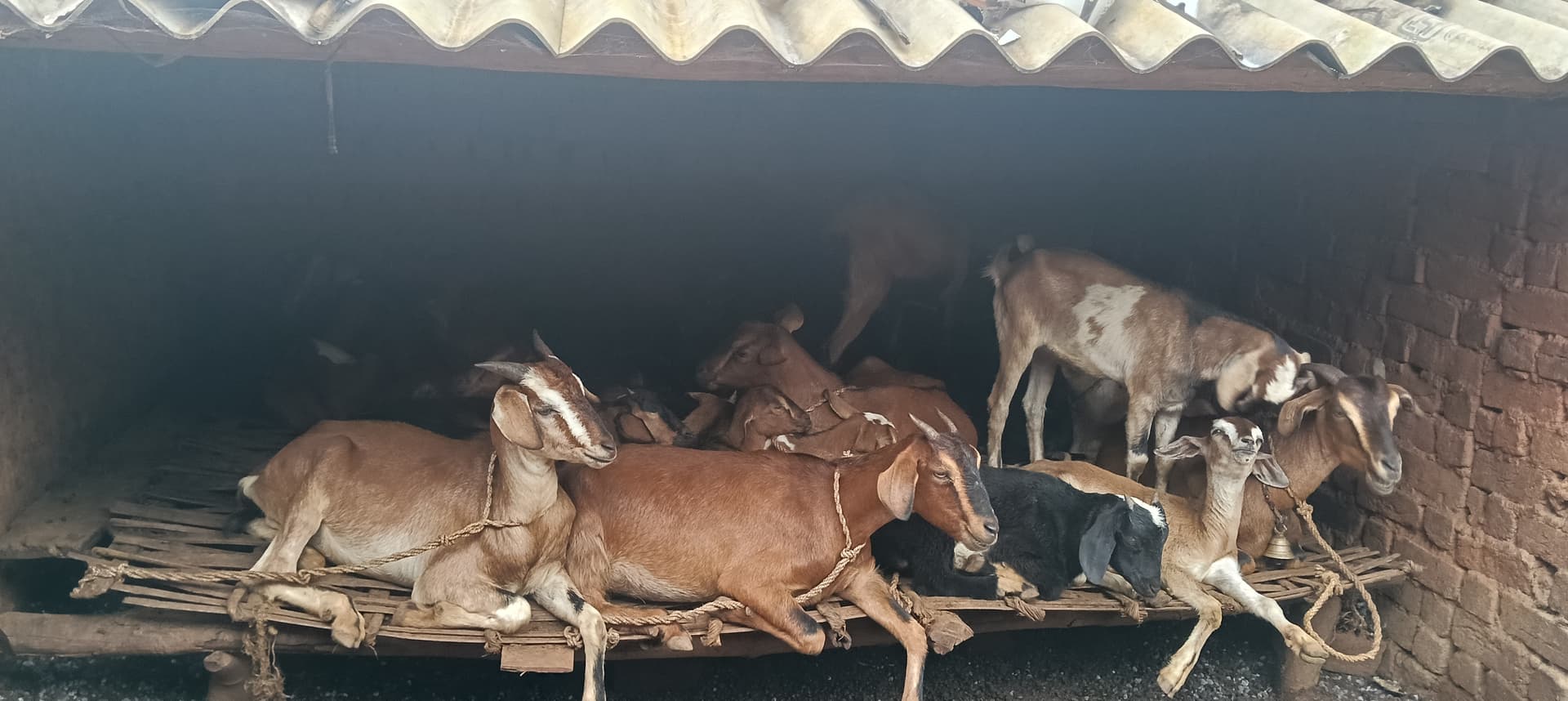
He initially purchased a single goat, which he sold a year later for ₹17,000. Encouraged by this success, he invested in 15 goats in 2012. By 2013, he had sold 14 castrated male goats (khasi), earning a total of ₹2,20,000, with each goat fetching between ₹20,000 and ₹25,000. Between 2013 and 2024, Gandhi sold approximately 314 khasi goats at an average price of around ₹20,000 per goat. During 2024–2026, he sold two goats for ₹41,000 each. With relatively low investment requirements and steady returns, goat rearing has become a profitable enterprise for Gandhi. The business has made him financially self-reliant, strengthened his confidence, and enabled him to earn a sustainable income.

In addition to goat rearing, Gandhi has established himself as a local money lender, providing loans to community members at an interest rate of 5%. Every year, he lends between ₹2 lakh and ₹3 lakh and receives repayments, including principal and interest, amounting to approximately ₹4 lakh to ₹5 lakh. This has become another important source of income for his family.
One notable example is Shambu Gauda, a community member who borrowed money from Gandhi to start a sandal business. The business has since grown successfully, demonstrating how Gandhi’s financial support has also contributed to local entrepreneurship. At present, Gandhi owns around 50 goats, each valued at approximately ₹20,000 based on the prevailing market price. To secure the best returns, he maintains contact with two or three livestock traders and sells his goats through competitive bidding to the buyer offering the highest price.
With the support of Gram Vikas, Gandhi also received training in the preparation of Jeeva Mruta and Bija Mruta, organic bio-inputs used to improve soil fertility and crop productivity. He prepares these inputs himself and applies them to his farmland, which has contributed to better agricultural production. Although goat rearing involves several risks, including disease outbreaks and animal mortality, Gandhi minimizes these challenges through regular care, proper feeding, and close supervision of his livestock. His commitment to shepherding and animal health has been a key factor in the success and sustainability of his enterprise.
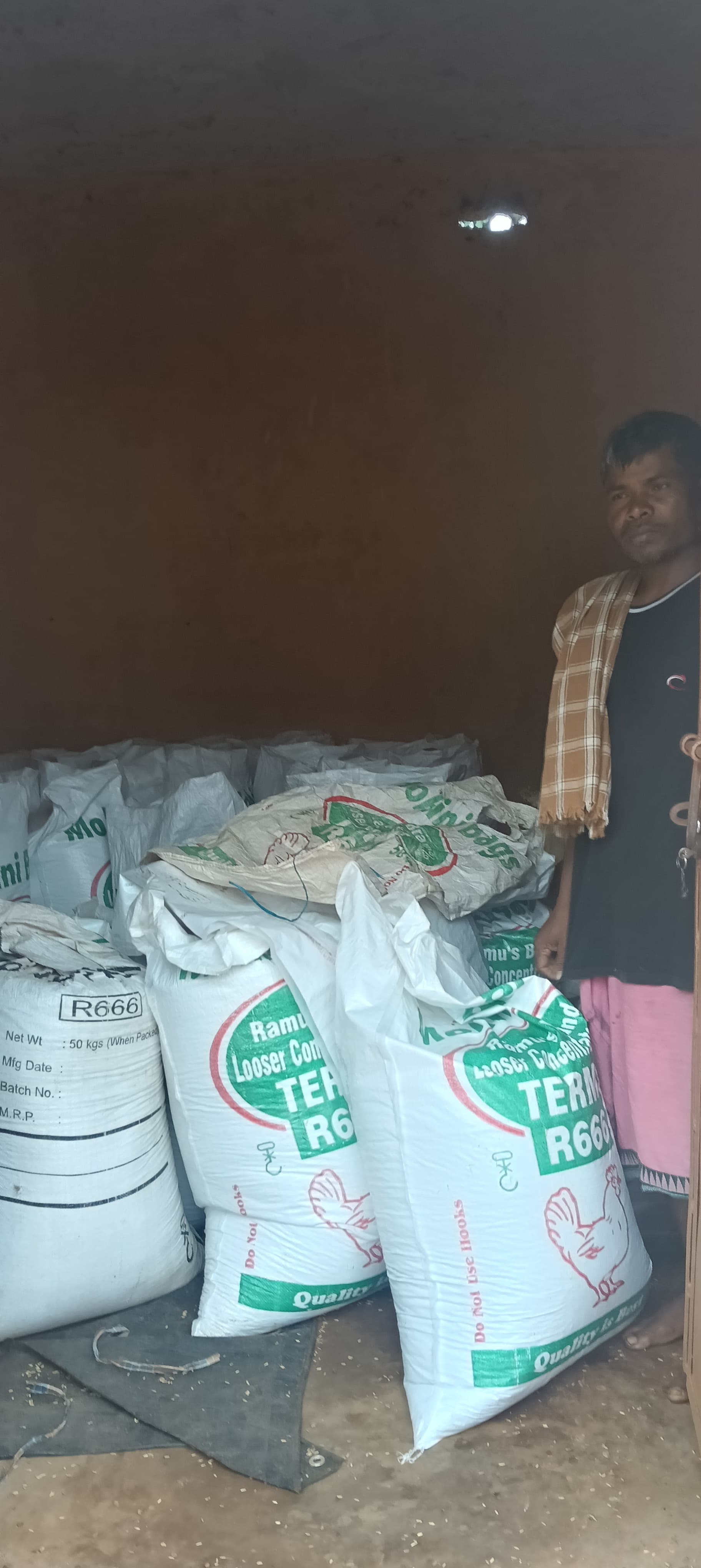
In addition to his other livelihood activities, Gandhi established a grocery shop to create a sustainable source of employment for his elder brother, who had previously depended on him for financial support. Over time, his elder brother became self-reliant and now manages the grocery business independently. He has also purchased an autorickshaw, which is used to transport grocery supplies and other goods, further strengthening the family’s livelihood. A few years ago, Gandhi also ventured into the business of purchasing agricultural produce from local farmers in Sidhipadar Gram Panchayat. Acting as a local trader, he buys a variety of pulses and millets produced by the community, including kandula (red gram), bajra (pearl millet), kuiri, mandia (finger millet), koshala, rice, and kangu, among others. Each season, he procures approximately 2–3 quintals of these crops and sells them from his home or in nearby markets. This enterprise has become an additional source of income, generating an estimated annual profit of ₹1–2 lakh.
Gandhi also plays an active role in supporting his community by contributing financially to social and cultural events such as community feasts, festivals, marriage ceremonies, and traditional rituals. Each year, he provides assistance based on the needs of the community. For example, he contributed ₹50,000 toward the community feast last year. The community has also allowed him to use the community hall to store agricultural produce, including pulses and other goods, reflecting the trust and respect he has earned among local residents.
At present, Gandhi’s children are continuing their education in schools and colleges. His elder brother’s daughters are also continuing their higher education. One is studying B.Tech at KIIT University, while the other is pursuing a graduation degree at a college in Bhubaneswar and all expenses of education are borne by Gandhi Majhi. Gandhi takes pride in supporting his family’s education, viewing it as an important investment in their future.