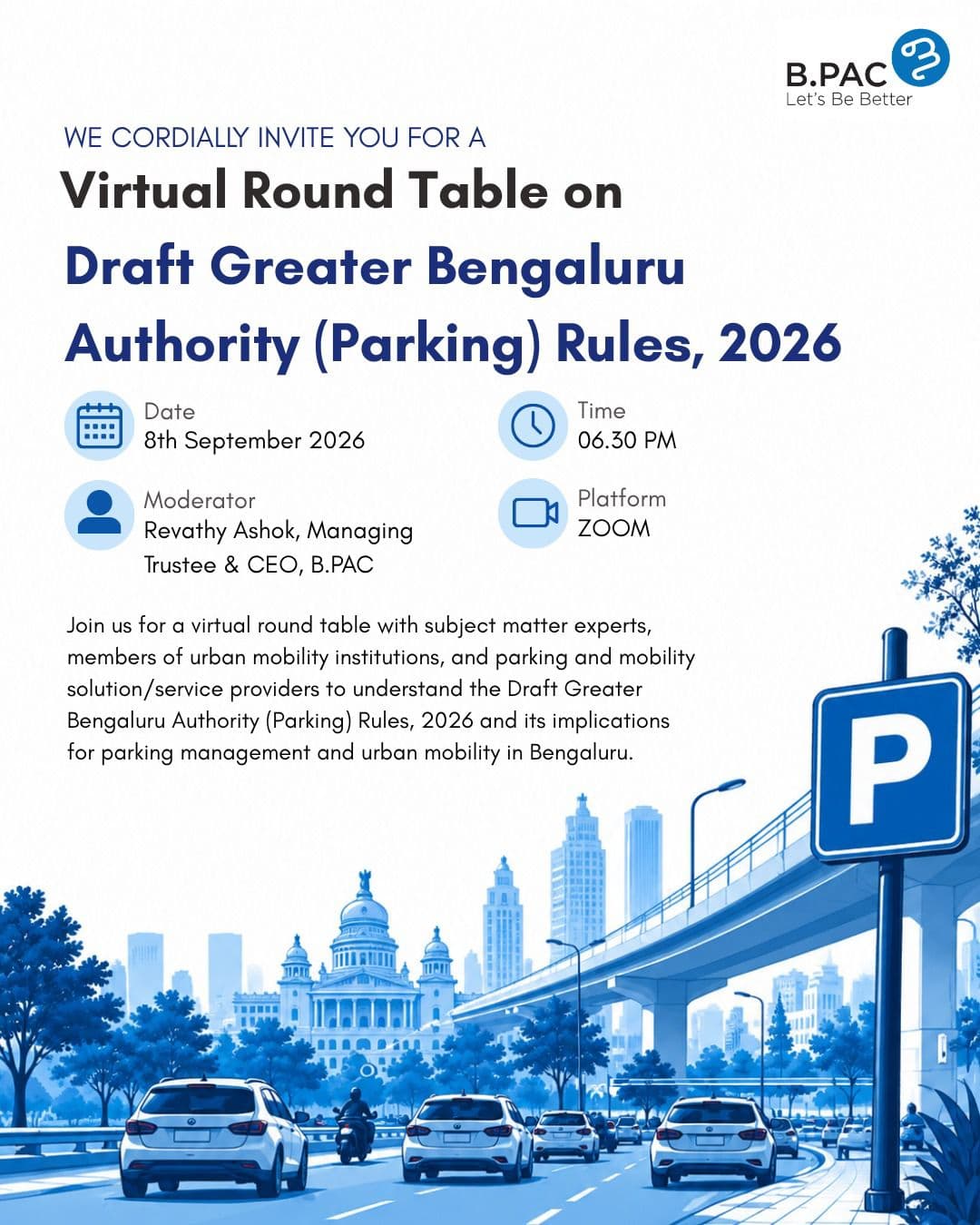
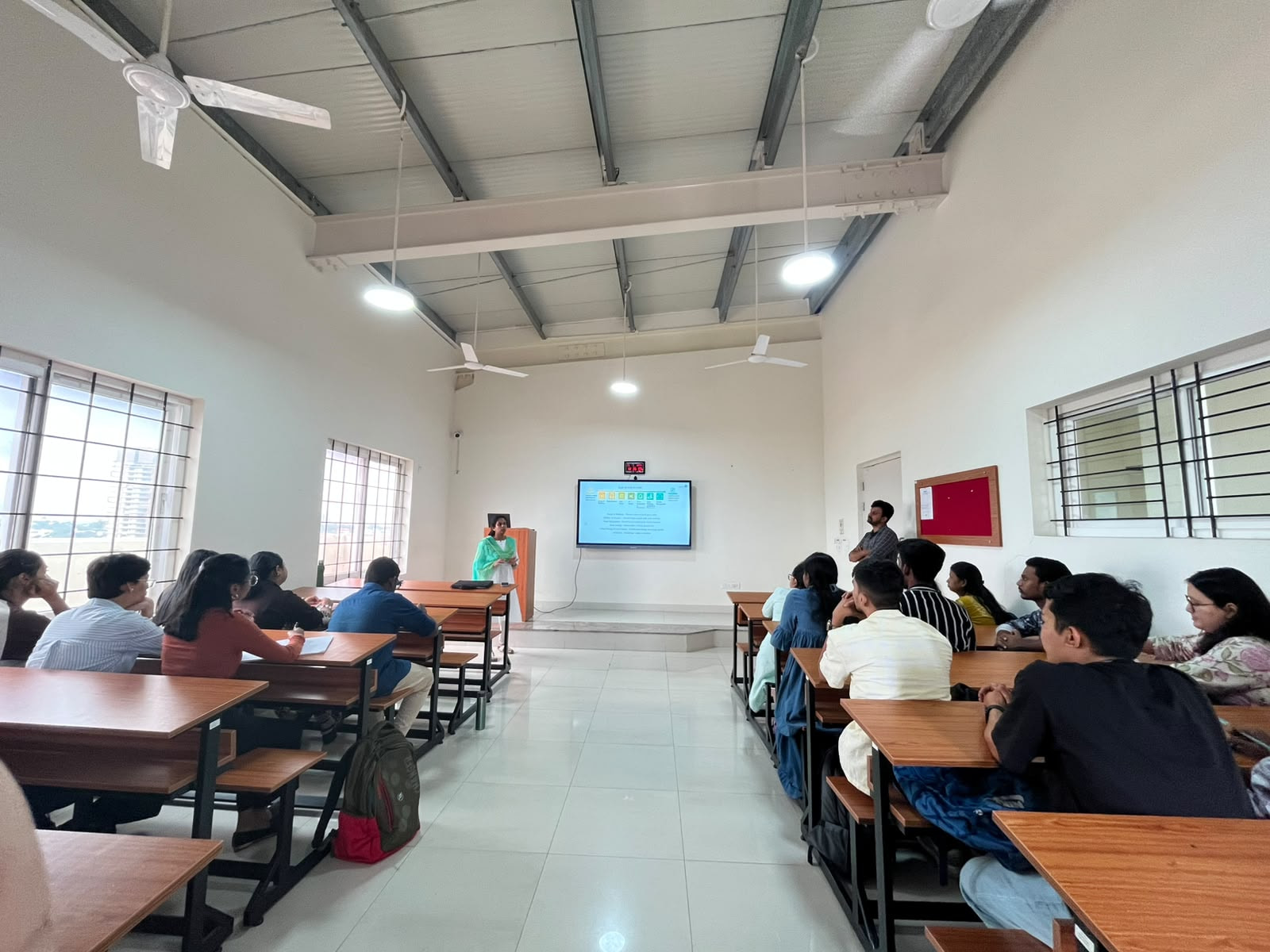
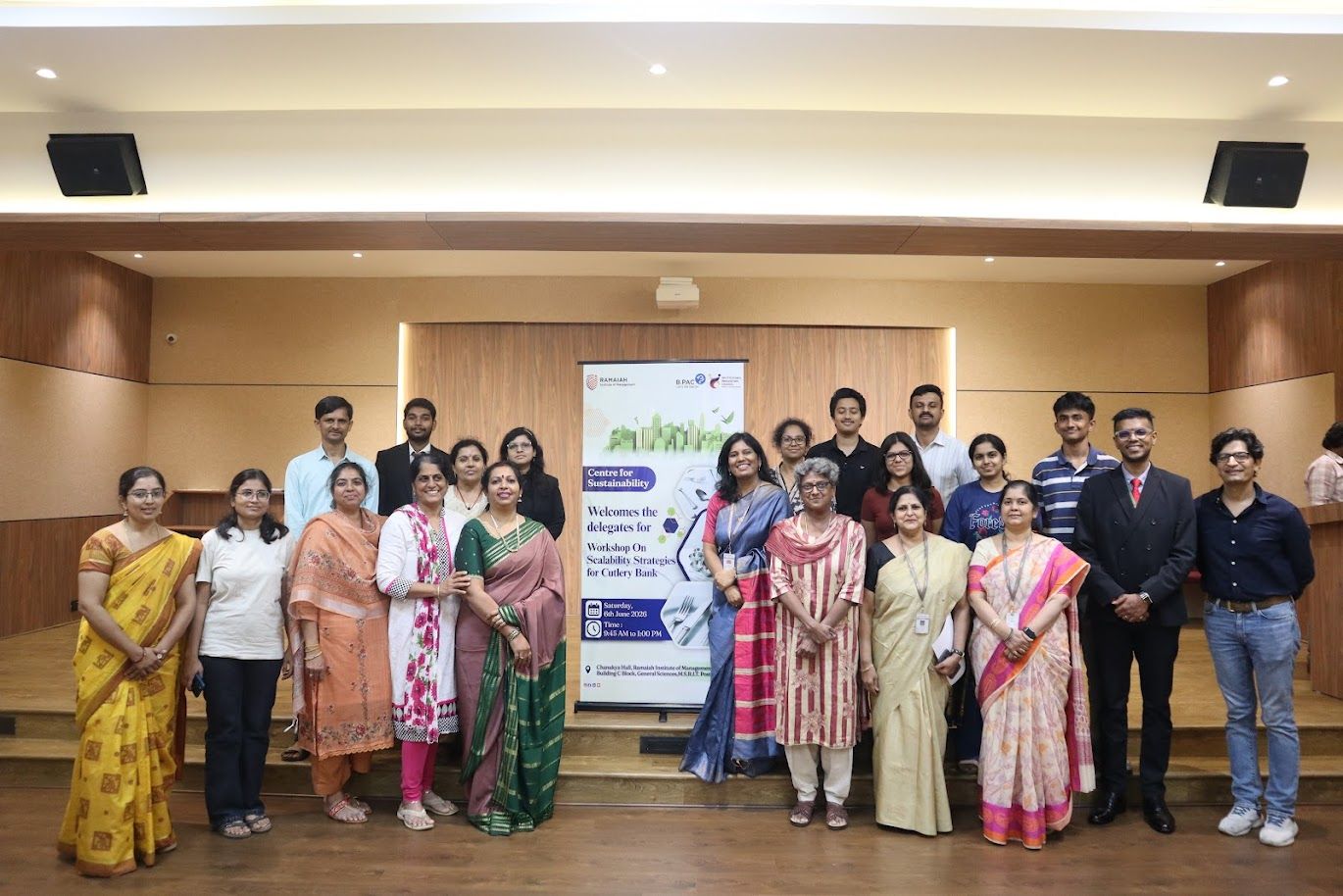
Ramaiah Institute of Management in collaboration with BPAC organised workshop on “Scalability strategies for Cutlery Bank”.The workshop concluded with active participation from Cutlery Bank founders across Bengaluru, along with students and sustainability enthusiasts.
The session created a meaningful platform to discuss the realities, challenges, and opportunities involved in operating and scaling cutlery banks in a city of over 1.4 crore people. Revathy Ashok, Managing Trustee & CEO, BPAC addressed the gathering and highlighted the urgent need for scalability, emphasizing that the current number of cutlery banks is far from sufficient for Bengaluru’s growing sustainability needs.
As part of the workshop, participants engaged in collaborative research activities including SWOT analysis exercises and Business Model Canvas discussions facilitated by Heads of various Departments under MSRIM. The findings from these sessions will contribute towards a detailed research report on strengthening and scaling the cutlery bank ecosystem in Bengaluru which will be prepared by MSRIM in collaboration with BPAC. It was a productive and insightful session fostering collaboration, learning, and collective action toward reducing single-use waste in the city.
Had a productive meeting with Hon’ble Bengaluru Development Minister Sri. Krishna Byre Gowda to discuss key urban governance priorities for Bengaluru.
We presented recommendations on Construction & Demolition (C&D) Waste Management,an extensive assessment report of public toilet infrastructure, the study on Inner Ring Metro, and other public infrastructure related projects.
Hon’ Minister responded positively to the recommendations, appreciated the inputs, and assured proactive consideration of these issues. We look forward to continued collaboration towards building a more liveable Bengaluru.
Dear citizens of Bengaluru Central City Corporation, you are cordially invited for RWAs and CSOs Meet with Shri Jagadeesha G., IAS, Commissioner, Bengaluru Central City Corporation (GBA) for an open interaction.
This is an opportunity for RWAs and CSOs to share areas of interest, suggestions, and insights for improving urban governance in Bengaluru Central City Corporation.
Join us on
Date: 18th July 2026
Time: 10:30 AM – 12:30 PM
Venue: Public Utility Building, Mahatma Gandhi Road
Bengaluru has evolved into a global megacity with a population exceeding 1.4 crore. Bengaluru has approximately 800–900 public toilets (with 479 listed under the GBA). There is no official consolidated data available regarding these public toilets. This fundamental urban infrastructure is under unprecedented strain. Public sanitation is a critical yet under-reported area requiring urgent citizen-generated evidence.
As part of B.PAC’s commitment to climate-resilient and inclusive urban governance, B.PAC undertook a community-led audit of public toilets during April and May 2026.
The initiative assessed 142 public toilets across the Central, North, West and South Corporations, documenting their functionality, maintenance, hygiene, accessibility, safety and user experience. The audit generated citizen-led evidence to identify service gaps and inform recommendations for improving public sanitation infrastructure. Public sanitation is integral to sustainable and climate-resilient cities, contributing to public health, dignity, gender equity, accessibility, and the effective use of public spaces. The findings will support engagement with government agencies to strengthen service delivery through evidence-based advocacy.
The audit was carried out with active support from B.CLIP Civic Leaders and Resident Welfare Associations of Pattegarapalya, Atmeeya Geleyara Balaga 2nd Stage, Basaveshwaranagar, Rajajinagar 1st “R” Block, Jayanagar, Vasanthanagar, Pulakeshinagar, Vijayanagar, and Chord Road RWAs, along with Malleswaram Swabhimana Initiative, Arasu Colony Residential Social Welfare Association, and Civic Bangalore.
Bengaluru’s rapid urbanisation has led to a sharp rise in Construction and Demolition (C&D) waste, posing significant challenges to the city’s roads, lakes, stormwater drains, and public spaces. In the absence of an efficient collection and management system, illegal dumping and fragmented institutional responsibilities continue to hinder effective waste management.
B.PAC’s Construction & Demolition Waste Management Framework presents a set of practical policy recommendations to strengthen accountability and improve the city’s C&D waste ecosystem. The framework proposes a single point of responsibility for waste collection, alignment of C&D collection zones with corporation boundaries, categorisation of waste generators based on volume, mandatory “Debris on Call” services for micro and small generators, and end-to-end digital tracking through GPS, QR-based verification, CCTV monitoring, and weight recording to enhance transparency and traceability.
The report also recommends strengthening collection systems and ensuring that waste is processed through authorised channels to reduce environmental impacts and improve urban cleanliness.
The framework has been presented to Hon’ble Bengaluru Development Minister Sri. Krishna Byre Gowda; Sri Maheshwar Rao M., IAS, Chief Commissioner, Greater Bengaluru Authority (GBA); Mr. Kareegowda, IAS, Chief Executive Officer, Bengaluru Solid Waste Management Limited (BSWML).
The Bangalore Political Action Committee facilitated an academic exposure visit for students from Mount Carmel (Deemed-to-be University) to key urban governance institutions in Bengaluru, focusing on climate resilience and sustainability. At the Integrated Command and Control Centre (ICCC), students were introduced to data-driven environmental governance through dashboards displaying real-time air quality indicators, ward-level weather conditions, and forecasting tools supporting disaster preparedness. Officials demonstrated how the ICCC coordinates emergency response, monitors climate-linked risks, and supports relief operations during extreme weather events.
The visit also included an interaction with officials from the Horticulture Department under the Greater Bengaluru Authority (GBA), who highlighted ecosystem-based climate adaptation through lake rejuvenation, park conservation, and urban biodiversity management. At the Bangalore Climate Action Cell, students gained insights into the city’s climate governance architecture, including the Bengaluru Climate Action and Resilience Plan, ward-level climate planning, and recent citizen consultations conducted across five wards to co-design local climate strategies.
Overall, the visit strengthened student engagement by bridging academic learning with practical exposure to institutional climate action and sustainable urban governance.