17th-18th June,2025: WRI India Engages Bodoland Territorial Council Departments to Align on Eco City Region Plans
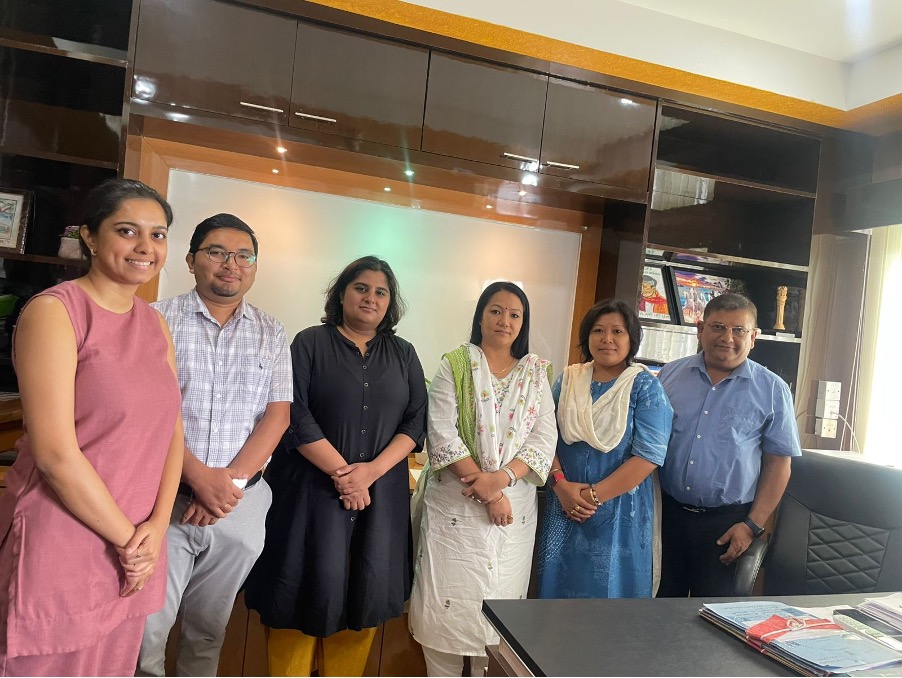
Through field visits, the Eco City Regions team engaged with multiple Bodoland Territorial Council departments, including the Urban Development Department (UDD), Panchayat and Rural Development (PnRD), Tourism, Agriculture, and Forest and Land Revenue. During the visit, early ideas on potential spatial strategies were presented and feedback gathered across departments. We also received valuable suggestions on finetuning proposed actions and locations, alongside a strong emphasis on the need to identify concrete ways to enhance forest conservation efforts. Additionally, the team met with Ranjith Basumatary, add designation here, who welcomed the work and discussed next steps regarding the launch of the Executive Summary.
30th June, 2025: WRI India Submits Draft Final Report to State Planning Commission for Review
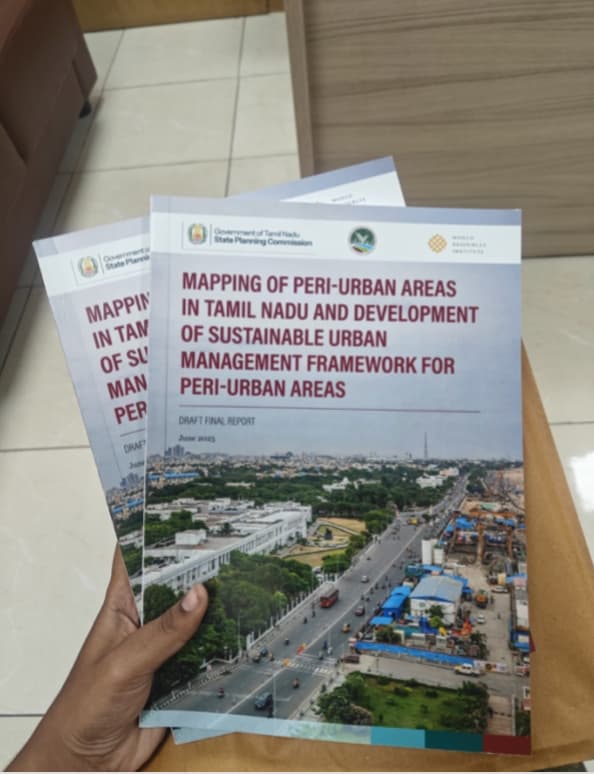
WRI India team was undertaking a study on peri-urban transitions and governance. The team has compiled and submitted the draft report on mapping of peri-urban areas in Tamil Nadu and development of sustainable urban management frameworks for peri-urban areas to the State Planning Commission for review and feedback. This milestone consolidates key research findings, stakeholder insights, and policy recommendations into a comprehensive document, marking significant progress towards project completion. Next steps include reviewing comments from the Commission, presenting the findings to relevant stakeholders, and incorporating revisions ahead of finalisation. The final report will serve as a critical knowledge resource to guide evidence-based planning and policy interventions for strengthening resilience, inclusivity, and sustainability in Tamil Nadu’s rapidly evolving peri-urban landscapes.
04th July, 2025: WRI India engages in state-level review for Uttar Pradesh’s Aspirational Cities Programme
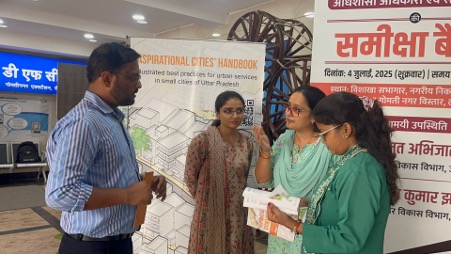
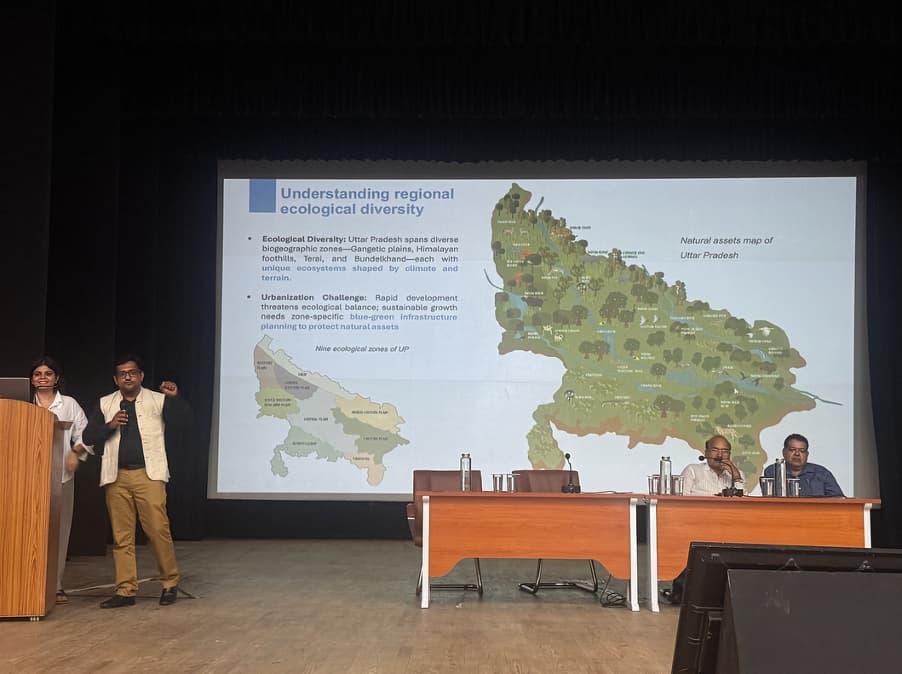

WRI India participated in a state-level partners’ review and capacity-building workshop for the Government of Uttar Pradesh’s Aspirational Cities Programme, chaired by senior officials from the Urban Development Department. The workshop provided a platform to present draft versions of Phase 1 of the Urban Services Handbook and gather valuable feedback to enhance its relevance for on-ground practitioners.
The Aspirational Cities Programme, launched in 2023, focuses on 100 fast-growing cities in Uttar Pradesh with populations between 20,000 and 1 lakh, aiming to support their rapid transition from rural to urban centres.
Next steps include refining the handbook based on feedback, conducting joint consultations for Phase 1 and 2, documenting impact stories, completing the Hindi translation, and preparing for the formal launch
14th July, 2025: WRI India presents Tamil Nadu peri-urban project findings to State Planning Commission
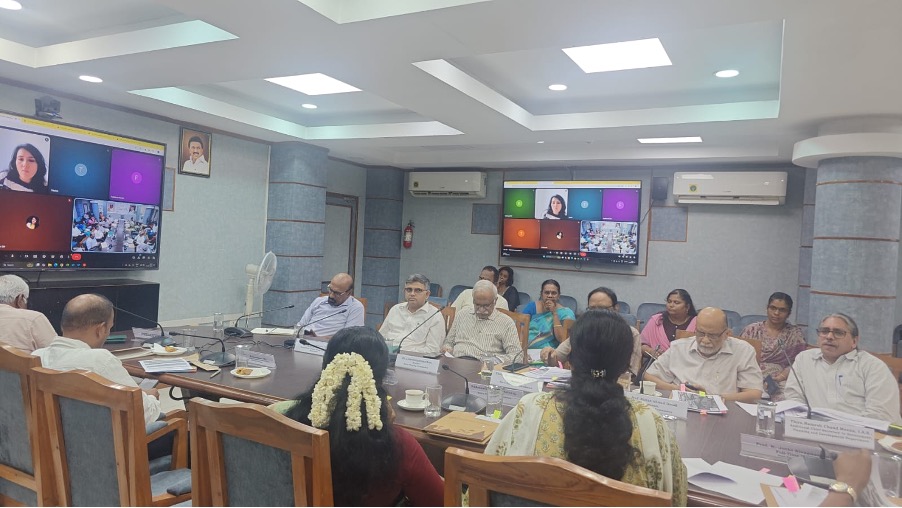
WRI India presented the key findings from the Tamil Nadu peri-urban project draft final report at the State Planning Commission’s Board Meeting. Following the presentation, the report was approved for final submission, with a request to include a tabulation of priority areas for relevant departments.
The team are now incorporating this input and preparing the final version for submission, marking an important step towards advancing integrated, evidence-based planning for Tamil Nadu’s peri-urban regions.
17th July, 2025: WRI India participates in U-CAN mixer hosted by Janaagraha in Bengaluru
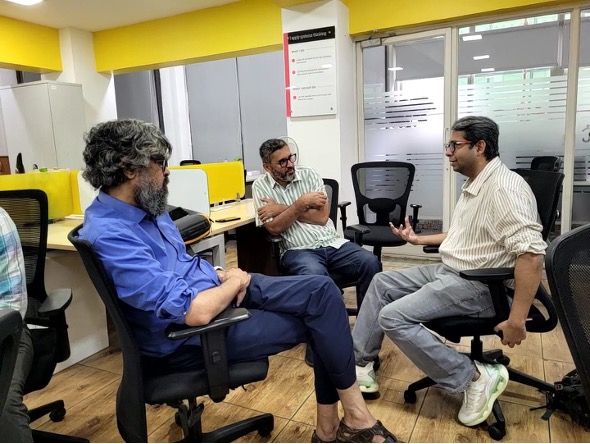
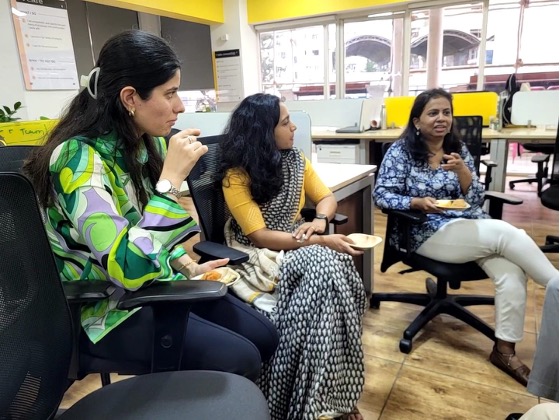
WRI India joined the latest U-CAN mixer in Bengaluru, hosted by Janaagraha, bringing together member organisations for an evening of connection, reflection, and knowledge sharing. The gathering featured stories from across the country shared by Vishwanath S, drawn from his extensive work in the water ecosystem, as well as insights from Srikanth Viswanathan on Janaagraha’s culture and the effort required to shift city systems.
From speed networking to stories from the field, the event underscored the value of coming together with openness and curiosity to strengthen collective action for urban change.
21st July, 2025: Municipal Corporation of Jalandhar (MCJ) Advances Funding Discussions with PMIDC for Nurpur Pond Rejuvenation
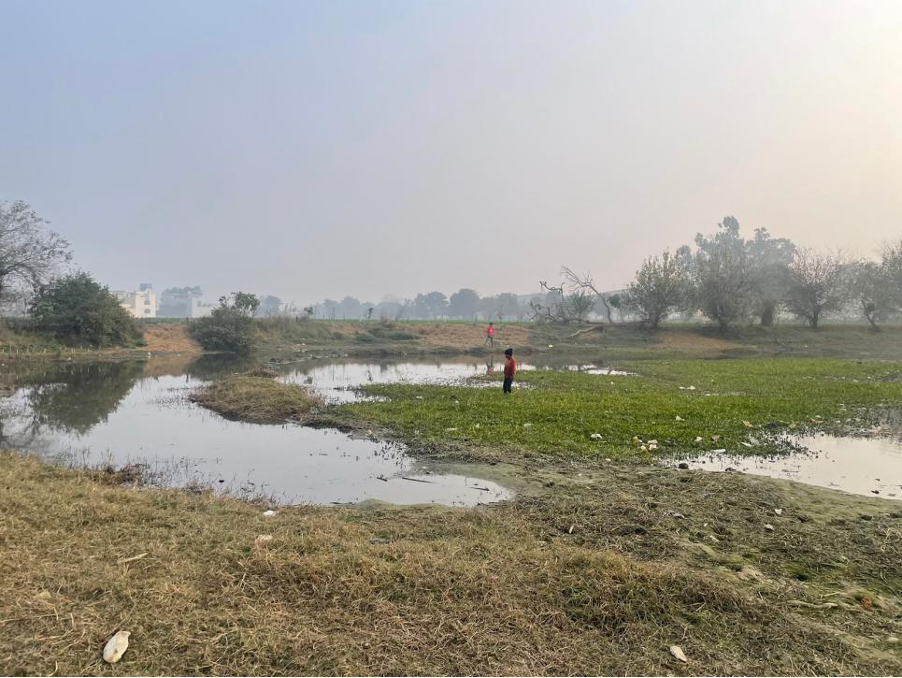
The Municipal Corporation of Jalandhar (MCJ) has initiated discussions with the Punjab Municipal Infrastructure Development Company (PMIDC) to explore potential funding for the rejuvenation of Nurpur Pond under two schemes — AMRUT 2.0 and the Scheme for Special Assistance to States for Capital Investment (Sponge City Component).
For the AMRUT 2.0 scheme, MCJ sent a proposal letter to the CEO of PMIDC and was subsequently directed to Shah Consultants for compilation of the AMRUT project. For the SSASCI scheme, PMIDC has requested the corporation to update baseline data across various urban reform components.
Nurpur Pond, located on the periphery of Jalandhar, is a vital peri-urban waterbody with the potential to serve as an ecological refuge, recharge aquifers, and provide shared public space for surrounding communities. Despite its current challenges, the pond’s restoration is envisioned through nature-based solutions that enhance water quality, biodiversity, and community well-being.
Read more about WRI India’s work on Nurpur Pond rejuvenation here: https://wri-india.org/perspectives/jalandhars-waterbodies-restoration-stewardship?utm_source=chatgpt.com
28th July, 2025: WRI India Showcases Bodoland Regional Spatial Strategy through Exhibition and Dialogue in Kokrajhar

On 28 July, WRI India conducted an exhibition and dialogue on the Bodoland Regional Spatial Strategy (BRSS) in Kokrajhar. The exhibition saw participation from government officials, civil society, and the public, helping validate and strengthen the proposals by grounding them in lived experience and deep local knowledge.
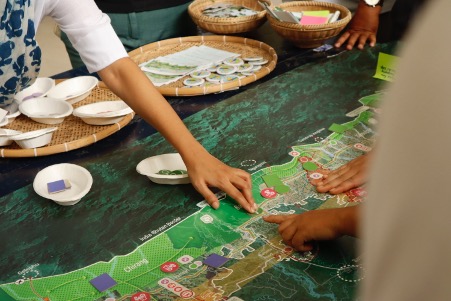
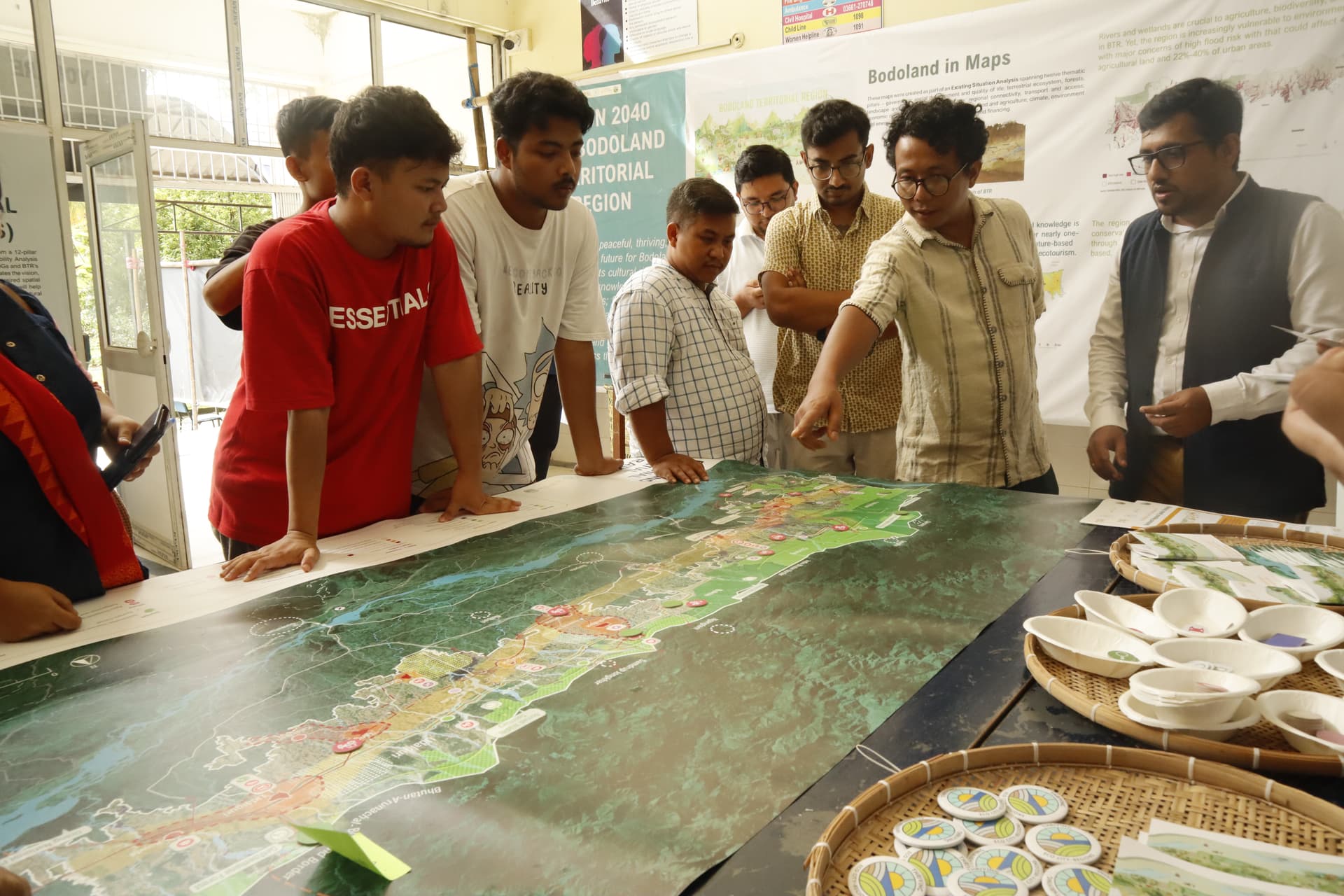
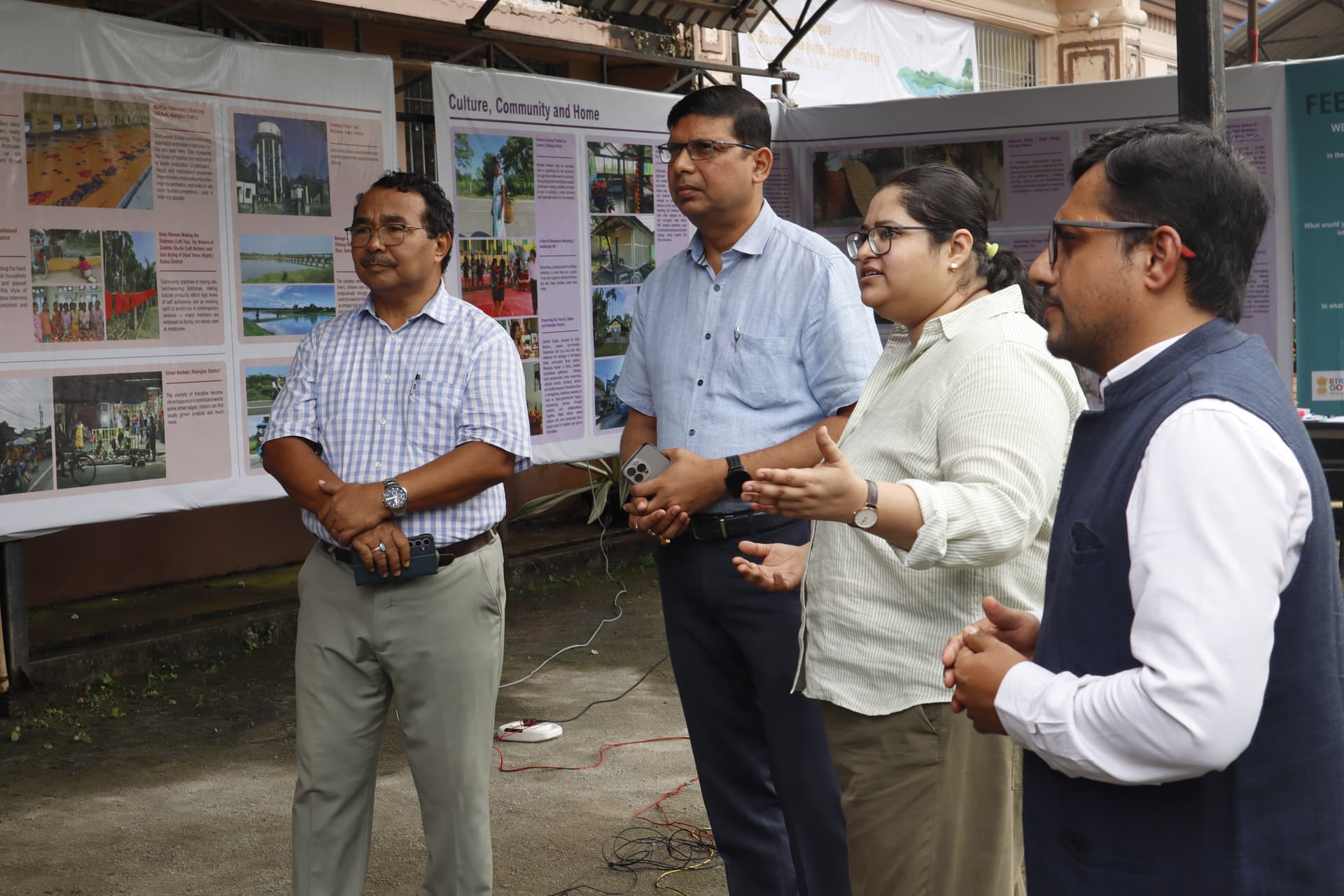
The BRSS exhibition featured Between Roofs and Rivers, a photo series capturing stories from the region on forests and ecology, livelihoods and development, local crafts and entrepreneurship, housing, and social progress—including narratives of local changemakers, who also displayed their work. A spatial exhibit showcased WRI India’s mapping efforts, land suitability assessment, and the proposed Regional Spatial Strategy, structured around the pillars of Equity, Ecology, Economy, along with Governance and Finance.
Government officials acknowledged the importance of the work, highlighting its role in shaping the region’s next steps—whether in planning and infrastructure development, attracting investments, conserving ecology and culture, or ensuring the social upliftment of its diverse communities.