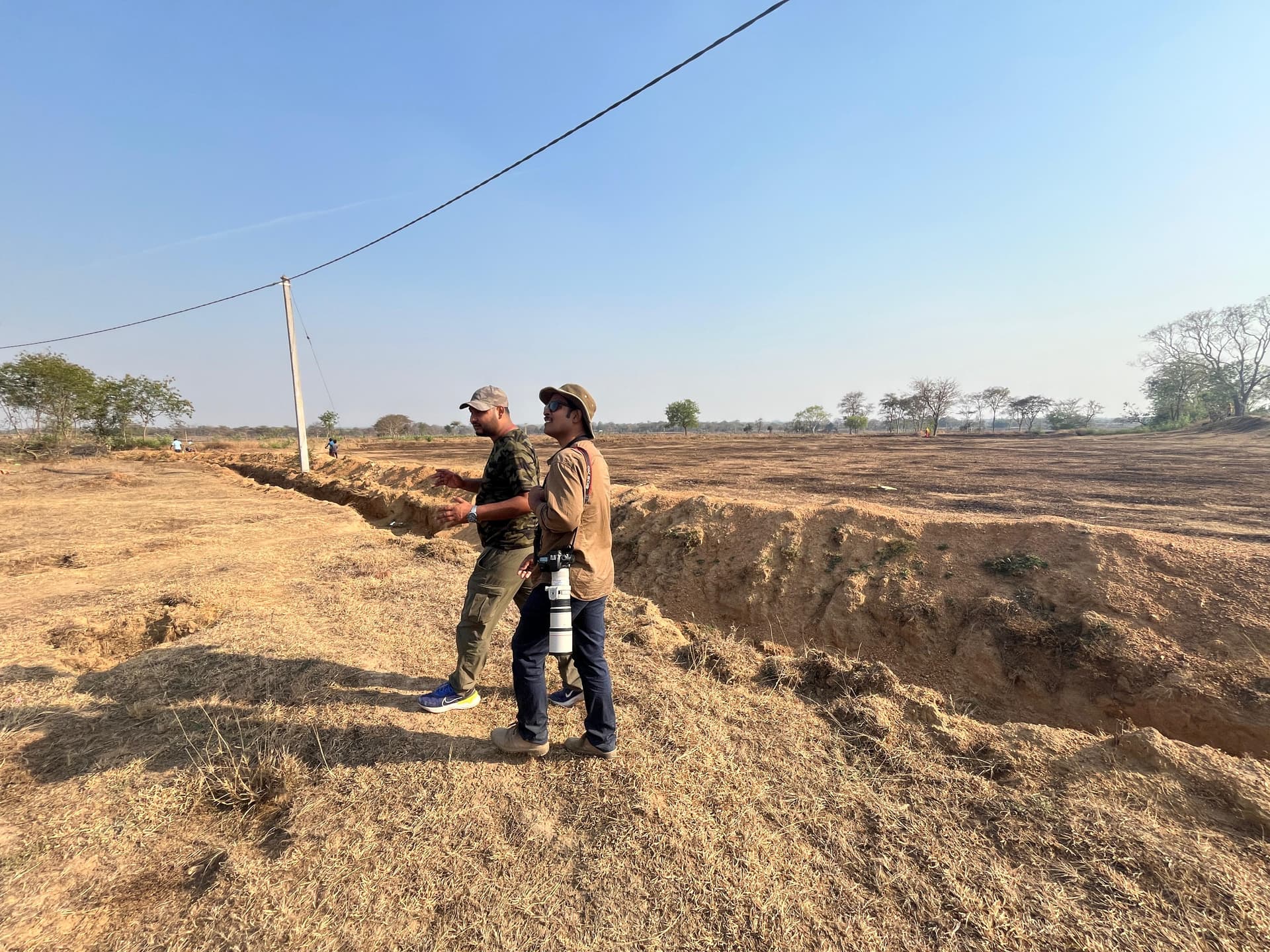
Planning dialogue with locals who have pledged their participation for the restoration of their degraded lands
Patuyara - Ayodhya - Purulia - Dalma elephant migration corridor
Planning dialogue with locals who have pledged their participation for the restoration of their degraded lands
Patuyara - Ayodhya - Purulia - Dalma elephant migration corridor
Initiation of a comparative study - before and after biodiversity study in the past restoration sites of Gorshika, Ranibund - 3 years period
It will be a 3 season survey and report will be submitted after that.
Biodiversity survey to check impact of restoration in the past 3 years!
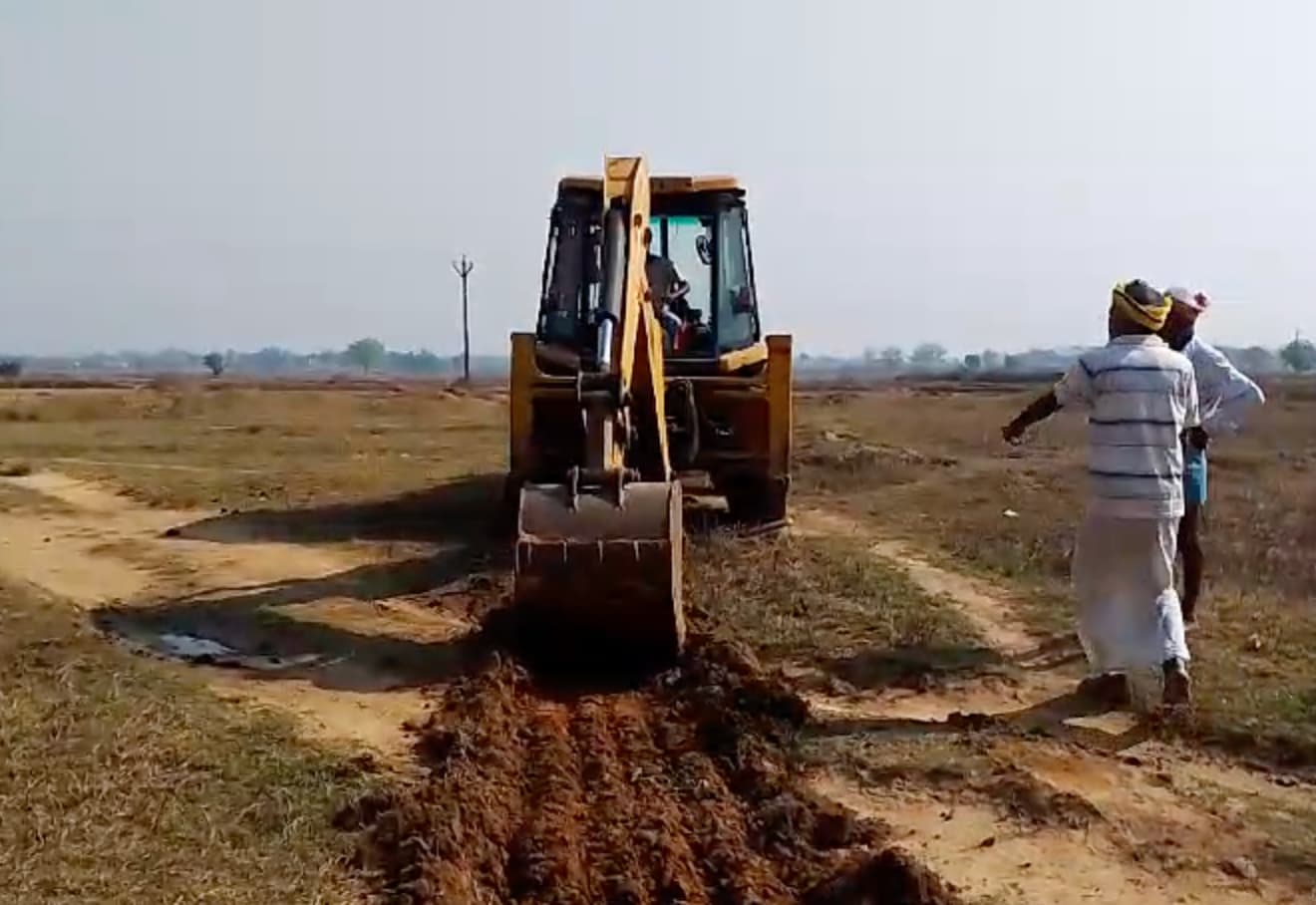
Initiation of restoration work in participatory mode in the first land of 108 bighas in ayodhya - purulia - dalma elephant corridor
Patuyara - Ayodhya - Purulia - Dalma elephant migration corridor
Earth Day celebration - #EarthDay2025 Celebration | Uttarayan Wildlife |
At Ranibundh, amidst the greens of our Uttarayan Wildlife Nursery, we celebrated Earth Day with hope and action. Together with school students — the torchbearers of tomorrow — we planted saplings of Mango and Banyan tree- keystone species vital to our ecosystem. Earth has the power to heal herself, but without awareness, we may not be able to save ourselves.
To encourage learning and nourishment, we also distributed pens, exercise books, and tiffins to the young minds who joined us. Let’s keep nurturing both nature and knowledge — the true roots of our future.
On going 5 years RM-UW restoration program in South Bengal!
Plantation Work : Under the flagship initiative “Restoration of South Bengal,” Uttarayan Wildlife is currently undertaking a major ecological restoration project in the Chatuhansa region of Purulia. The aim is to revive degraded landscapes through systematic plantation and soil management practices.
Current Work Status:
Land Preparation: Soil digging and leveling are actively underway across the designated 80–100 bighas of land to ensure suitable conditions for plantation.
Team Involvement: A dedicated local team is engaged in field-level activities, with regular monitoring and supervision to maintain progress and quality.
Continue soil preparation across remaining land parcels.
As part of the ongoing Restoration of South Bengal initiative, Uttarayan Wildlife is actively maintaining our nursery at Ranibandh, Bankura to support the large-scale plantation work in Purulia and adjoining regions.
Current Nursery Activities:
Nursery Maintenance: Regular maintenance work is being carried out to ensure healthy sapling growth and readiness for transplantation.
Relocation of Saplings: Saplings are being carefully relocated within the nursery space to optimize growth and storage before dispatch.
Weeding & Watering: Intensive weeding and daily watering routines are being managed under extreme summer conditions.
Team Involvement: The operations are being supervised by Bhim Mahata, Nursery Supervisor, with assistance from local laborers working daily despite the scorching heat.
Significance:
This nursery serves as the backbone of the plantation drive, ensuring a consistent supply of healthy, indigenous saplings for restoration work across South Bengal.
RM-UW 4th year restoration activities:
Post initial inspection, land condition survey, plants have been sorted out in our nursery for July - Aug period of plantation - monsoon is early this year. to save the plants from cattle, we are taking two steps - deep trenches which also helps in regeneration over the full extent of the land and acts as rainwater pits and keeps the cattle away. We are also keeping some portion of the land for grazing with the initial regeneration that has happened due to soil treatment. This helps in grazing and also stall feeding.
This year we are involving one school and one college in the restoration process, about 1.5 acres in school and college are being restored with plants where the students are directly involved int he process…
RM-UW Restoration process of South Bengal degraded lands!
From barren to blooming
|
Through our ongoing Ecosystem Restoration Project in Purulia, barren lands are transforming into thriving greenscapes.
Strategic pit digging and trenching have enabled rainwater harvesting, stopping runoff and recharging the soil
. Thousands of micro-catchments now nurture life, proving that with the right intervention, nature can heal.
Miracle happens with little nudge from locals and UW/RM to restore barren lands of Purulia - elephant corridor - we see the Bengal fox making a come back in one of our restoration sites!
RM-UW restoration in Purulia of barren degraded lands to convert to forest continues!
5000 SAPLINGS PLANTED
120 BIGHAS!
Chatusha - Purulia - one of our restoration sites - a remote village primary school has joined hands with UW-RM to revive their degraded land around their school with full participation of the students who will plant - maintain the small patch of their forest. We had a half a day session with the students on nature and importance of it.
Purulia Chatusha site: All plastic waste from the grow bags are collected and given for recycled and fertiliser given for initial growth of the saplings
Nursery
Due to storm and floods, our 6 acres nursery is partially destroyed. We have started repairs.
RM:UW Restoration
Inspection of this years restoration work continues - good results mainly due to community involvement in care.
RM-UW: Maintenance and replantation of existing plots.
As the dry season nears, existing plantation has to be fertilised by the local organic vermicompost, weeding for airing of the plants, checking the overall health.
FORESTS AND LANDSCAPE RESTORATION OF DEGRADED FORESTS AND ELEPHANT CORRIDORS OF SOUTH - CENTRAL OF WEST BENGAL, INDIA TO ENHANCE BIODIVERSITY AND CLIMATE RESILIENCE - Quarter REPORT –2025-26(Fifth year)
Summary
As part of RM-UW restoration of degraded landscapes of South Bengal mainly Purulia, we have
in the 2nd qyr of the 5th year(Nov 25 – Nov 26).
Major Restoration Activities During 2025–2026
During the project period, plantation and replantation activities were undertaken at several important
locations.
Restoration Area Approx. Plants
Jhujka – New Plantation Zone 2026 2,150
Dhadkidi – Replantation Zone 2,000
Patuyara – Haradhan’s Land 2,500
Amrit’s Land 1,000
Chatuhansa School 200
TOTAL 7,850
In addition to the above plantation activities, the project included transportation, loading and
unloading, labour support, field supervision and accommodation-related expenses necessary for
implementation.
New Plantation at Jhujka
A major achievement during this project year was the establishment of a new plantation over
approximately 14 bighas at Jhujka. This area represents a new restoration landscape rather than simply
strengthening an existing plantation. The establishment of vegetation over this area is expected to
create additional habitat and ecological connectivity as the plantation matures. The new Jhujka
plantation will require continued protection and maintenance during the initial establishment phase to
ensure strong survival and allow natural regeneration to gradually develop.
Replantation of Existing Restoration Areas
A major component of this year’s work was the replantation of previously established plantation zones.
Replantation was necessary in areas where plant mortality, environmental conditions, grazing or other
disturbances had created gaps in vegetation cover.
Rather than considering these gaps as failures, they were treated as part of the adaptive restoration
process. Replantation helped strengthen vegetation density and maintain continuity within the
restoration landscape.
The replantation work was particularly important because ecosystem restoration requires consistent
vegetation cover over time. Maintaining established areas is often as important as creating new
plantation areas.
Maintenance and Protection
One of the major lessons from the previous project year was the importance of post-plantation
maintenance. After plantation, the restoration areas were maintained twice during the previous year,
which resulted in better plant establishment and growth.
The positive growth observed during the current monitoring period demonstrates the value of timely
maintenance and protection.
• Supporting young plants during establishment
• Controlling competing vegetation where necessary
• Replacing dead plants
• Protecting plantation areas
• Monitoring grazing pressure
• Identifying areas requiring intervention
• Supporting overall vegetation development
• Rainwater Harvesting Pits
The project therefore recognizes maintenance as an integral part of restoration rather than an
additional activity after plantation.
Reduction of Cattle Grazing
Cattle grazing was identified as one of the major threats to young plantation areas. To address this
issue, Uttarayan Wildlife conducted meetings and discussions with local communities regarding the
importance of protecting the restoration areas.
In addition, a local caretaker was engaged from the previous year to regularly monitor and protect the
plantation areas. These interventions have resulted in a noticeable reduction in cattle grazing.
Reduced grazing pressure has allowed young plants to establish more successfully and has created
better conditions for natural vegetation development. The experience demonstrates that community
engagement and local monitoring can be highly effective tools for protecting restoration landscapes.
Evidence of biodiversity restoration
One of the most encouraging outcomes of the restoration programme has been the increasing use of
restored areas by wildlife. The ecological value of the project can now be observed not only through
tree growth but also through the return and establishment of wildlife.
Bengal Fox
A particularly significant observation was the discovery of a Bengal Fox den inside one of the
restoration areas planted during the previous year. The establishment of a fox den is a strong ecological
indicator because it suggests that the restored area has developed sufficient vegetation
cover(Grassland), shelter and food availability to support a resident or breeding wild mammal. The
presence of a predator also indicates that the restoration area is beginning to support different levels
of the local food web.
Indian Hare
Indian Hares have also been regularly observed using the restored landscapes as habitat. Their
presence indicates that the developing vegetation is providing suitable cover and potentially improved
food resources. As vegetation continues to mature, these areas can become increasingly important
habitat for small mammals.
Birds
The restoration areas have also become increasingly attractive to birds. The growth of trees and
vegetation has created roosting locations, feeding areas, shelter and nesting opportunities, while
increasing insect availability supports a wider range of bird species. The increasing number and
diversity of birds observed within the restoration areas provides another positive indication of
ecological recovery.
Restoration of the Food Chain
Perhaps the most important ecological development observed during the project is the gradual revival
of the local food chain.
A functioning ecosystem requires relationships between producers, herbivores, insects, birds, reptiles,
small mammals and predators.
As vegetation has developed:
Plants → Insects & Herbivores → Birds & Small Mammals → Predators
The increasing presence of birds, Indian Hares and the Bengal Fox indicates that several levels of this
ecological relationship are beginning to re-establish themselves.
The presence of a predator such as the Bengal Fox is particularly encouraging because it suggests that
the restored landscape is no longer functioning simply as a plantation but is gradually becoming a living
ecosystem. This transition—from planted vegetation to a developing ecological community—is one of
the most important indicators of restoration success.
Evidence of Ecological Succession
The current condition of the older restoration areas demonstrates encouraging signs of ecological
succession. The planted trees are showing strong growth, while vegetation is gradually becoming
denser and structurally more complex.
As vegetation develops, it creates new microhabitats and ecological niches. These conditions allow
additional plants, insects, birds and mammals to establish themselves.
The progression can broadly be understood as:
Plantation → Vegetation Establishment → Habitat Formation → Natural Regeneration → Wildlife
Colonisation → Ecological Succession
The project team has already observed several stages of this process. Therefore, the success of the
project should not be measured only by the number of plants surviving but also by the ecological
processes that are developing within the restored landscape.
Community Participation
Community participation remains an important part of the restoration programme. Regular
communication and meetings with local communities have helped create greater awareness regarding
protection of plantation areas, reduction of cattle grazing, importance of native vegetation, long-term
benefits of restoration and protection of wildlife habitat.
The appointment of a local caretaker has further strengthened local involvement and monitoring. The
experience from the project demonstrates that restoration becomes more sustainable when local
communities are involved in protecting the landscape.
Key Outcomes of 2026–2027
Ecological Outcomes
• Approximately 7,850 plants were included in the current year’s plantation and replantation
activities.
• Approximately 14 bighas of new plantation were established at Jhujka (as we have limited fundstill
we took some loans to continue the regular process).
• Several previously planted areas were strengthened through replantation.
• Existing trees are showing strong and healthy growth.
• Evidence of natural ecological succession is emerging.
• Restored areas are increasingly being used by birds.
• Indian Hares have established habitat within the restoration landscape.
• A Bengal Fox has established a den inside a restoration area planted during the previous year.
• The developing landscape is showing signs of a recovering food chain.
Social and Management Outcomes
• Cattle grazing has been reduced through community meetings and local engagement.
• A local caretaker has continued to support protection and monitoring.
• Regular maintenance has improved plant establishment.
• The project has demonstrated the importance of long-term management rather than one-time
plantation.
Challenges
Cattle Grazing
Although grazing has reduced significantly, it remains a potential threat to young plants and requires
continuous monitoring.
Long Restoration Period
An ecosystem cannot be restored within a single plantation season. Trees require several years to
mature, and wildlife communities take time to establish.
Continuous Maintenance
Young plantations require periodic intervention to maintain survival and growth.
Natural Disturbances
Rainfall variation, drought, grazing, soil conditions and other environmental factors can influence plant
survival and ecosystem development.
Wildlife Recovery
While the presence of foxes, hares and birds is encouraging, the full recovery of biodiversity will require
many more years of protection and habitat development.
Lessons Learned
• Restoration is a long-term process. Planting trees is only the beginning. Ecological recovery
requires years of protection, monitoring and natural development.
• Maintenance directly influences survival. The experience of conducting maintenance twice after
last year’s plantation has demonstrated better establishment and growth.
• Protection is as important as plantation. Reducing cattle grazing and human disturbance has
allowed vegetation to develop more successfully.
• Wildlife presence is an important restoration indicator. The Bengal Fox den, Indian Hares and
increasing bird activity provide evidence that the landscape is becoming ecologically functional.
• Natural succession should be encouraged. Once vegetation becomes established, natural
processes should be allowed to contribute to the development of the ecosystem wherever
possible.
• Local involvement is essential. Community meetings and the presence of a local caretaker have
helped reduce disturbances and improve protection.
Future Restoration and Management Plan
• Regular maintenance of all plantation areas
• Replacement of plants where required
• Continued protection from cattle grazing
• Regular field monitoring
• Strengthening community participation
• Monitoring natural regeneration
• Monitoring bird and mammal activity
• Protection of wildlife habitats that are developing naturally
• Maintaining the older restoration sites
• Allowing natural succession to progress wherever possible
Particular attention will be given to the older restoration areas where natural regeneration and wildlife use are already becoming visible.